
The largest living history museum in the US, where costumed interpreters bring the 18th-century colonial capital to life. Colonial Williamsburg is a 301-acre sites includes 89 original 18th-century buildings and several hundred recreated buildings from the 18th century, according to original plans.
21 Delightful Things to Do in Colonial Williamsburg
Learn about Colonial Williamsburg
Walk Along Duke of Gloucester Street
Take a guided tour
Tour the Governor’s Palace
Visit the Capital
Walk by the Courthouse
See the Powder Magazine
See the Cannon Fire
Visit the Folk Art Museum
Attend a Performance at the Play House Stage
Learn about Colonial Trades and Crafts
Walk into Shoppes with Colonial Flags
Sample Colonial Food
Visit the Open Air Market
Tour a Historic Home
Visit the Historic Animal Breeds
See the Historic Gardens
Enjoy Dinner at the Tavern
Take a Ghost Tour
Use the Free Shuttle
Spend the Night
Top Things to Do in Virginia’s Historic Triangle
How was Colonial Williamsburg Restored?
In 1926, the rector of Bruton Parish Church, Reverend Dr. W.A.R. Goodwin, approached philanthropist John D. Rockefeller Jr. to become a financial partner in restoring Colonial Williamsburg to its 18th-century appearance. It opened to the public in 1935; however, this was just the beginning.
After decades of research, restoration and reconstruction of lost buildings, the Rockefeller family and its foundation donated over $79 million dollars. Using early photographs, maps, manuscripts, archaeological excavations and existing architectural evidence, architects recreated and restored the buildings.
Buildings, such as the Raleigh Tavern and the Capitol, were the first to be rebuilt, using existing foundations. The Governors Palace followed shortly after, and President Franklin D. Roosevelt came to on October 20, 1934, to dedicate the Duke of Gloucester Street.
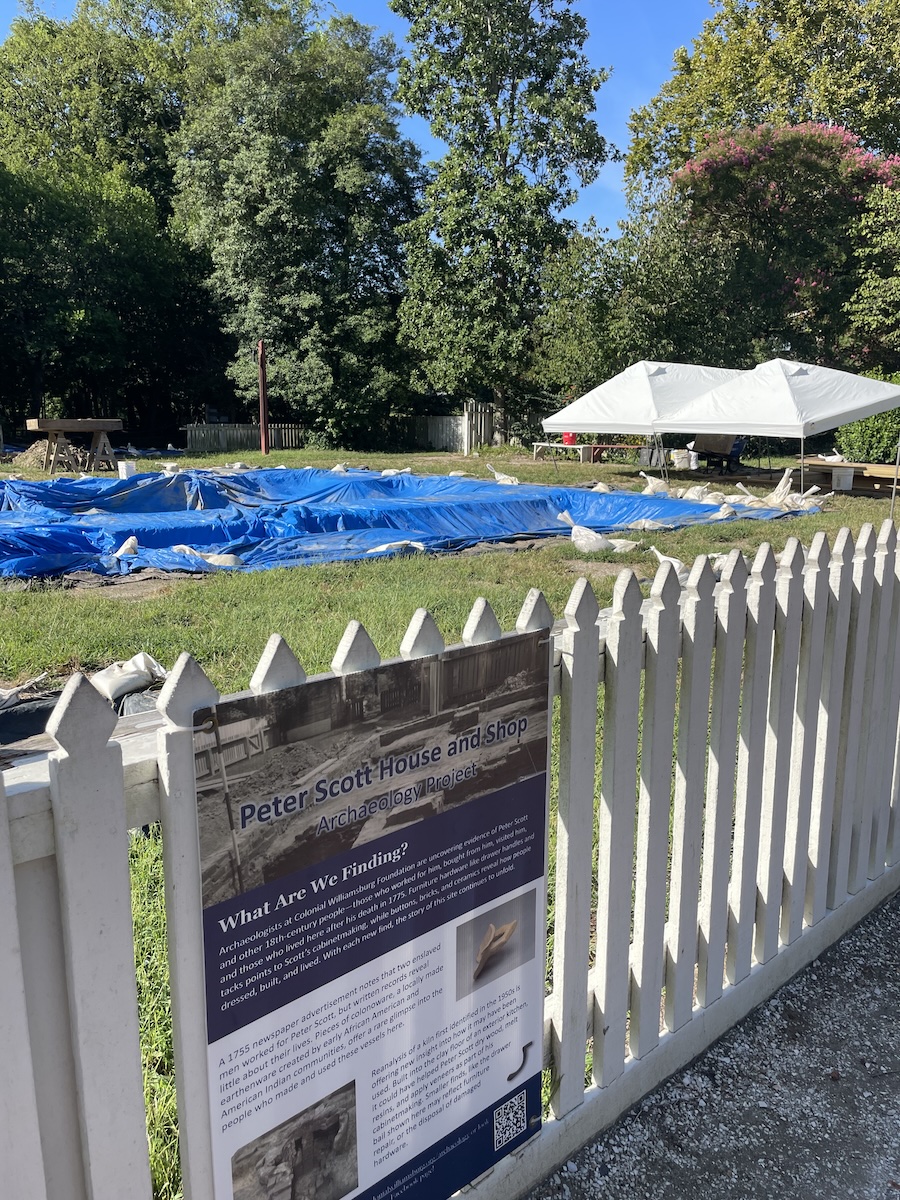
Work continues, both archaeological excavations and historical building reconstruction. During my visit, I watched an active dig.
Getting Around Colonial Williamsburg
Colonial Williamsburg includes three main thoroughfares and connecting side streets. It is designed to represent Williamsburg as it existed in the 18th century.
The main streets are Duke of Gloucester Street and Francis Street. Palace Green is flanked by historic sites, some with historical demonstrations. The Governor’s Palace and Gardens are located at the end.
Remember, Colonial Williamsburg is pedestrian-only. Be prepared: carry water and wear comfortable shoes and a sun hat. There are concessions throughout Colonial Williamsburg. Most buildings are air-conditioned and heated.
Take a Guided Tour
During my visit, I took a private guided tour with Trish Thomas of Williamsburg Walk Tours. She met me in front of the Bruton Parish Church for a one-hour outdoor walking tour.
I enjoyed the tour as Trish was a font of historical facts and carried a binder of additional images. While we walked down the streets, members of the costumed Colonial Williamsburg staff said good day, as she shared tidbits about working in the area.
After asking me about my interests, she wove in architecture and women’s history into her historical narrative. We walked by most historical buildings, and I learned more about each, even as an avid history student.
Note: This tour doesn’t go inside the individual buildings. I recommend taking a tour early in the day, when you first arrive in Williamsburg, since it is a great history refresher.
Top Colonial Sites Across the US
Visit the Government Buildings at Colonial Williamsburg
Colonial Williamsburg has several government buildings to tour. These were used first under British rule; after the American Revolution, the new U.S. Government used them.
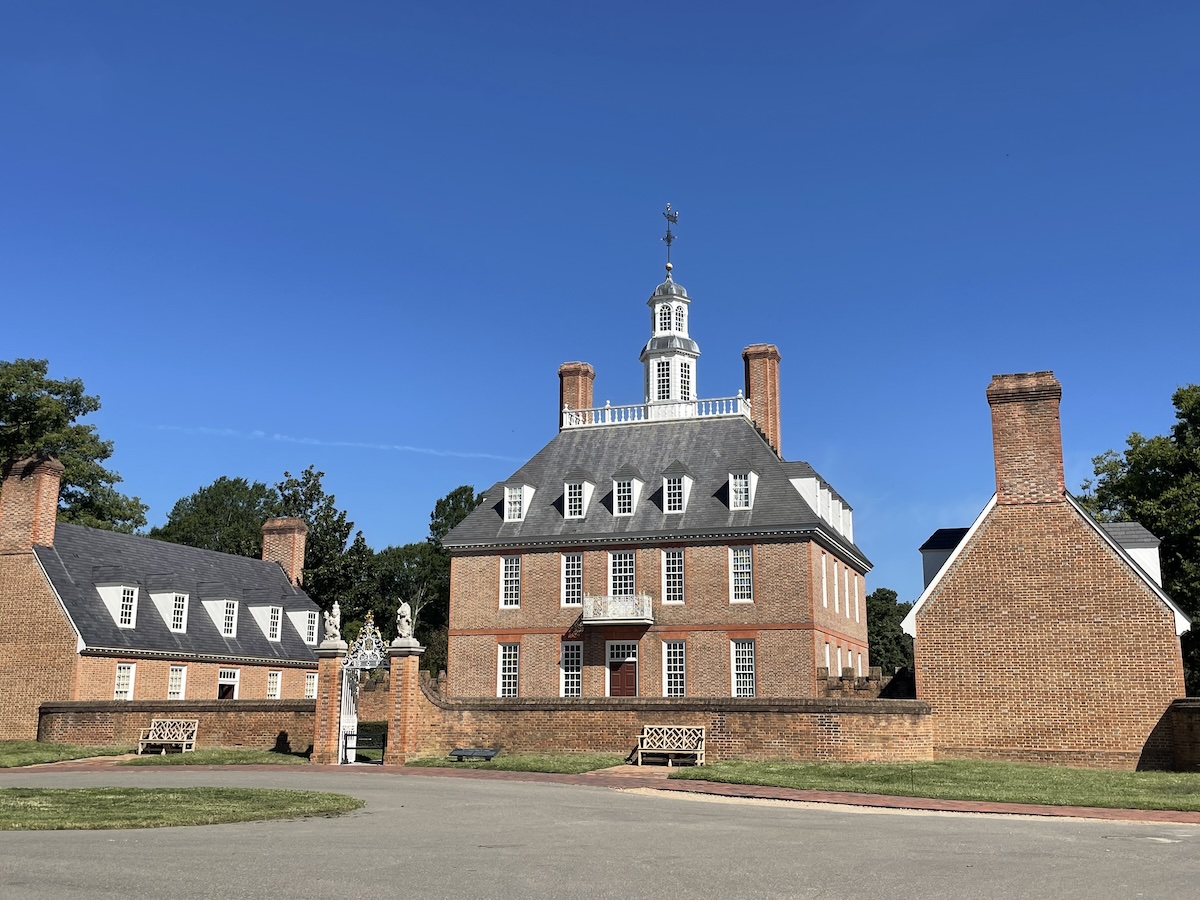
Governor’s Palace
Governor’s Palace is the home of the Royal Governors during Colonial times and the first two Governors of the State of Virginia. The current Palace is a reconstruction, opened in 1934.
The original was built between 1706 and 1722. It was a residence of Royal Governor’s, including Lord Dunmore, who fled the property in 1775 at the start of the Revolutionary War.
During my visit, I toured the Governor’s Palace. It reminded me of a small English Palace, so the entrance hall is adorned with muskets and swords as a display of force.
Other rooms included the dining room, used for formal dining and where both George Washington and Thomas Jefferson ate. Off the first-floor hall, I walked through the Butler’s Pantry, where dishes were stored and final preparations were made.
Behind the first-floor hall, the Ballroom is painted a Robin’s Egg Blue and was added to the Governor’s Palace in 1750. This space hosted large gatherings and, for the most part, lacked furnishings.
The final first-floor space was the Supper Room, a small dining area painted a bright spring green. It was used for private dining, and it featured an exterior door to access the garden and the kitchens.
I continued up the grand staircase to visit the Governor’s Bedchamber, Her Ladyship’s Bedchamber and the Middle Chamber. These rooms were private spaces used by the Governors and their wives.
The Governors Palace Grounds and Outbuildings
I walked through the outbuilding next to the Palace. During this time period, cooking took place in another building, a two-story structure. In another building. I found a scullery for cleaning and preparing
chickens. The Governor’s Palace also includes a garden and formal landscaped grounds.
The Governor’s Palace offers kitchen tours, including the use of enslaved people, who often lived above in a loft. Check its calendar of tour times for specific tours.
Visitors can take a guided tour from 10 a.m. to 4 p.m., first come, first-serve. During my visit, I only waited for a few minutes before the next tour departed. The tour is included in the Colonial Williamsburg Day Pass; however, I recommend you wear your pass, as you will be asked to show it. Located at 300 Palace Green St.
Colonial Williamsburg Capitol
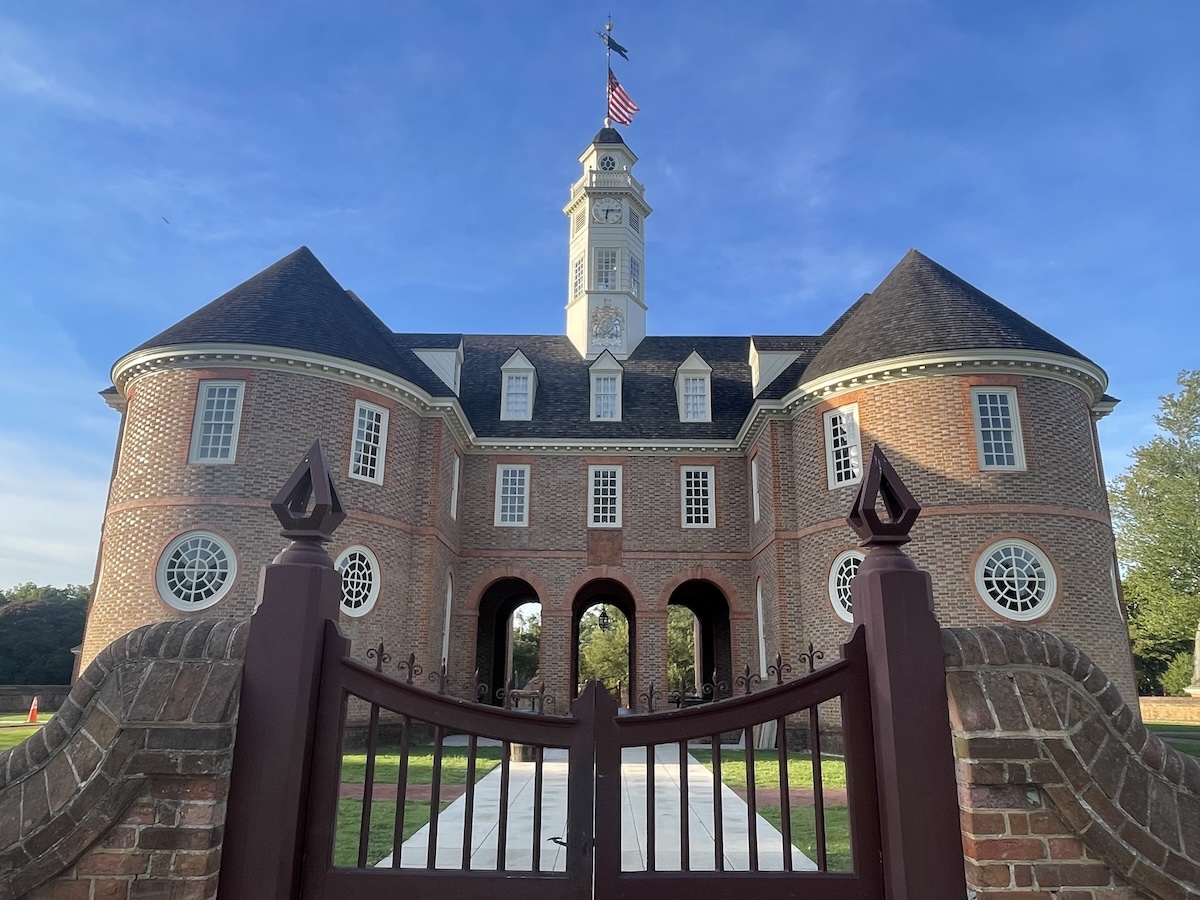
Completed in 1705, the Capitol in Colonial Williamsburg replaced the structure in Jamestowne, that went up in flames on Halloween 1698. This building was the center of British authority in Virginia for most of the 18th century, until it burned in 1747.
Rebuilt, the Capitol went up in flames again in 1832, but the state government had moved to Richmond. At this time, it was not rebuilt.
The current building is a reconstruction of the 1705-1747 building, using the original foundation. It was the epicenter of the American Revolution, with Thomas Jefferson and George Washington among others using the building.
Located at 500 E Duke of Gloucester St. Visitors can tour the Capitol on a guided tour. It is open most days from 10 a.m. to 5 p.m.
Colonial Williamsburg Courthouse
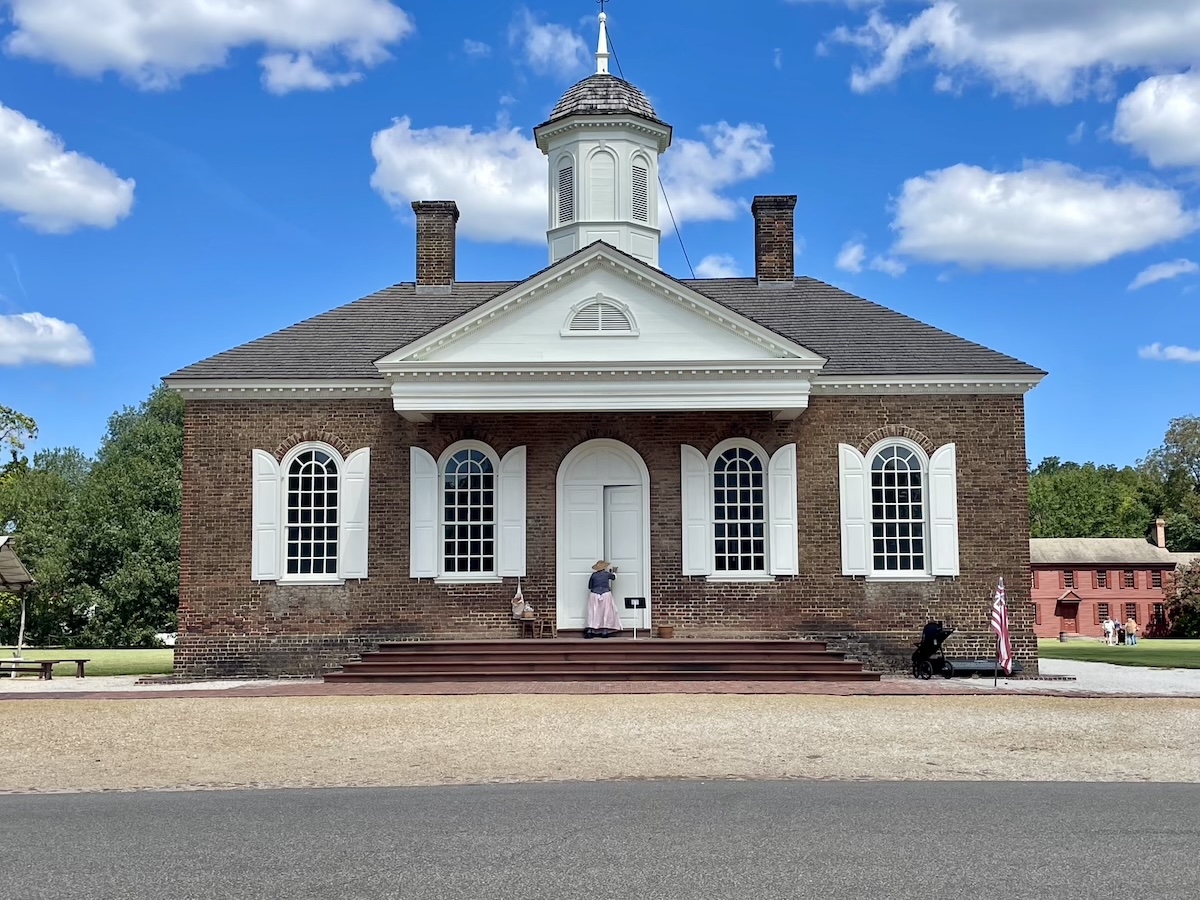
Colonial Williamsburg Courthouse is an original Georgian 18th-century courthouse. As I passed by, it appeared it was missing the columns to support its portico, but they were intentionally left off.
Benjamin Waller read the Declaration of Independence from its steps after receiving it from Philadelphia. During the U.S. Civil War, the building was used as a hospital.
Located at 461A East Nicholson Street, Williamsburg. Open daily from 10 a.m. to 5 p.m.
Public Gaol
The jail in Colonial Williamsburg held prisoners who awaited trial. Ordinary people were prisoners; however, the most notorious were some of Blackbeard’s pirates in 1718.
Located at 500 E Duke of Gloucester St. Open daily from 10 a.m. to 5 p.m.
Power Magazine
The eight-sided Power Magazine stored arms and ammunition dispatched from London to protect the area. However, the English soldiers stole the gunpowder before the revolution as tensions escalated.
This area is also used for weapon demonstrations. The Military Encampment is also in this area, next to the Market House.
Located at 102 E. Duke of Gloucester St. Closed for renovations; however, you can easily walk by it.
Top Colonial Places to Visit in Philadelphia
Art Museums in Colonial Williamsburg
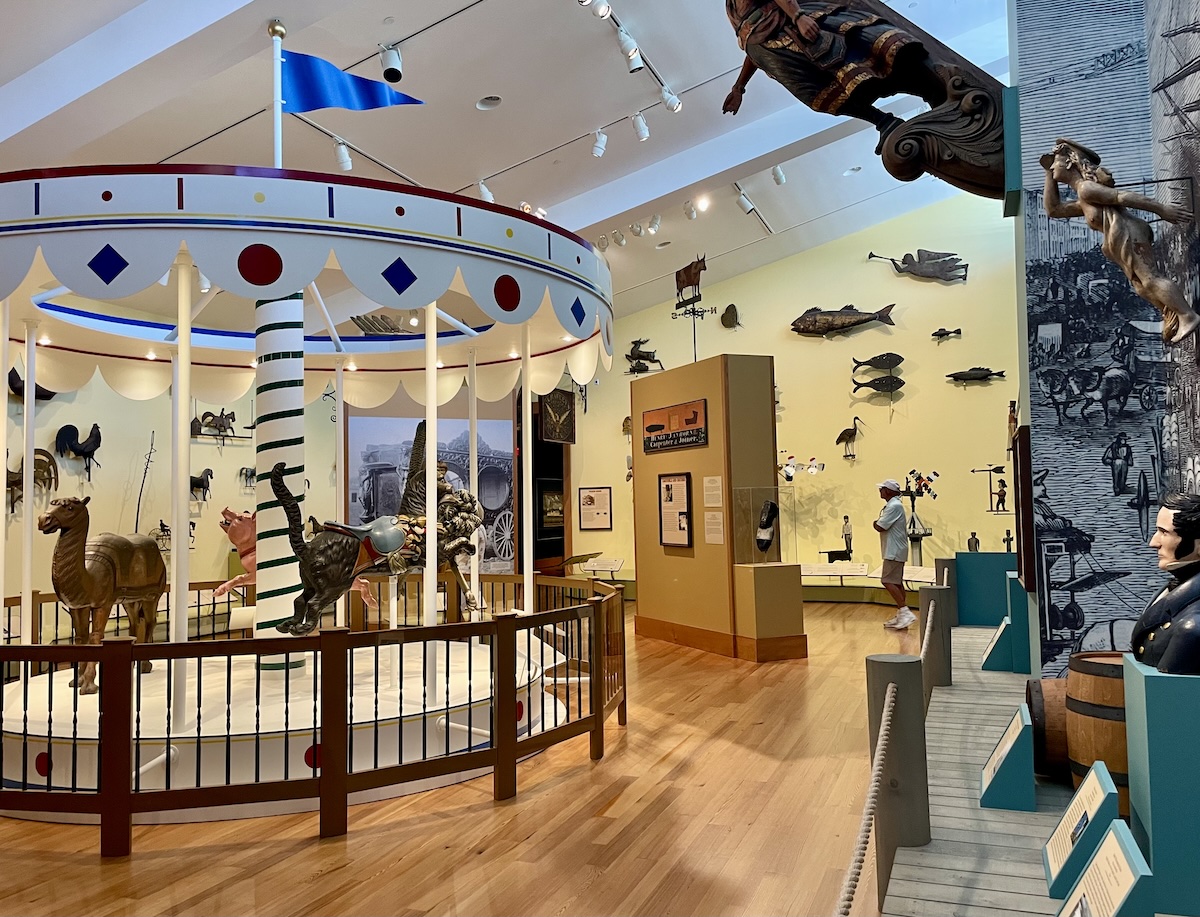
Colonial Williamsburg has two art museums in one location: the Abby Aldrich Rockefeller Folk Art Museum and the DeWitt Wallace Decorative Arts Museum. The complex is across Francis Street, the main thoroughfare.
The folk art museum is the oldest institution dedicated to preserving, collecting, and exhibiting art made by self-taught artisans. During my visit, I found an assortment of objects, like children’s toys.
The DeWitt Wallace Decorative Arts Museum features both British and American antiques and decorative items from the 17th to the 19th centuries. I found this to be a treasure trove, from china and silver to furniture and clocks.
During my visit, I didn’t have enough time to visit, and I would love to go back. I would recommend two to three hours to tour both museums.
Located at 301 South Nassau St., Williamsburg. Open daily from 10 a.m. to 5 p.m. Find storage lockers, a museum store and a cafe.
Play House Stage
Before 1720, Colonial Williamsburg built an open-air theater. Check the events calendar for scheduled productions during your visit.
Located at 208 Palace Green Street.
Top Things to Do on Boston’s Freedom Trail
Learn about the Craftspeople of Colonial Williamsburg
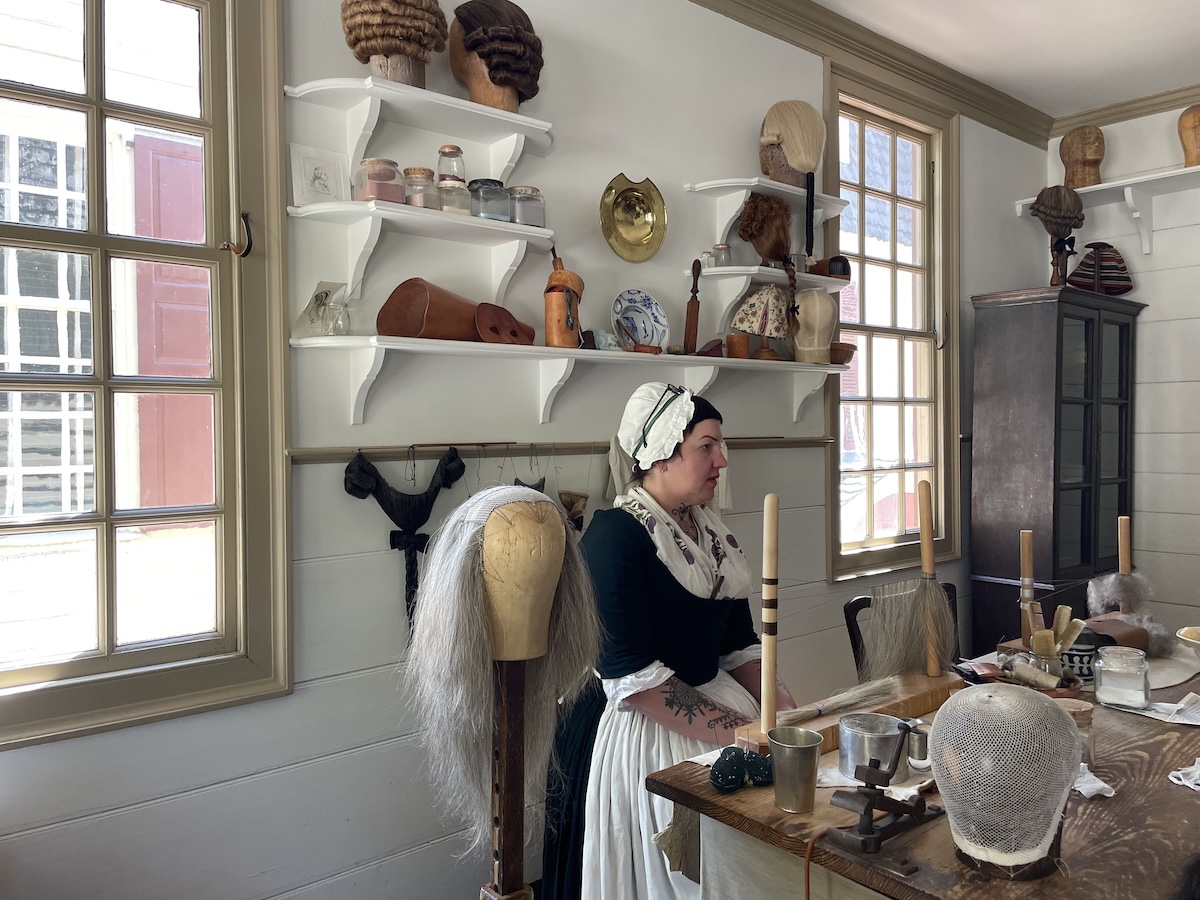
One of the most interesting things to do in Colonial Williamsburg is to learn about the original trades from tradespeople. Each has learned a skill from years of working through and apprecticeship.
During my visit, I looked for the Colonial Flag, the one with a small Union Jack and red-and-white stripes. This signifies that a storefront or artisan shoppe is open.
I walked through the open shoppes and I learned about the crafts and trades of the time. From the wigmaker making traditional Colonial wigs to the cabinetmaker, the furniture maker and more, each shop or workroom was educational and informative.
Some shoppes sells goods, like the Tarpley, Thompson & Company Store at 402 E Duke of Gloucester Street, a clothing store. The Prentis Store at 213 E Duke of Gloucester Street sells beeswax candles, pottery and leather goods.
Market Square was a hub of buying and selling in 18th-century Williamsburg. This open-air market sells souvenirs and crafts, including kids colonial toys. Located at 100 E Duke of Gloucester St.
Community Buildings in Colonial Williamsburg
Colonial Williamsburg included buildings for community use. From Taverns to a school to a hospital, many of the spaces have been restored or recreated.
Charlton’s Coffeehouse was a gathering place during Colonial times. Visitors can learn about the Stamp Act, which was a tax. Located at 429 E Duke of Gloucester St. Open daily from 10 a.m. to 5 p.m.
The Williamsburg Bray School was a school for enslaved children during Colonial Times. Children between 3 and 10 learned to read, and the girls learned to sew. Located at 105 S Nassau St, Williamsburg.
The Public Hospital of 1773 was the first mental hospital in British North America. It is located at 325 Francis St. W, Williamsburg.
Raleigh Tavern was established around 1717. Taverns were gathering spaces that offered food, drink, lodging and boarding for horses. In the Apollo Room, many conversations occurred leading up to the American Revolution. Located at 413 East Duke of Gloucester St., Williamsburg.
Presbyterian Meetinghouse is located at 531 Francis St. E, Williamsburg.
The Public Hospital of 1773 was the first mental hospital in British North America. It is located at 325 Francis St. W, Williamsburg.
Raleigh Tavern was established around 1717. Taverns were gathering spaces that offered food, drink, lodging and boarding for horses. In the Apollo Room, many conversations occurred leading up to the American Revolution. Located at 413 East Duke of Gloucester St., Williamsburg.
Top Things to Do in Virginia’s Shenandoah National Park
Historic Homes in Colonial Williamsburg
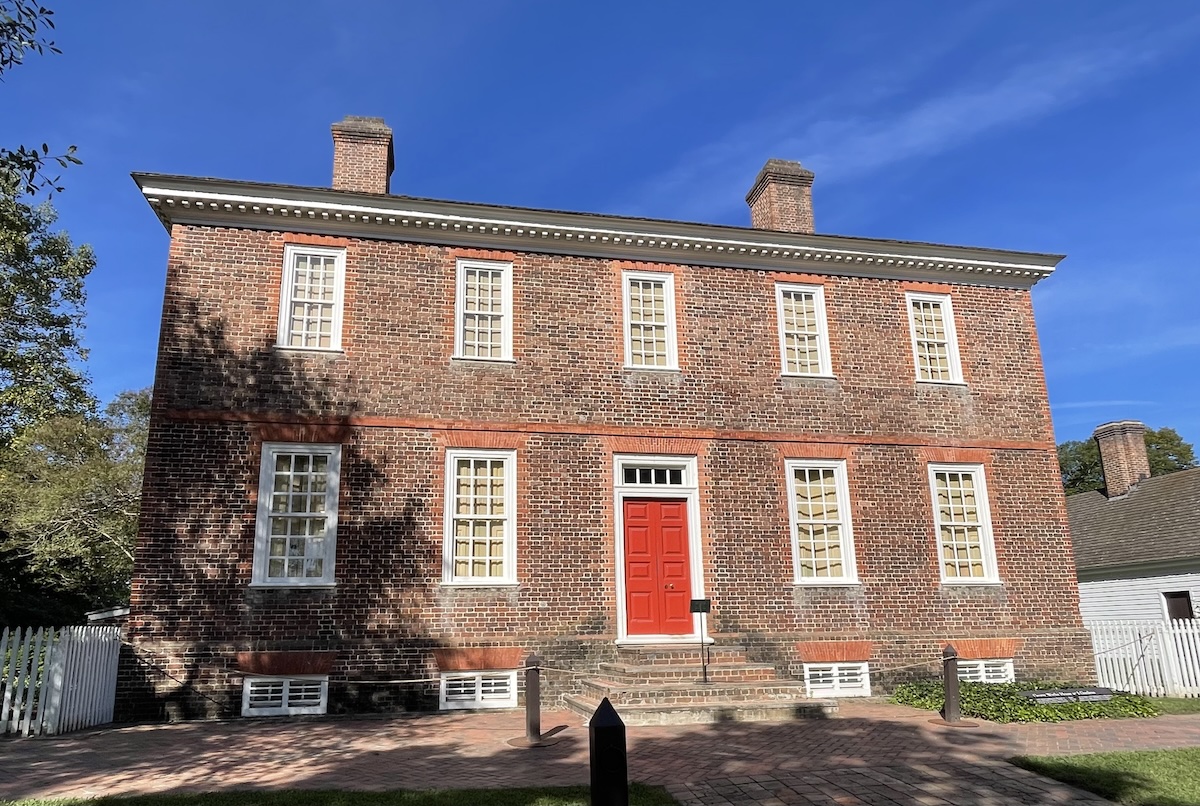
Colonial Williamsburg offers many original homes from the era, and some are still inhabited by residents. Visitors can tour historic homes, and during my tour, my guide pointed out the historical features and each’s history.
George Wythe House
Built in the 1750s, George Wythe House was designed and built by architect Richard Taliaferro. His daughter married George Wythe and gifted the house to them.
Wythe was a lawyer and taught law in the house, and one of his students was Thomas Jefferson. Both would sign the Declaration of Independence. This house was also used as Washington’s headquarters.
Located at 101 Palace Green St., Williamsburg. Open for self-guided tours.
James Geddy House
Built by James Geddy, Jr. and his wife Elizabeth and their five children. Located at 117 W Duke of Gloucester St., Williamsburg. Open for self-guided tours.
Peyton Randolph House
Built by Peyton Randolph, he lived there with his family and 27 enslaved people. Speaker of Virginia’s House of Burgesses and President of the First Continental Congress. Part of the house dates to 1715, making it one of the oldest surviving buildings in Williamsburg.
Located at 100 W Nicholson St., Williamsburg. Open for self-guided tours.
John Carter House is unfurnished and located at 209 Palace Green St., Williamsburg. It is open for scheduled tours.
The Rockefellers’ Bassett Hall
This is one of the 88 original surviving buildings in Colonial Williamsburg. The visionary, Rev. Dr. W.A.R. Goodwin, showed this property to John D. Rockefeller, Jr., in 1926 to entice Rockefeller to help fund the restoration.
Top Things to Do at New River Gorge National Park and Preserve in West Virginia

Historic Livestock in Colonial Williamsburg
Colonial Williamsburg is home to historical livestock breeds. Over time, some breeds fall out of favor, or newer breeds are developed for favorable traits.
There are 100 rare breed animals in the historic area. From lambs to cows to chickens to horses. If you have kids, I recommend you visit the animal pens, located next to Prentis Store.
Historic Gardens in Colonial Williamsburg
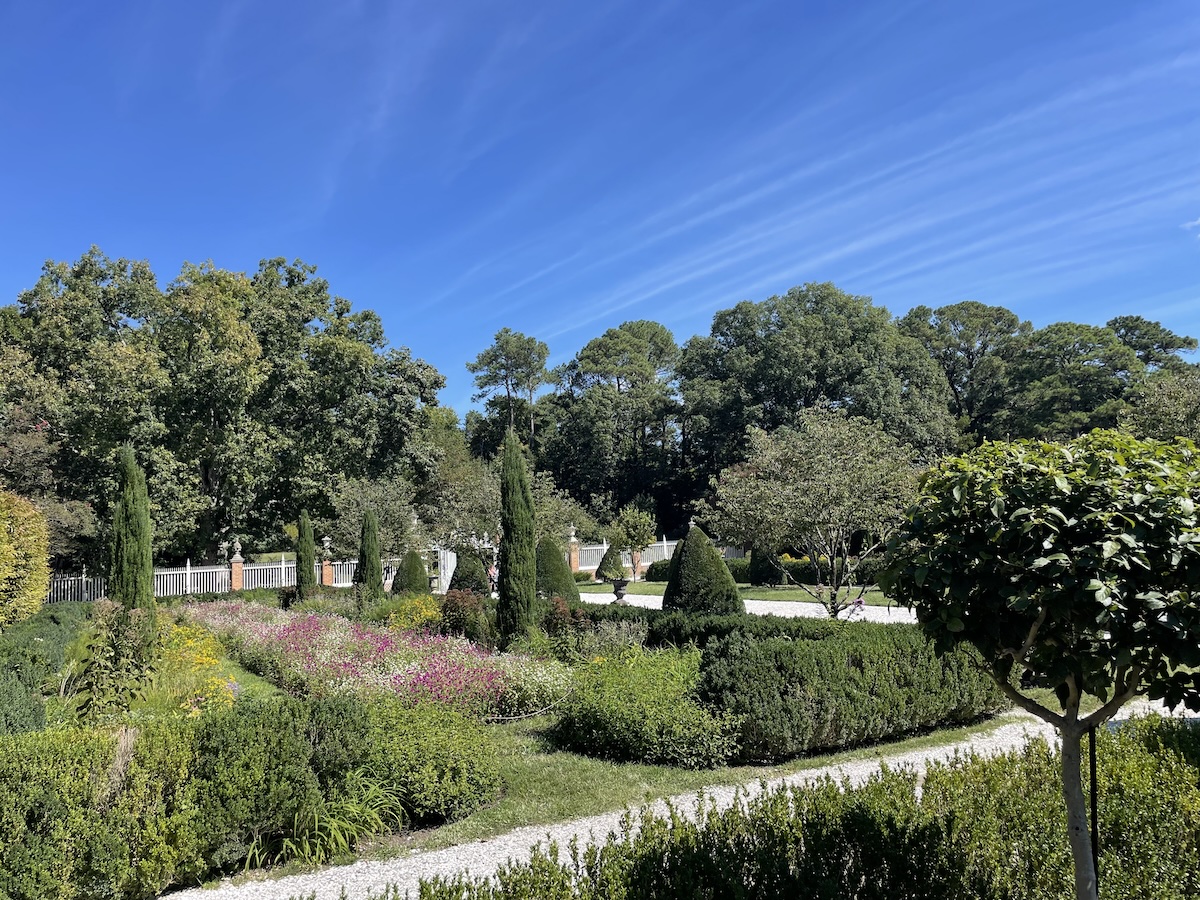
Colonial Williamsburg has 30 landscaped historic gardens. They range from flowering gardens to the grand 10-acre Governor’s Palace Gardens and Grounds.
Each offers seasonal color, and when I visited in early September that gardens were colorful. Originally tended by enslaved people, now volunteers keep the gardens going.
Many homes at the time included a kitchen garden. Some Colonial Williamsburg restaurants utilize produce grown on-site.
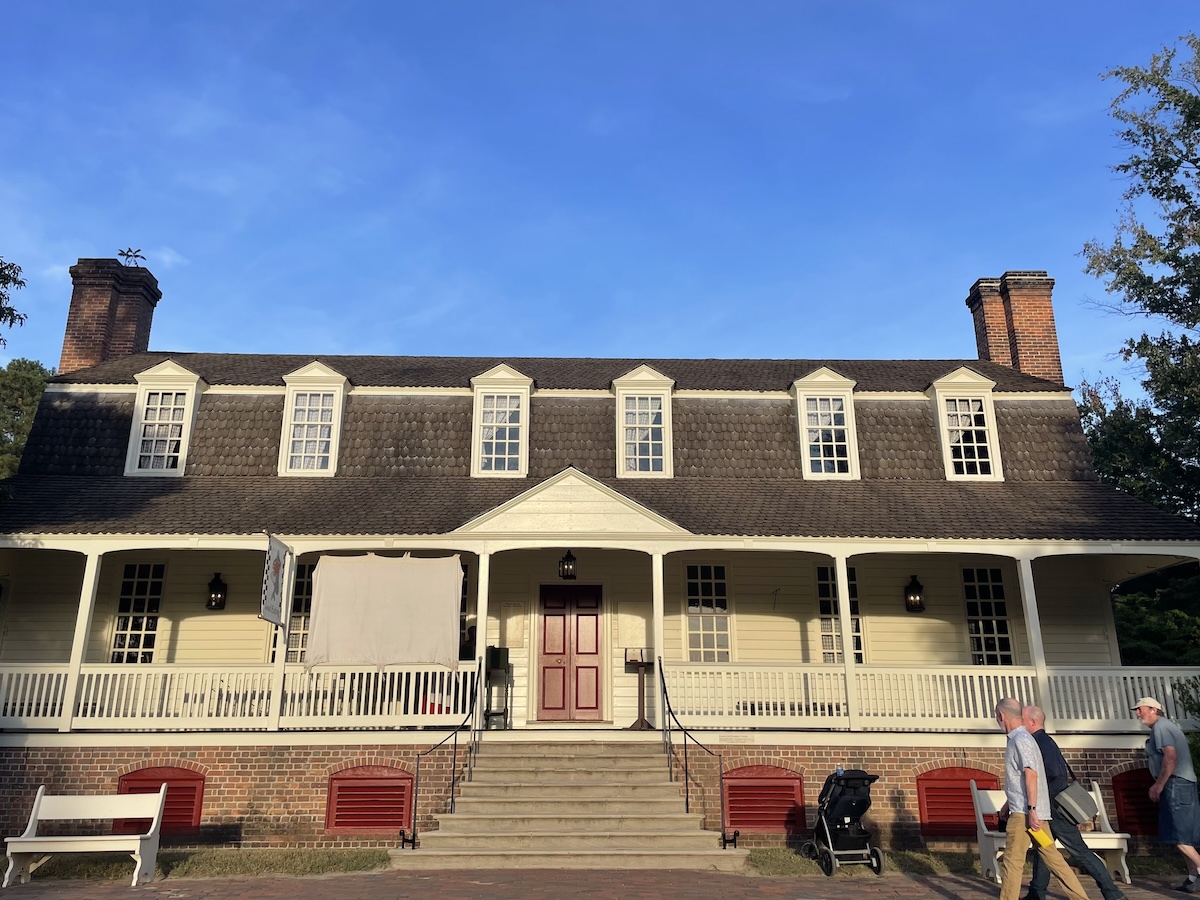
Where to Eat in Colonial Williamsburg
At one point, Williamsburg had seven taverns that were used by residents and tourists. Residents gathered at taverns to share news, and they were often some of the first buildings completed.
Colonial Williamsburg features historic taverns that serve food inspired by what the Colonists ate in the 18th century. Taverns also offer rooms above their dining areas for travelers.
Christiana Campbell’s Tavern
During my visit, I dined at Christiana Campbell’s Tavern, located on the edge of Colonial Williamsburg, behind the Capitol. George Washington and Thomas Jefferson frequented it. The interiors are candlelit, and during my visit, a musician rounded the dining room.
I started my meal with Old Stitch from the Williamsburg Alewerks, a nutty brown ale adapted from original recipes. They served it in an earthenware jug. Christiana
Campbell’s Tavern also serves historically inspired cocktails and its alcoholic punch for at least two. It also serves non-alcoholic beverages like root beer and ginger ale.
Christiana Campbell’s Tavern serves a historically inspired, locally sourced menu. During my visit, I sampled the Fried Chicken, cooked to crunchy perfection, with seasonal vegetables on the side.
It came with spoon bread, a moist cornmeal bread baked in a dish and scooped out. Other entrees include oysters, crab cakes and seafood pye, a fish pie. A beef and vegetarian entree round out the menu. Families will also find a kids menu.
Located at 101 South Waller St. Open Tuesday to Saturday, 4 to 8 p.m. Reservations are encouraged.
King’s Arms Tavern
Established by Jane Vobe in 1772, the King’s Arms Tavern features servers dressed in period attire. It serves colonial recipes, such as beef, pork and Cornish hen. There’s also a kids menu.
Located at 416 East Duke of Gloucester St., Williamsburg, VA. Open Thursday to Monday for lunch 11 a.m. to 4 p.m. and dinner from 4:30 to 8 p.m.
Shields Tavern
Opened by Jean Marot in 1709, then by his daughter and husband, Anne and James Shields. Traditionally, some taverns served food family-style, and Shields Tavern offers a Groaning Board for lunch.
Located at 422 East Duke of Gloucester St., Williamsburg, VA. Open from Tuesday to Saturday from 11 a.m. to 2 p.m
Raleigh Tavern Bakery
During my visit, my tour guide recommended the Ginger Cake, baked daily in authentic wood fire ovens. I snagged one that was still warm, and it was soft and moist, with the just-right flavor of ginger, a personal favorite.
The Raleigh Tavern Bakery also sells other baked goods, cold drinks and snacks. Located at 413 East Duke of Gloucester Street. Open daily from 9 a.m. to 5 p.m.
McKenzie Apothecary serves coffee, tea and baked goods near the Governor’s Palace. Located at 207 Palace Green St. Open Wednesday to Sunday from 9 a.m. to 4 p.m.
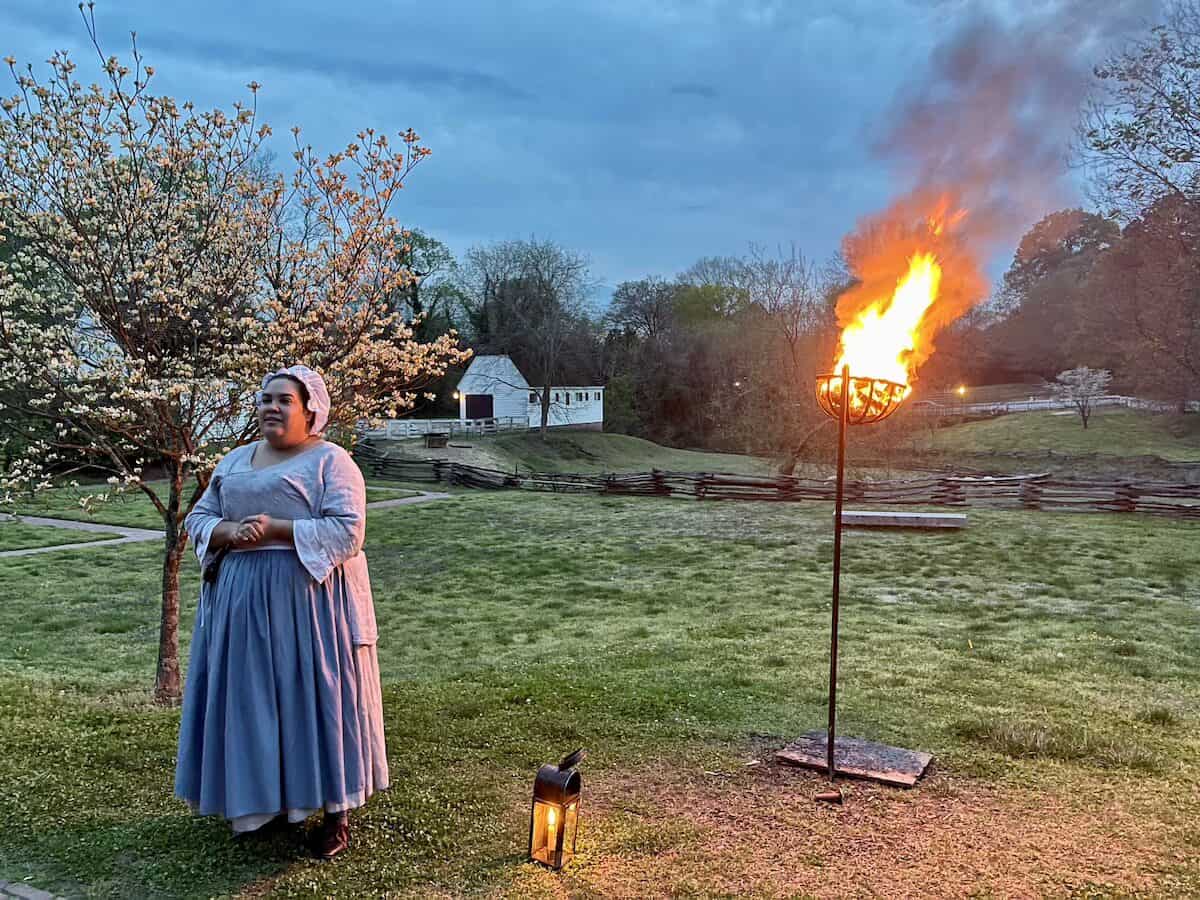
What to Do in the Evening at Colonial Williamsburg
The Haunted Williamsburg Tour is the official haunted program that enters the historic buildings. More historical than haunting, additional tickets are required. Admission is $20 per person, and reservations are required.
The Kimball Theatre opened in 1933 as a Radio-Keith-Orpheum (RKO) and has been home to the performing arts in Colonial Williamsburg ever since. Located at 428 W Duke of Gloucester St.
Getting Around Colonial Williamsburg
You can park at the Colonial Williamsburg Visitor Center, where parking is available for $10 per day at 101 Visitor Center Drive. Worth noting, this is not next to Colonial Williamsburg.
During my visit, I parked at the P4 during the day. It is located on the west side of Colonial Williamsburg. Do yourself a favor and pay for parking through its kiosk, not its app. It is cheaper for shorter stays (ask me how I learned that.)
There is a complimentary bus service on the Williamsburg Area Transit Authority, WATA Route 15. It makes several stops in Colonial Williamsburg, including The Capitol, The Tavern, Market House, Museums and Merchants Square.
Buses run every 15 minutes, Monday through Saturday from 9 a.m. to 9 p.m. and Sunday from 9 a.m. to 6 p.m. Visitors with dinner reservations and evening activities can park at the tavern parking lot off of Francis Street. I did this and found free parking behind Christiana Campbell’s Tavern.
Admission tickets are required to enter buildings and experience programming in the Historic Area. One day, adult tickets are $37.50 and kids (6 to 12) are $10. You can buy them in advance or on-site.
If you purchase tickets in advance, you will have to exchange the voucher for a ticket you will wear for your visit. Each building will require a valid ticket for entry. You can, however, walk through Colonial Williamsburg for free if not entering the buildings.
America’s Historic Triangle Ticket
If your family wants to visit all five sites, the America’s Historic Triangle Ticket is the one for you. It allows unlimited entrance to all five sites over five consecutive days: the three living history museums and the two NPS sites. Adult admission (16+) is $126, youth (6-15) are $74 and those 5 and younger enter for free.
Where to Stay in Williamsburg
Rochambeau Roadside Inn
Originally built in 1954 as the Motel Roshambo, local siblings Lyle and Anna Schiavone acquired this vintage roadside stop. After a thoughtful modern overhaul, it reopened as the Rochambeau Roadside Inn in 2024.
Named after the French General Comte de Rochambeau, who aided American forces during the Revolutionary War, the Rochambeau Roadside Inn offers a seamless digital smart check-in and check-out system via text message using a 4-digit room code, with no keys or apps.
Two buildings offer 22 rooms, with classic king rooms, double rooms, a bunk room and two suites. Each room is comfortably decorated with modern colonial details, like historically inspired wallpaper.
Room 10 is a classic king room with a locally made mattress from Paramount Sleep in Norfolk, Virginia. Beds are dressed in white cotton linens and very comfortable.
The room features individually controlled air conditioning and heat, plus a ceiling fan. This room is 230 square feet and includes a reach-in storage area, an in-room safe, and a retro-inspired Frigidaire minifridge.
Outside, guests will find an outdoor fire pit with chairs and picnic tables. An outdoor courtyard area is also near the lobby. The ice house features loaner bikes and helmets in assorted sizes, an ice machine and buckets, ironing boards, irons and steamers.
The Rochambeau Roadside Inn offers free Wi-Fi, free self-parking right outside guest rooms with electric vehicle charging.
Located at 929 Capitol Landing Rd, Williamsburg, VA.
Disclosure: Visit Williamsburg hosted me during my visit. This article contains affiliate links.
