Within the famed Black Hills, there are two National Park Service sites with cave tours. Under South Dakota’s surface, travelers will find two show caves within 31 miles of each other. From Badlands National Park to Mount Rushmore National Memorial to Minuteman Missile National Historic Site, the Black Hills of South Dakota are a top destination for outdoor adventure. Here are the top things to do at Wind Cave National Park.
Top 14 Things to Do at Wind Cave National Park
Take a Wind Cave Tour
Go on the Scenic Drive
Take a Hike
See Wildlife
Attend a Ranger Program
Picnic in the Park
Learn about Wind Cave
Visit Jewel Cave
Take a Jewel Cave Tour
Take a Hike
Find Wildflowers
Earn a Ranger Badge
Learn About White Nose Syndrome
Camp
Mount Rushmore Planning Guide

Why Visit Wind Cave
The South Dakota Black Hills offer a week of fun, from national parks to outdoor adventure. Sometimes, I like to add a cave tour (or, in this case, two cave tours ) to my itinerary. Cave tours take you underground and explore the unique landscape that’s hidden under the surface.
Wind Cave National Park is named after the barometric winds at the cave’s entrance, which can predict the weather. With hiking, camping and a herd of bison, Wind Cave National Park is more than a cave tour.
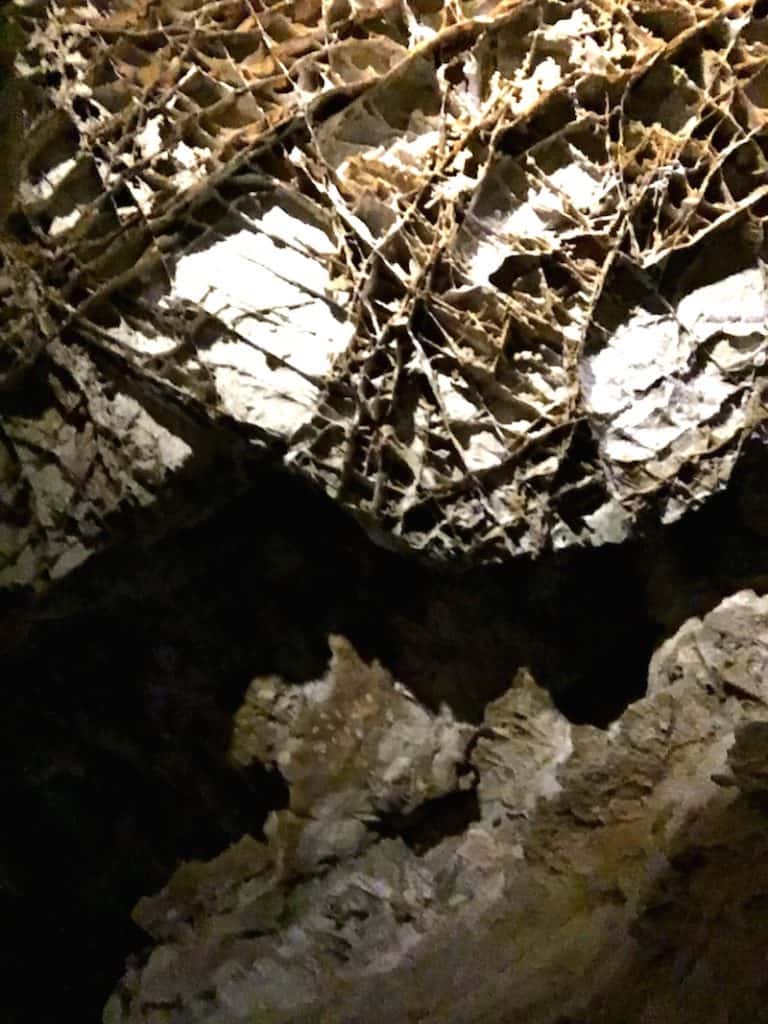
Visitors can enjoy the scenic drive into the park and see some of its wildlife. Underground, Wind Cave’s boxwork, popcorn and frostwork are cave formations to find during your visit.
Top Things to Do in South Dakota’s Black Hills
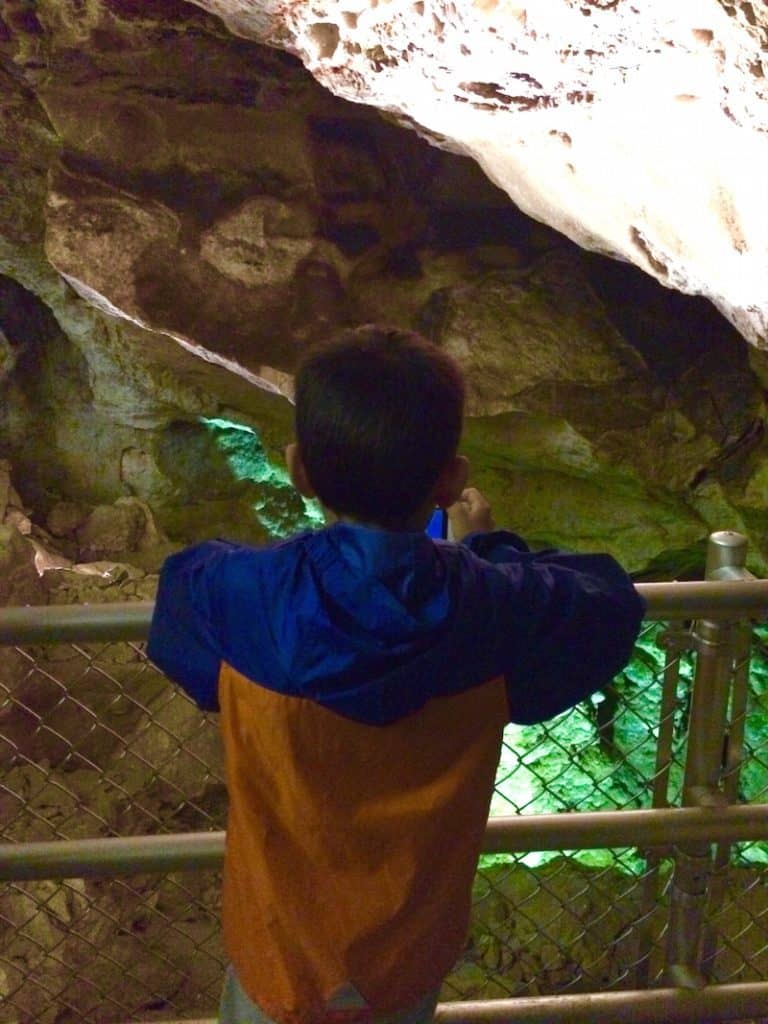
Should You Visit a Caves with Kids?
Cave tours are ideal for school-age kids who can explore without much assistance. However, cave tours do not allow babies to ride in carriers or strollers. Both are for safety reasons, like bumping heads and steep trails in the cave.
Younger kids might have issues with the dark. However, some really like that discoveries still happen as cave explorers go deeper into the caves and map each one.
How to See the Wind Cave
With over 100 miles of passageways, portions of Wind Cave remain uncharted and only five percent have been discovered. The boxwork, popcorn and frostwork cave formations in Wind Cave are exceptional for all visitors, especially cave enthusiasts.
Wind Cave National Park offers three basic tours: the Natural Entrance Tour, the Fairgrounds Tour and the Garden of Eden Tour. I’ve taken the Fairgrounds Tour and Natural Entrance Tour. All tours are guided and leave from the Visitor Center.
Cave Tours
The Garden of Eden Tour
This is the least strenuous tour and is recommended for younger children and visitors with health or mobility concerns. This tour uses the elevator to enter and leave the tour. It includes 150 steps and covers .3 miles during the one-hour-long tour.
However, tourgoers will need to navigate trails that can be slick and poorly lit. If that sounds too strenuous, there is space in the Visitor Center to wait like others take the tour.
You can book this tour in advance. I recommend this for mixed groups.
The Natural Entrance Tour
This tour includes 300 steps, mostly down, lasts an hour and 15 minutes and covers a .6-mile route. I entered the cave through a man-made entrance next to the original and rode the elevator out. I enjoyed walking down into the cave as the first explorers did, it added to the feeling of adventure.
You can book this tour in advance. I recommend this tour for families.
The Fairgrounds Tour
This is the most strenuous tour, lasting an hour and a half and including 450 steps. For this tour, we rode the elevator down and back up afterward. My kids, 13, 12 and 8, loved the tour. All ages are welcome as long as they can walk the entire .6-mile route.
You can book this tour in advance.
The Candlelight Tour
Explore a cave like explorers, by candlelight. This tour includes 424 steps and covers .6 miles along the Blue Grotto Route. This section doesn’t offer lights and lasts 2 hours.
Tourgoers will need to make reservations for this summer-only tour. It requires participants to wear long pants and lace-up shoes.
This tour is a small group and everyone must be 10 years or older. Only available in summer and tickets are sold at the Visitor Center.
Wild Cave Tour
This is a four-hour introduction to cave exploring, including crawling and climbing off the trail. Tourgoers will spend much of their time exploring the cave on their hands and knees. This portion of the cave doesn’t offer lighting.
This tour is a small group and participants must be 16. Only available in summer and tickets are sold at the Visitor Center.
Accessibility Tour
For those with mobility concerns, Wind Cave National Park offers an Accessible Tour. It is a 30-minute tour with no steps. It uses the elevator and there is parking near the elevator building. Participants will see the famed boxwork on this tour.
Reservations must be made in advance as this tour isn’t scheduled daily. Call the visitor center at (605) 745-4600 to arrange.
Tickets can be reserved online in advance. Admission for Natural Entrance and Fairground tours: adults 16 and older is $17, kids 6 to 16 are $9 and kids under 5 are $1. The Garden of Eden admission for adults 16 and older is $15, kids 6 to 15 are $8 and kids under 5 are $1. The Candlelight Tour is $17 for 16 and older. The Wild Cave Tour is $46 per person.
Some tickets are available for the day of tours, though most sell out within a few hours in the morning.
Top Things to Do at Mount Rushmore
Scenic Drives in Wind Cave
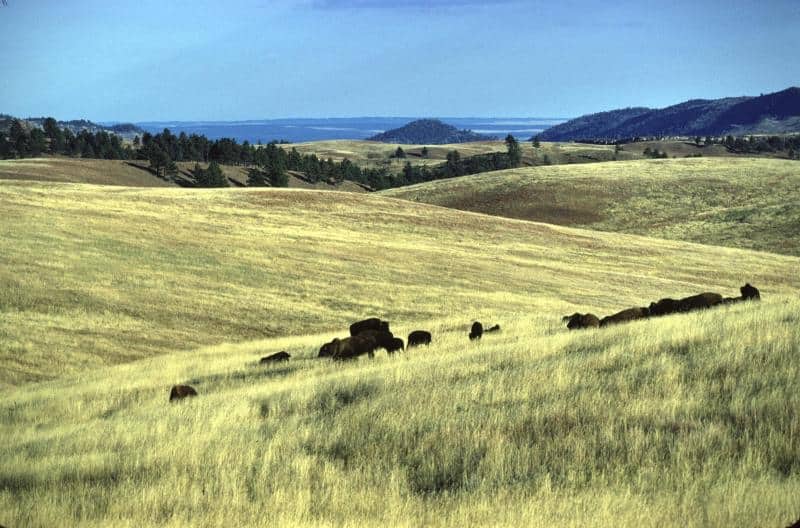
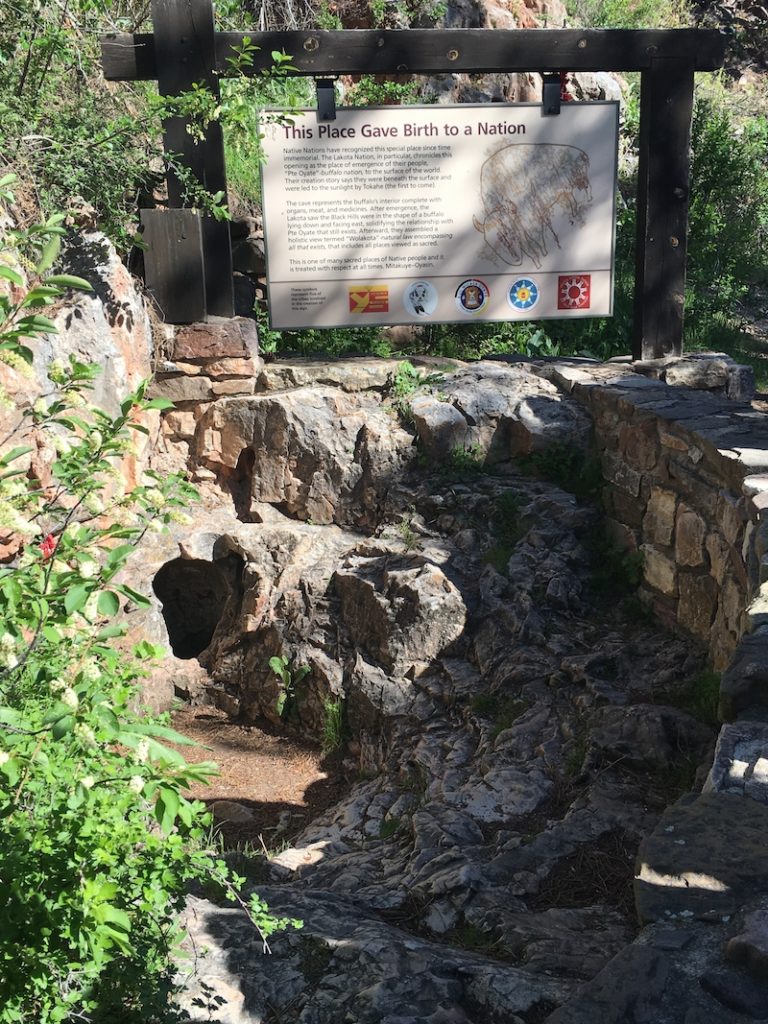
Explore the native grassland prairies at Wind Cave National Park. It’s the largest protected area in the U.S. With herds of bison, pronghorn and prairie dog towns, my kids love driving through the park. Take Highway 87 as an alternative route to or from Custer, South Dakota, for a scenic drive.
Wind Cave Geology Driving Tour—A 20-mile (32 km) scenic drive with pullouts to learn about the area’s geology.
Hiking in Wind Cave
Find 30 miles of hiking through Wind Cave National Park.
Prairie Vista Trail—A 1.0-mile (1.6 km) pet-friendly round-trip loop trail.
Elk Mountain Campground Trail—A 1.0-mile (1.6 km) pet-friendly round-trip loop trail.
Rankin Ridge—A 1.0-mile (1.6 km) round-trip hike loop trail.
Wind Cave Canyon—A 1.8-mile ( 2.9 km) is a former gravel road.
Best Things to Do Custer State Park
Wildlife Viewing in Wind Cave National Park
You can find lots of animals within the park, though dawn and dusk are the best wildlife viewing times. The Park Rangers can also point out areas that offer the best chance to see wildlife.
Bison
Elk
Pronghorn
Prairie dogs
Black-footed ferret
Horseback riding is permitted in Wind Cave National Park. Permits can be picked up at the visitor center.
Ranger Programs
As a popular destination in South Dakota, seasonal ranger programs are offered during the summer season. Centered around the Elk Mountain Amphitheater, the selection changes, though. There is a Junor Ranger program along with evening Ranger programs.
Picnicking at Wind Cave
Find a Picnic Area close to the visitor center with seven tables, along with a couple of charcoal grills.
What to do at Devils Tower National Monument in Wyoming
Camping at Wind Cave National Park
Elk Mountain Campground
Year-round
Reservations Accepted
64 sites, RVs at 48 sites
Potable water (Summer only) with flush toilets (summer only) and vault toilets the rest of the year.
History of Wind Cave
The Bingham Brothers discovered it in 1881 when the wind blew off their hats. Due to its vastness, Wind Cave has its own air pressure system that tries to equal the air pressure on the surface.
In 1903, Theodore Roosevelt signed legislation creating Wind Cave National Park, the seventh national park in the National Park System and the first cave protected as a national park. In 1913, bison from the New York Zoological Gardens were sent to Wind Cave to reestablish bison in the region.
Civilian Conservation Corps
A group of young men arrived at Wind Cave National Park in 1934. The Civilian Conservation Corps, part of President Roosevelt’s Works Progress Program, worked on conservation projects across the U.S.
During their tenure, the men of the CCC dug the 208-foot elevator shaft, constructed concrete stairs, and built a fence to contain the animals. They also added lighting to the cave and replaced the stairs at the natural entrance.
Where’s Wind Cave National Park
Wind Cave National Park is located 58 miles south of Rapid City, South Dakota, and has a regional airport with commercial flights. The park is 10 miles north of Hot Springs, South Dakota, along U.S. Highway 385 N. It’s free to enter, though cave tours require tickets. The park is open every day, all day.
Family Guide to the Black Hills of South Dakota
What to Do at Jewel Cave
As the third-longest cave in the world, it features 210 miles of mapped passages. Local prospectors discovered Jewel Cave in 1900 after blasting dynamite to enlarge the entrance and discovered a cavern covered with calcite crystals. It is a calcite-covered cave, so it sparkles.
Head to the visitor center
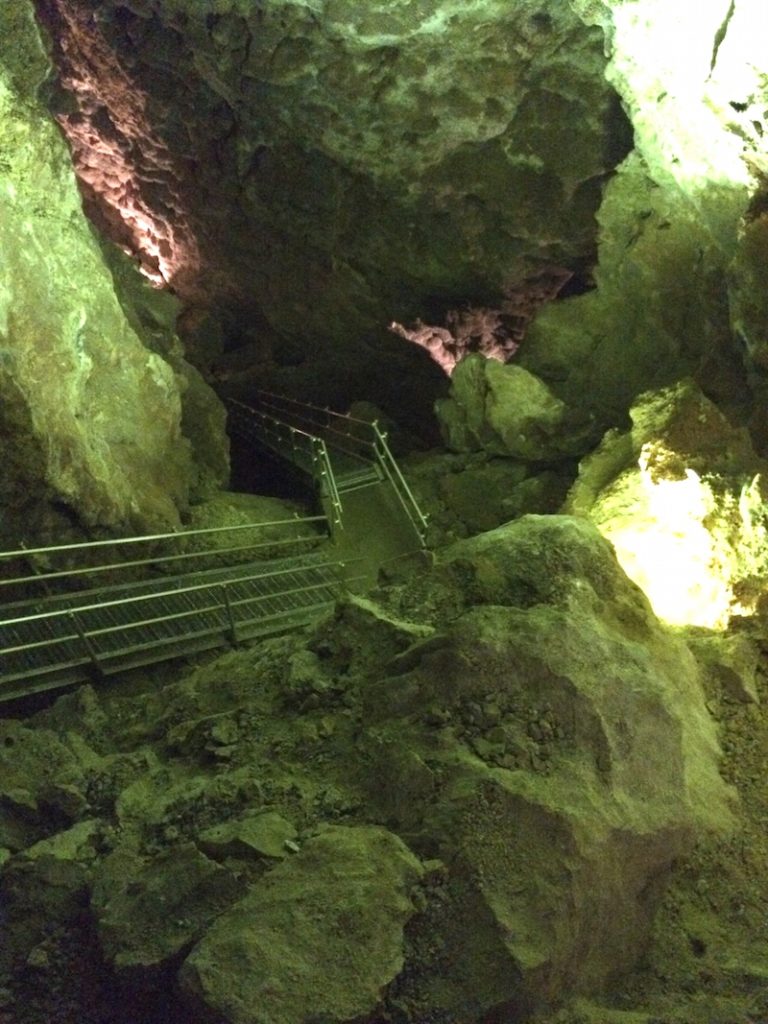
Take a cave tour.
Hike above ground at Jewel Cave.
Become a Junior Ranger
See Wildlife

Jewel Cave Visitor Center
All cave tours depart from the Jewel Cave Visitor Center, where you can purchase tour tickets, grab maps, and pick up Junior Ranger booklets. You can also find an interpretive area.
Open daily from 8 a.m. to 5 p.m. late April to late September. Open from 8:30 a.m. to 4:30 p.m. for the rest of the year. Restrooms are located in the visitor center, and none are located in the cave itself.
Cave Tours at Jewel Cave National Monument
Jewel Cave National Monument offers two basic tours, the Scenic Tour and the Discovery Tour. Tickets are available in advance for cave tours via Recreation.gov.
The Scenic Tour
The Scenic Tour is the most popular and strenuous since visitors will have to navigate 732 steps up and down metal scaffolding. Since kids must navigate the stairs, it’s advised that they be at least six years old. Kids can’t be carried during the Scenic Tour.
The Discovery Talk
Get an introduction to Jewel Cave without navigating 700+ steps. just 15 steps. A park ranger explains the types of calcite that give Jewel Cave its name and how the cave was formed.
Historic Lantern Tour
Offered in the summer only, this tour uses lanterns, and it’s similar to a cave tour of the 1930s. This tour includes 600 steps.
Wild Caving Tour
Offered in the summer only, this tour lasts 3 to 4 hours. Participants must to 16-years-old and navigate small spaces.
We didn’t make it to the Jewel Cave Visitor Center in time to get tickets for the Scenic Tour and took the Discovery Tour instead. Book in advance for summer travel.
The Scenic Tour and Lantern Tour are $16 for adults ( 16+), kids 6 to 15 are $8, and kids under 5 are $1. The Discovery Tours are $6 for adults 16 and older, kids 6 to 15 are $3, and kids under 5 are $1. The Wild Cave Tour is $45 per person (16 and older only).
Hiking at Jewel Cave National Monument
Find three self-guided hiking trails.
A Walk on the Roof Trail—A .25-mile (.4 km) round-trip trail at the Visitor Center.
Canyons Trail—A 3.5-mile (5.6 km) loop trail from the Visitor Center through Lithograph Canyon and the Historic Area.
Hell Canyon Trail—A 5.5-mile (8.8 km) trail traversing Hell Canyon.
Kids and Pets at Wind Cave and Jewel Cave
Traveling with your kids or pets is part of the fun. The Black Hills make a great trip with lots of activities and things to see.There are special activities for kids. As for pets, they are welcome at the picnic areas and parking lots.
Junior Ranger Program
The Junior Ranger Program is the go-to program for families to learn more about National Parks. It’s free and takes about two hours to complete. My kids love the badges that the park rangers present them with after they complete their booklets.
Earn a Junior Ranger Badge at both Wind Cave National Park and Jewel Cave National Monument. Cave tours aren’t required to earn a Junior Ranger Badge, but kids need to attend a ranger program.
BARK Program
Wind Cave National Park and Jewel Cave National Monument welcome pets as long as they practice the principles of the BARK program. Pets are not allowed on cave tours.
B–Bag waste and dispose of it in the trash
A–Always leash your dog for their safety and others
R–Respect wildlife
K–Know where you can go
Guide to Junior Ranger Badges You Can Earn at Home
Historic Area of Jewel Cave
See a cabin built by the Civilian Conservation Corps (CCC) in 1935. It was used as the first park headquarters. The Historic Entrance is down a stone-step path.
Also, find picnic tables at the Historic Area. Open in the summer only.
Wildflowers at Jewel Cave National Monument
Find any number of the 393 plant species. The Visitor Center, Historic Area and along the trails are the best places to see wildflowers from late Spring until Fall.
Animals of Jewel Cave
Explore the topside of Jewel Cave and look for animals. Dawn and dusk are the best times for animal viewing.
Bats—Nine different species
Big horn sheep
Mule deer
Elk
Mountain lion
Coyote
Bobcat
Gray fox
Long-tailed weasel
Where to Eat at Jewel Cave
Jewel Cave National Monument doesn’t feature a lodge with dining and lodging. This monument is a day-use park only. Find two picnic areas at Jewel Cave—one near the visitor center and the other at the historic area.
History of Jewel Cave
Local prospectors discovered Jewel Cave in 1900 after blasting dynamite to enlarge the entrance and discovered a cavern covered with calcite crystals. Proclaimed a national monument in 1908, the cave is the third largest mapped cave in the world.
The Civilian Conservation Corps (CCC) arrived in 1935. They built a three-room cabin and trails with steps for the cave entrance.
Where’s Jewel Cave National Monument
Jewel Cave National Monument is 53 miles southwest of Rapid City, South Dakota, and 13 miles west of Custer, South Dakota, along South Dakota Highway 16.
Jewel Cave Visitor Center is open every day from 8:30 a.m. to 4:30 p.m. from mid-March to the end of November and is closed on Thanksgiving Day, December 25. Admission is free to the park, and it is only charged for cave tours.
Jewel Cave National Monument is open from 8 a.m. to 5 p.m. from Memorial Day until Labor Day with reduced hours during the rest of the year. It is a day-use-only NPS site.
Guide to NPS Passes
Bats and White-Nose Syndrome
If you plan on visiting either cave in South Dakota, you can not wear any clothing, including shoes, that have been in another cave due to White-Nose Syndrome. A ranger will stop all cave visitors at both locations and ask.
White-nose syndrome kills hibernating bat colonies across the U.S. and Canada. This fungus thrives in low temperatures and high humidity and has killed 6 million bats since its discovery in 2006.
Know Before You Go
Don’t try to visit both caves on the same day in the summer, tickets sell out for the day’s tours in the morning.
Tickets are sold first-come, first-serve.
Take a jacket for the cave tours, the average temperature in both caves is around 50F.
Backpacks and purses are prohibited on cave tours, leave them in your car.
Strollers are prohibited in Wind Cave and Jewel Cave.
Walkways are dimly lit and can be slippery; wear appropriate shoes.

Comments are closed.