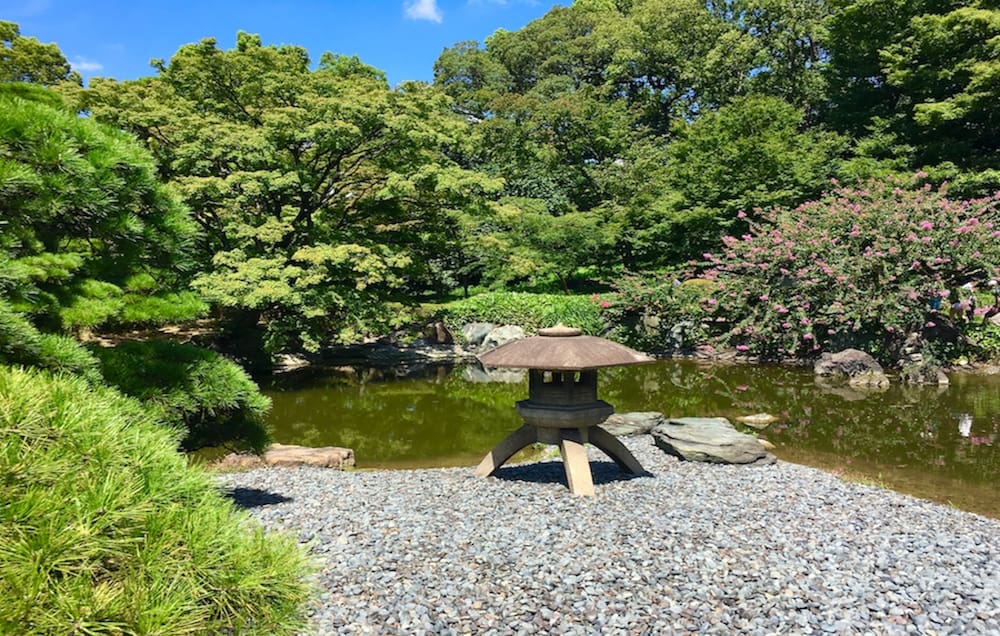
Mixing ultramodern and traditional, Tokyo blends the energy of New York City with the refinement of Paris. Planning a trip for a first-time visitor can be intimidating, especially if it’s their first trip to Asia. By combining traditional Japanese sights, the arts of Tokyo, and pop culture musts, this 3-day itinerary takes travelers to the BEST things to do in Tokyo.
Arriving in Tokyo
Since most flights from North America arrive in the afternoon or evening, gather your checked luggage and head downstairs at Narita International Airport. Pick up your Japan Rail Pass or arrange for luggage delivery if your bags are large.
Board a Japan Rail Express Train to the Tokyo Terminal or Shibuya Station for the most economical way into downtown Tokyo. Take the Tokyo Metro line to get to your hotel. After arriving, explore around its neighborhood and grab some dinner. Rest up for the 3-day Tokyo itinerary starts early and explores all day.
BEST Things to Do in Tokyo
Shibuya Station
Hachiko Statue
Myth of Tomorrow Mural
Shibuya Crossing
Shibuya Center-gai
Omote-Sando
Meiji-Jingu
Shinjuku
Robot Restaurant
Tsukiji Outer Market
Hama-rikyu Onshi-teien
Imperial Palace
National Museum of Modern Art
After 5 Food Tour by Urban Adventures
Senso-ji
Ueno-koen
National Museum of Western Art
Tokyo National Museum
Tokyo Sky Tree Observation Deck
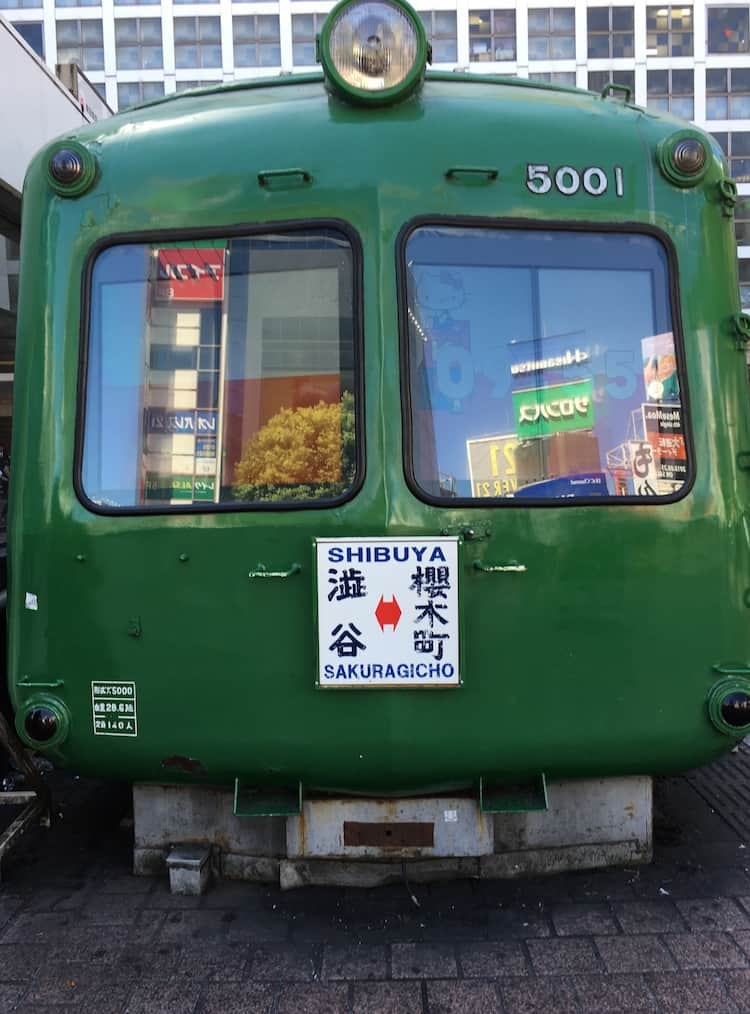
Day 1 Tokyo Pop Culture Day
Spend the first day in Tokyo getting acquainted with Tokyo’s pop culture. Board the Ginza Line (orange line) to Shibuya Station, the hub of shopping and entertainment.
Shibuya Station
Most travelers will travel through Shibuya Station several times during their visits. It is also the gateway to the Shibuya district, a hub for shopping and entertainment.
Located at the intersection of the Hanzomon, Fukutoshin and Ginza Lines. Open from 5 a.m. to past midnight when the last train departs.
Food Show
Head downstairs if you’re hungry to Food Show, a grocery store with a food hall attached. Find bento boxes, sushi, Japanese gyoza and lots of French pastries and breads.
Located at 2-24-1 in the basement of the Department Store and accessed by Shibuya Station. Open 10 a.m. to 9 p.m.
Head upstairs and outside for the following destinations.
Myth of Tomorrow Mural
The Myth og Tomorrow by Taro Okamoto depicts the Hiroshima bombing. The massive mural went missing in the 1960s and was later found in Mexico in the early 2000s.
Located on the second floor of Shibuya Station. Free to visit.
Dos and Don’ts for Visiting Shrines and Temples in Japan

Hachiko Statue
As a national symbol of loyalty, a dog named Akita walked to Shibuya Station every day to meet its owner, even years after its owner’s death.
Located at Hachiko Exit at Shibuya Station. Free to visit.
Shibuya Crossing
As the busiest intersection in Japan, just take a few moments and people-watch. Then take a time-lapse video at the corner of the intersection while the pedestrians cross in all directions.
During my visit, I saw the Mario Carts here.
Located right outside Shibuya Station. Free to visit.
Shibuya Center-gai (Shopping District)
Walk down the main pedestrian-only drag in Shibuya for a lesson in Japan’s pop culture. Find a mix of Japanese and North American shopping along with fast food dining. A must for teens and young adults, then pop into a Purikura Photo Booth for a strip of pics as a souvenir.
After exploring Shibuya and doing a bit of souvenir shopping, head back to Shibuya Station for the next destination. Take the Ginza Line (Orange) from Shibuya Station to Omete-Sando Station (G2).
Located at Udagawacho, near Shibuya Station. Free to enter.
Top 30 Japanese Snacks to Eat
Omote-Sando (Shopping District)
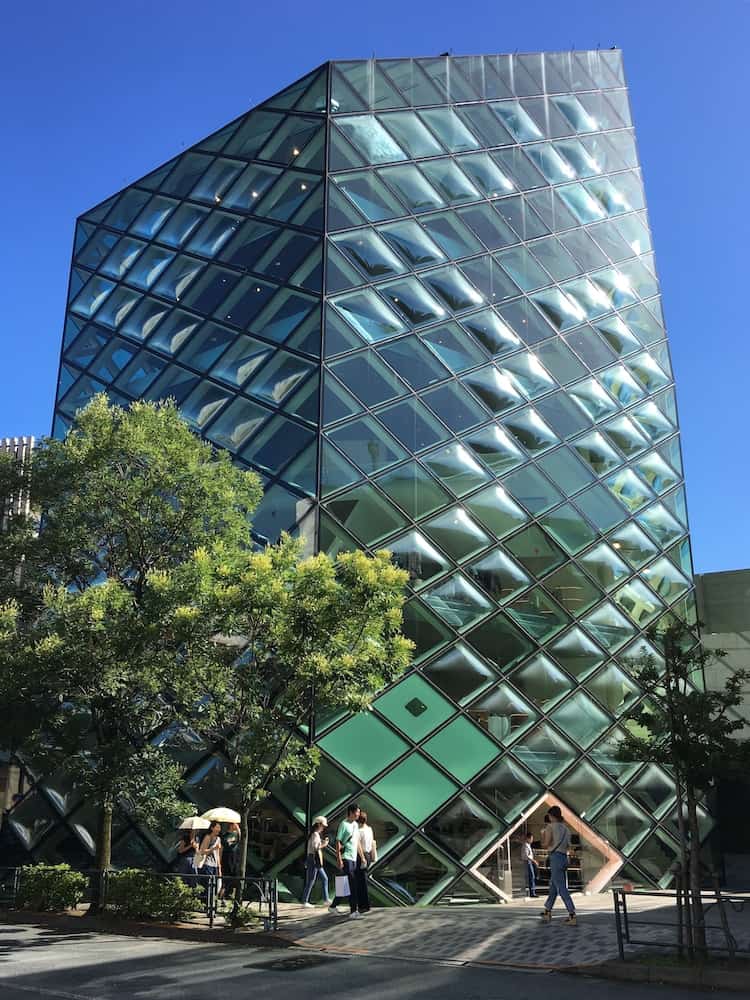
Where the Ginza area is for traditional luxury shopping, Omote-Sando offers edgier designers. See designers like Comme des Garçons, Stella McCartney and Prada. With its tree-lined streets, it’s often referred to as the Champs-Élysées of Tokyo.
As a bonus, the contemporary architecture is also tops in Omote-Sando. Walk west along Omote-Sando, ducking down Cat Street for window shopping towards the next destination
Exit Omote-Sando Station and walk in either direction for Omote-Sando.
Meiji-Jingu (Shinto Shrine)
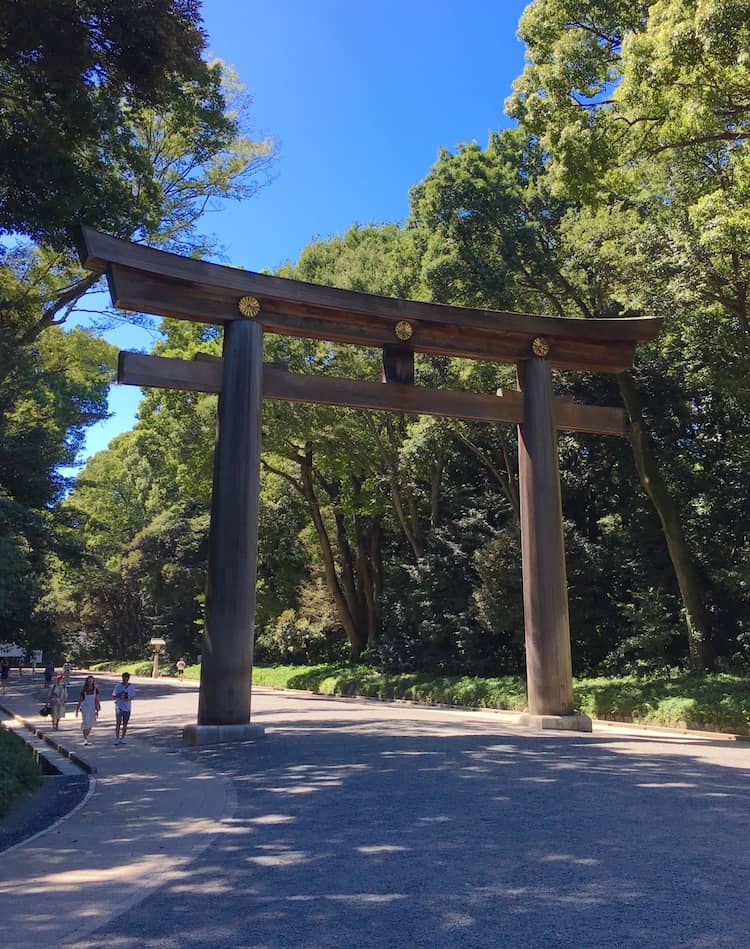
As Tokyo’s grandest Shinto Shrine, it’s a must. It offers a wooded escape from the buzz of Harajuku, along with a picturesque shrine that wedding parties use for portraits.
Emperor Meiji (1868-1912) designed the garden for his empress. Built in 1920, the original Shrine burned down during WWII and was later rebuilt.
To walk through the Shrine, rinse your hands and mouth at the font and pay respects. Amulets and wooden plaques are available for purchase.
Walk through the Meiji-Jingu Inner Garden for a teahouse, the iris garden, Kiyomasa’s Well and the azalea garden. An additional 500 yen admission fee.
Located at Yoyogi Kamizono-cho, Shibuya-ku. Open from dawn to dusk. The Meiji-Jingu is free to enter.
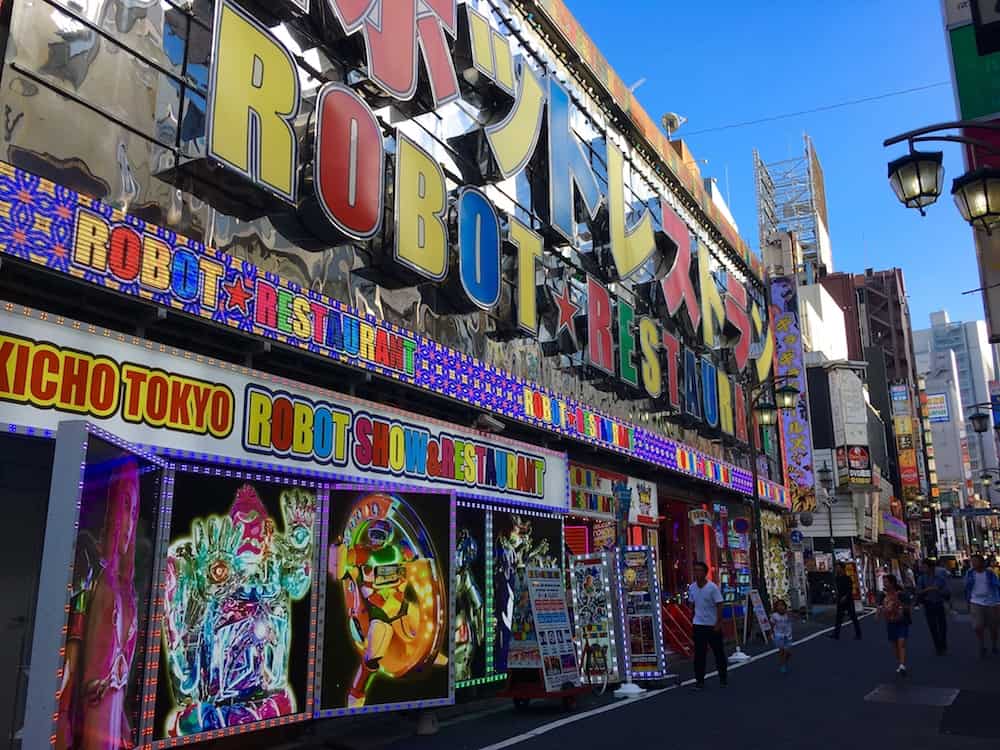
Shinjuku Neighborhood
After exploring Shibuya and Harajuku neighborhoods, head north for the evening. For the next destination, walk north out of Meiji-Jingu to the Kita-Sando Station (F14) and take the Fukutoshin Line (brown) to Shinjuku-Sanchome (F13). Then transfer to the Marunouchi Line (red) to Shinjuku Station (M8).
Walk around this entertainment district in the early evening for a taste of Tokyo nightlife. This is a great place to eat, from yakitori to ramen.

Day 2: Traditional Tokyo Day
Learn about Tokyo by sampling some Japanese food, walking through one of Tokyo’s best gardens and strolling through the Imperial Palace Gardens. Follow up by enjoying some contemporary Japanese art, located close by.
Arrive hungry for the first destination and have lots of Japanese yen on hand. Take the Marunouchi Line (Red) to Kasumigaseki Station (M15), then transfer to the Hibiya Line (Silver) to the Tsukiji stop (H10).
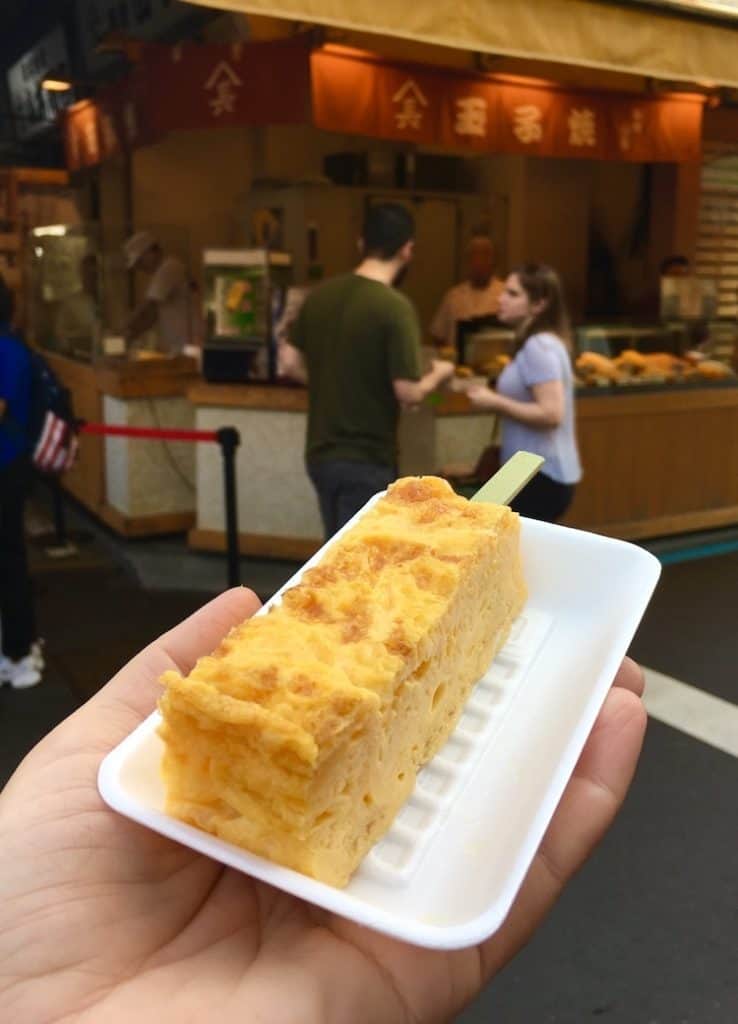
Tsukiji Outer Market–Food Market
I recommend you walk the pedestrian alleys lined with food stalls. Discover a diverse range of offerings, from Wagyu beef to mochi desserts, matcha ice cream, and a variety of spices.
If you didn’t eat breakfast at your hotel, then grab a Japanese egg omelette at Tsukiji Outer Market. I recommend bringing lots of Japanese Yen for sampling.
Located at 5-2-1 Tsukiji, Chuo-ku. Open 9 a.m. to 2 p.m. Monday to Saturday. Free to enter.
Put the next destination into your maps app and walk .7 miles.
Hama-rikyu Onshi-teien–Garden and Naajima no Ochaya–Teahouse
This is one of the best gardens in all of Tokyo. Hama-rikyu Onshi-teien features trees along with seasonal blooming gardens. See the tidal pond and the bridges that cross it. Don’t miss the 300-year-old pine tree.
The shogunate used this garden for duck hunting. The picturesque tea house is open for a cup of green tea or matcha.
Located at 1-1 Hama-rikyu teien, Chuo-ku. Open 9 a.m. to 5:00 p.m. Admission 300 yen for Adults, free for kids with the Tea service an additional charge.
For the next destination, take the Oedo (magenta) Line at Shiodome to Monsen-naacho Station (E15), transfer to the Tozai (Light blue) Line to Otemachi Station (T09).

Imperial Palace
Visitors cross the impressive moat surrounding the Imperial Palace. It’s the main residence of the emperor of Japan and covers 284 acres in the center of Tokyo.
Visitors can tour the Imperial Palace East Garden, a landscaped garden with lots of trees. Also, I recommend you walk through the Kokyo Higashi Gyoen to find a small waterfall and pond for a perfect picture backdrop.
Located at 1 Chiyoda, Chiyodao-ku. The Imperial Palace East Garden is open 9 a.m. to 5 p.m., but closed on Monday and Friday. Free to enter.
Exit through the Hirakawamon Gate of the Imperial Palace East and walk to the next destination.
National Museum of Modern Art—MOMAT
This is the home to the largest collection of modern Japanese art in Japan. The MOMAT is the first art museum in Japan and opened in 1952.
If limited on time, I recommend you head to the highlights gallery on the fourth floor for the best of Japanese modern and contemporary art. During the early 20th century, Japanese artists studied and worked in Paris.
If you have time, walk to the Crafts Gallery, its sister location. It displays kimonos, lacquerware and glassware.
Located close by at 1 Kitanomaru-koen. Additional admission.
Located at 3-1 Kitanomaru-koen, Chiyoda-ku, and within walking distance from the Imperial Palace (on the northern boundary). Open 10 a.m. to 5 p.m. Tuesday to Thursday and Sunday. Open 10 a.m. to 8 p.m. Friday and Saturday. Adult admission is 500 yen, 250 yen for college students and free for kids under 18.
Grab the Tokyo Metro’s Tozai Line (light blue) at the Takebashi Station (T08) to Otemachi Station (T09). Transfer to the Chiyoda Line (green) to Hibiya Station (C09) and walk to JR Yurakucho Station, connect to Hibiya Station for the next adventure.
After 5 Food Tour by Urban Adventures
The food in Tokyo is some of the most diverse in the world, so learn about its rich culinary heritage from a local. I recommend a guided food tour, like After 5 offered by Urban Adventures.
My English-speaking guide offered insights into Japanese dining customs. Our tour started with a favorite for locals after work, yakitori.
First stop, Yakitori Alley, where we sampled several bamboo-skewered meat and vegetable appetizers. Then we nibbled on mochi in Ginza before hopping on a Tokyo Metro for the final stop, Tsukishima, an island close to Tokyo.
We walked down the quieter streets for our next culinary treat, Monja-yaki. It’s a traditional pancake made with cabbage, mochi and pork on a griddle in the middle of our table.
We met outside JR Yurakucho Station. The tour went from 5 p.m. to at least 8 p.m. Admission was based on age, not for kids under 12. Reservations required.

Day 3: Tokyo Culture Day
Learn more about Japanese culture by exploring a temple and the best museums. Arrive early at the first destination and take the Ginza Line (orange) to the Asakusa Station (A18).
Senso-ji Temple
This is one of Tokyo’s most visited sights for the Japanese and travelers. Senso-ji is the temple for Kannon, the Buddhist Goddess of Mercy.
I recommend you arrive early and walk through the red Kaminari-mon Thunder Gate to appreciate the scale of the structure. Then take a moment to light some incense and pay your respects at the temple.
Afterward, see the Five-Story Pagoda that stands next to Senso-ji. Then, walk around the grounds for smaller structures and gardens with koi ponds. The walk up to the temple offers a souvenir and food arcade.
Located at 2-3-1 Asakusa, Taito-ku. Open 24 hours. Free to enter.
After visiting Senso-ji, head to the next destination for several museums. first, head back to the Asakusa Station (A18) for the Ginza Line (orange) to the Ueno Station (G16).
Ueno-koen in Ueno Neighborhood–A City park with Museums
Created in 1873 on lands formerly belonging to the temple of Kan’ei-ji, which was destroyed.. Ueno-koen is a large city park in the western style.
Ueno-koen offers lots of space to explore and is a great place for people watching. It is home to numerous museums, like the National Museum of Western Art, the Tokyo National Museum and the National Science Museum. Families will find the Ueno Zoo and a large pond.
This is one of the top places for Cherry Blossom viewing in the spring. They bloom in late March and early April, and many hold hanami parties in the park.
Located at Uenokoen, Taito-ku, across from Ueno Station. Open daily from dawn to dusk. Free to enter.
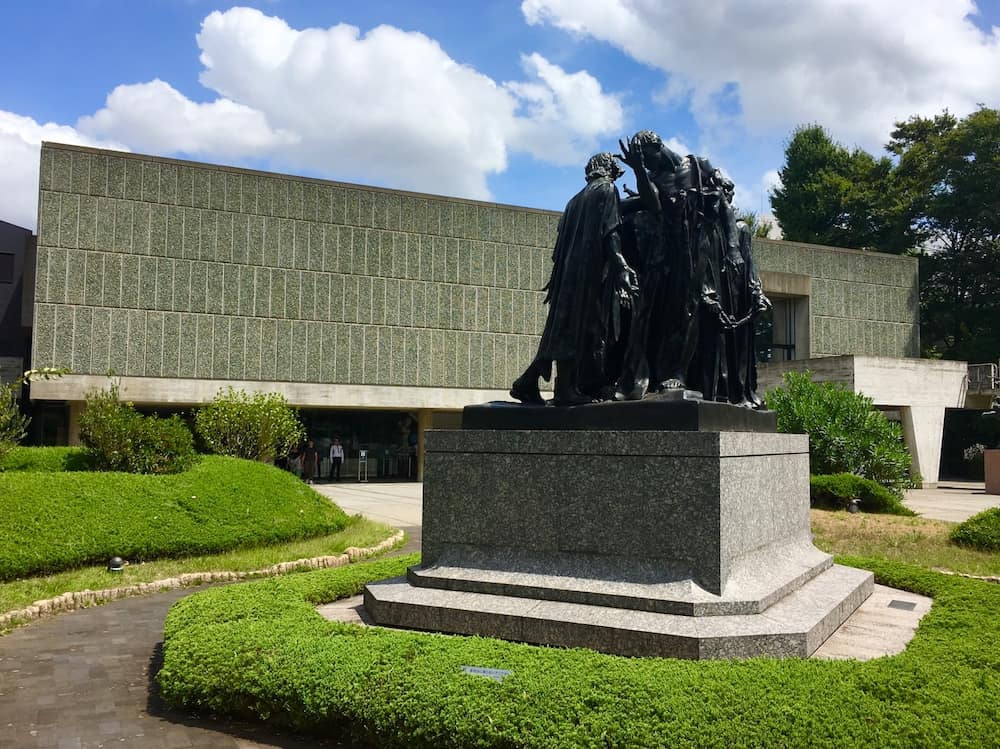
National Museum of Western Art
Designed by famed architect Le Corbusier, the modern building is part of a UNESCO World Heritage Site. The National Museum of Western Art displays Western art from the Renaissance through the Modern era.
During our visit, we saw an extensive collection of works by Roudin, Delacroix, and Monet. Along with masters Renoir, Van Gogh and Gauguin, this museum offers all the thrills of New York City museums.
For those pining for Western food, the café offers a French-inspired café with views of the garden.
Located at 7-7 Ueno-Koen. Open Tuesday to Thursday and Sunday from 9:30 a.m. to 5:30 p.m., Friday and Saturday from 9:30 a.m. to 8 p.m. (closed Monday). Adult admission is 500 yen, 250 yen for college students, free for kids and seniors.
Tokyo National Museum
The Tokyo National Museum offers the world’s largest collection of traditional Japanese Art, like wood prints and silk screens, samurai swords and kimonos. Focus on the Honkan Gallery and the Gallery of Horyu-ji Treasures for the labeled Japanese national treasures.
Located at 13-9 Ueno-Koen. Open Tuesday to Thursday and Sunday from 9:30 a.m. to 5:30 p.m., Friday and Saturday from 9:30 a.m. to 8 p.m. (Closed Monday). Adult admission is 1,000 yen, 500 yen for college students and free for kids and seniors.
After spending three full days exploring Tokyo, head up for a nighttime view over the largest city in the world. Take the Ginza line (orange) from the Ueno Station (G16) to the Asakusa Station (G19) and transfer to the Asakusa line (rose) to Oshiage Station.
Tokyo Skytree Observation Deck
Tokyo Skytree offers two different observation decks for views of the sprawling city. Along with observation decks, find restaurants and a glass tube connecting the different levels. On a clear day, visitors might see Mt. Fuji.
Located at 1-1-2 Oshiage, Sumida-ku. Open 10 a.m. to 10 p.m. Admission to the 350-meter deck is 2,100 yen for adults (18+), 1,400 yen for teens (12 to 17) and 850 yen for kids (6 to 11). A combo ticket for both the 350-meter and the 450-meter deck is 3,100 yen for adults, 2,150 yen for teens (12 to 17) and 1,300 yen for kids (6 to 11). More for weekends, holidays and same-day tickets.
Where to Stay in Tokyo
During our visit, we stayed at Tokyo’s Centurion Hotel Grand Akasaka.
Disclosure
Consideration for brands mentioned. This post contains affiliate links.

Comments are closed.