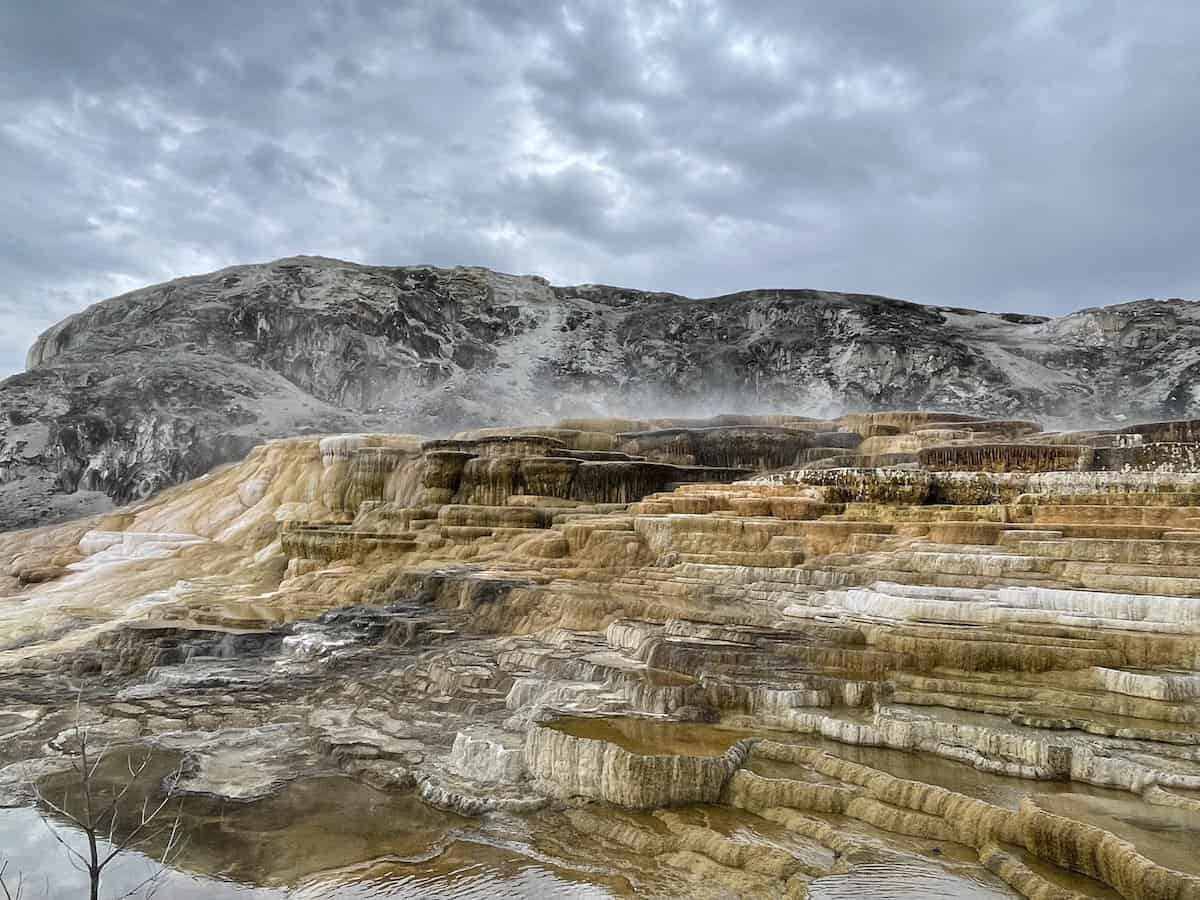
Located in the northwest corner of Yellowstone National Park, Mammoth Hot Springs is one of the more popular gateways into the park. Due to its lower elevation, this area is open year-round, and it is close to Bozeman, Montana. For visitors entering or leaving the park, Mammoth Hot Springs offers a convenient stopover. Its top features include travertine hot springs and Fort Yellowstone. Here are the top things to do at Mammoth Hot Springs.
13 Cool Things to Do at Mammoth Hot Springs in Yellowstone
-
Walk the boardwalks of Mammoth Hot Springs
-
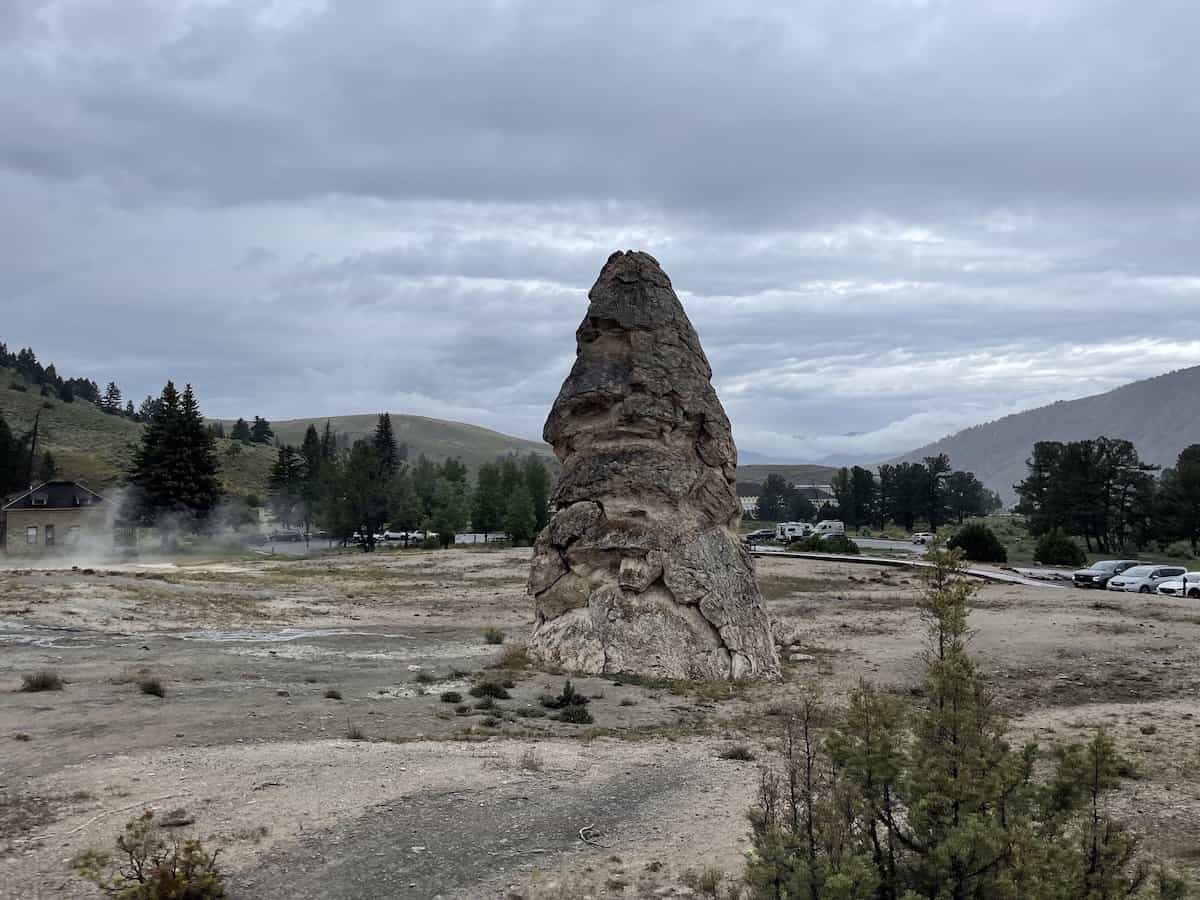
See Liberty Cap
-
Hike to Palette Spring
-
See Opal Terrace
-
Visit the Albright Visitor Center
-
Walk through Historic Fort Yellowstone
-
Walk through the Mammoth Hot Springs Hotel’s Map Room
-
Drive the scenic loop of the Upper Terraces
-
Spot Some Elk in Mammoth Hot Springs
-
Take A Wildlife Excursion
-
Enjoy Dinner at the Mammoth Hotel Dining Room
-
Spend the Night at Mammoth Hot Springs
-
Drive out to the Roosevelt Arch
Yellowstone at a Glance
| Year Established: 1872 |
| Located: Northwestern Wyoming, Idaho and Southern Montana |
| Size: about 3,471 square miles |
| Top Features: Geothermal Geysers, Wildlife Viewing and Historic National Park Lodges |
Tour the Mammoth Hot Springs Terraces
With the majority of the parking located in this area, the Mammoth Hot Springs Terraces is usually the first place travelers visit. After hiking through the terraces, walk to the Albright Visitor Center, Fort Yellowstone and the Mammoth Hot Springs Hotel.
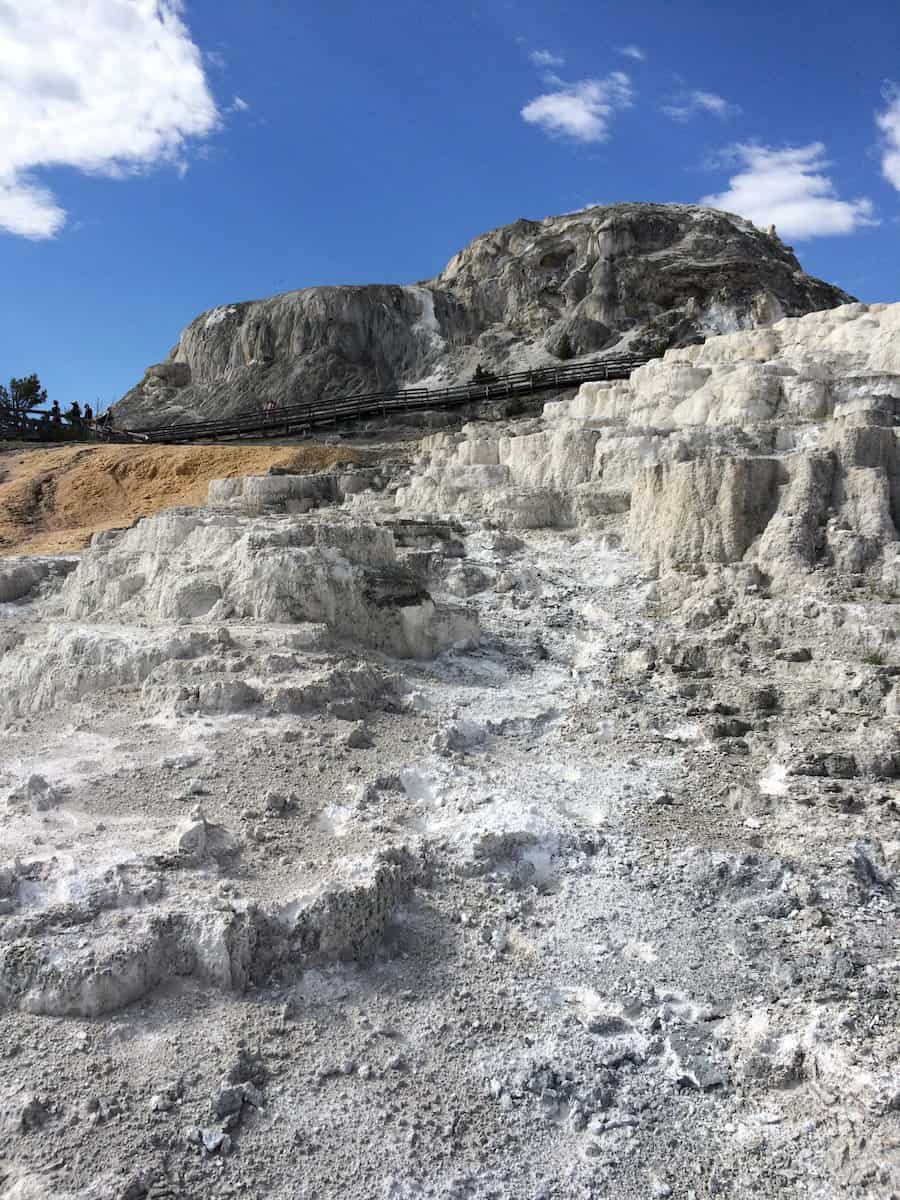
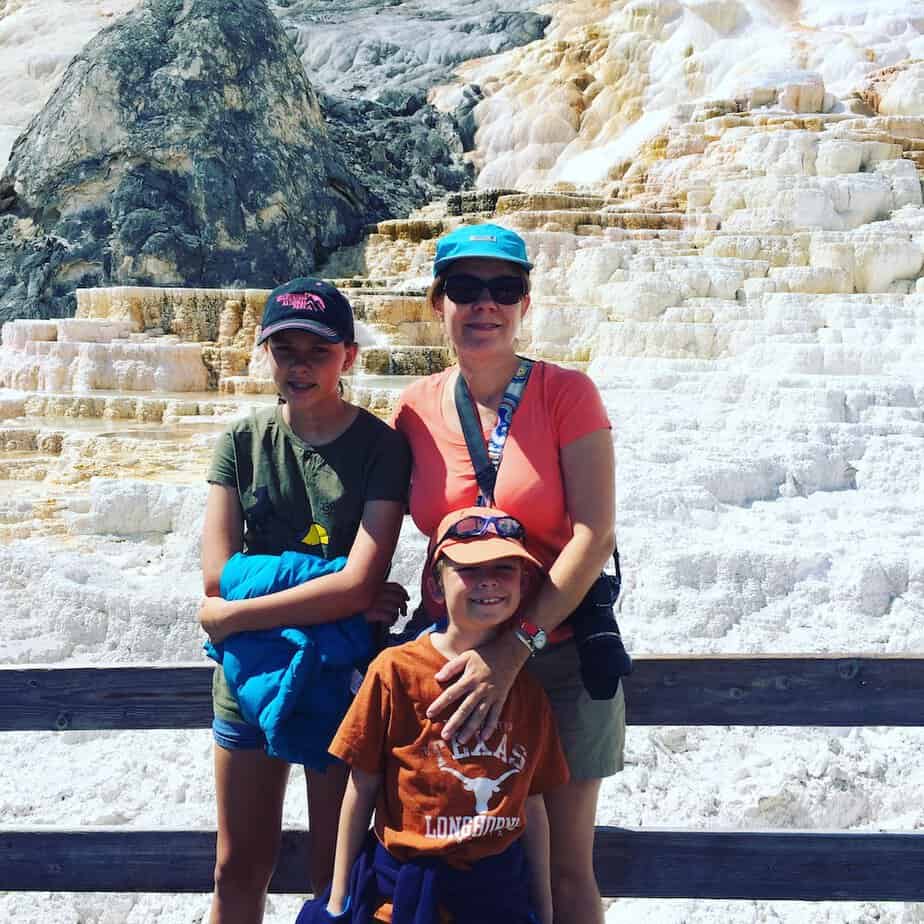
One of the top things to see at Mammoth Hot Springs is the most protected travertine-depositing hot springs in the world. With a series of boardwalks and overlooks, visitors can walk to the different levels of the terraced limestone.
Starting either at the top (accessible by car) or the bottom, visitors can hike the Mammoth Hot Spring Trail. Best of all, they can explore the entire terraced hot springs area.
The boardwalk features a series of stairs to see the limestone features and is divided into the Upper and Lower Terraces. There are three trailheads for the Lower Terrace and one trailhead for the Upper Terrace.
Mammoth Hot Springs is still creating travertine. Rainwater seeps into the ground’s fractures and is heated by a volcanic heat source. The hot water then bubbles back up to the surface at Mammoth Hot Springs, depositing travertine limestone.
Visitors must stay on boardwalks since the water is hot (over 160F). This area is part of Yellowstone’s geothermal areas. Visitors must practice Leave No Trace principles and refrain from throwing anything into Mammoth Hot Springs.
Most features are labeled at Mammoth Hot Springs, and there is a booklet for purchase at trailheads.
The Complete Guide to Yellowstone National Park
Top Features of Mammoth Hot Springs
-
Liberty Cap
-
Devils Thumb
-
Palette Spring and Terrace
-
Minerva Spring and Terrace
-
New Blue Spring
-
Highland Terrace
-
Canary Spring
Walk Through the Albright Visitor Center
This building, originally used as the 1909 bachelor officers’ quarters in Fort Yellowstone, underwent a complete renovation. Its interpretive area focuses on Yellowstone’s wildlife, and it was named after Horace Albright, the second Director of the National Park Service.
Park Rangers are available for questions and hand out maps and Junior Ranger booklets. Fishing permits are also available at the Albright Visitor Center. Visitors will find restrooms, water bottle fillers and a bookstore.
Located at Grand Loop Road and Parade Grounds Road. Open daily from 9 a.m. to 5 p.m. Free to enter.
Tour Old Fort Yellowstone
The Albright Visitor Center is located at the corner of Fort Yellowstone. This area is the park’s headquarters, and it is open year-round.
Back in the late 1800s and early 1900s, U.S. Army patrolled the park, securing it from poachers and rogue campgrounds. At first, the soldiers lived in temporary housing. Then in 1891, the U.S. Army constructed Fort Yellowstone. The U.S. Army was stationed at Yellowstone National Park for 32 years.
In total, 35 structures remain from the U.S. Army occupation. It is a National Historic Landmark District and the buildings still sport their red clay roofs.
For travelers interested in Fort Yellowstone, walk up Officers Row Road. Many of the buildings are in use and, therefore, stay on the street.
Top Things to See in Fort Yellowstone
-
Parade Ground
-
Batchelor Officers’ Quarter (Albright Visitor Center)
-
Captains’ Quarters
-
Double Officers’ Quarters
-
Double Calvary Barracks (Yellowstone Administration Building)
Walk Through the Lobby and Map Room of the Mammoth Hot Springs Hotel
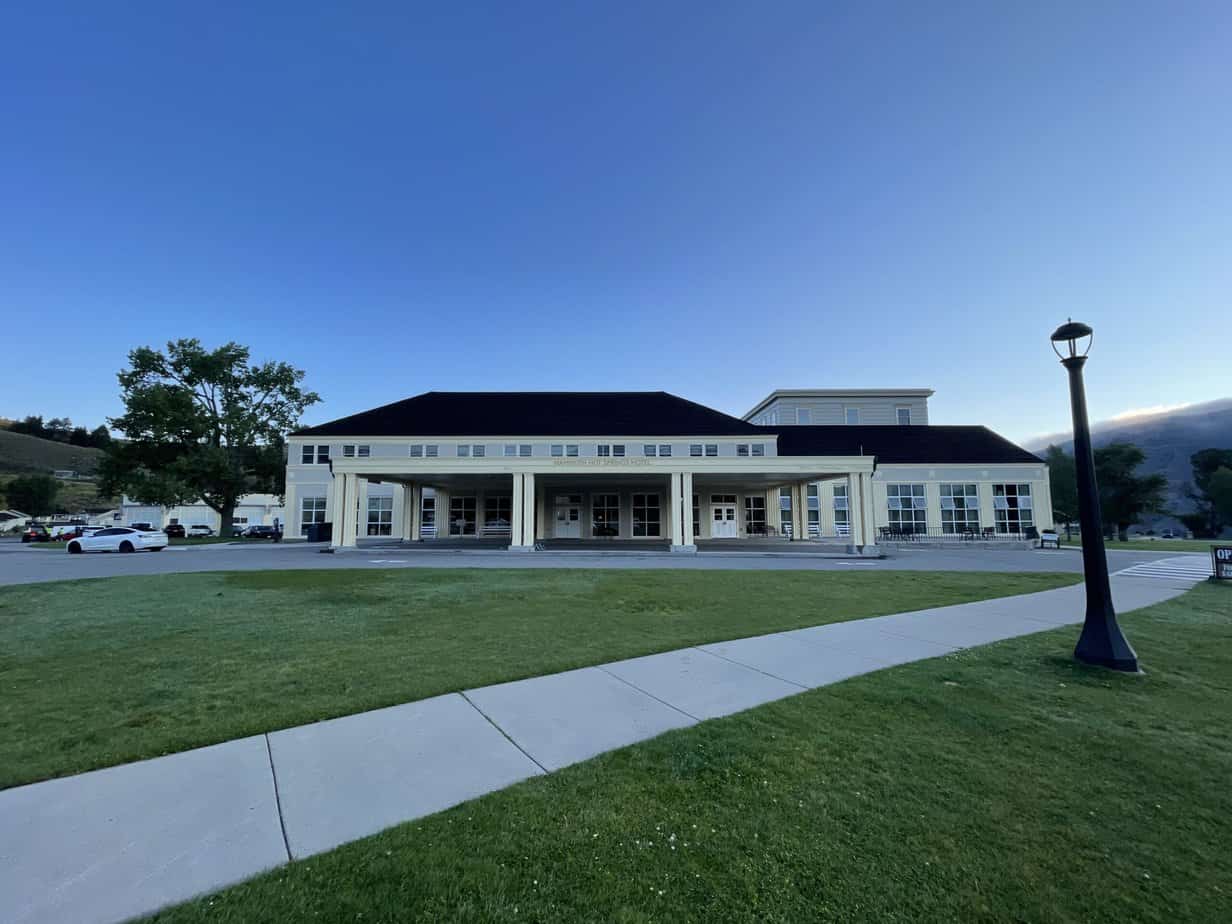
The majority of the Mammoth Hot Springs Hotel was built in 1936. However, one wing remains of guest rooms originally built in 1911. It underwent an extensive renovation, and its Lobby and Map Room are gathering spaces for those in the Mammoth Hot Springs area.
The signature Map Room contains a large wooden map of the United States, constructed of 15 different kinds of wood from nine countries. It is a focal point in the room, which also features a piano player and a lively bar in the evening. The room serves local beer and wine and is the best place to swap animal sitings.
Take a Hike in Mammoth Hot Springs
Opal Terrace
It is located in the backyard of a historic 1908 house designed by Robert Reamer, across the street from Mammoth Hot Springs Terrace.
Palette Spring
An add-on to the Mammoth Hot Springs Trail, it’s a .3-mile in-and-out trail with a 29-foot elevation gain. Find the trailhead along Grand Loop Road and its parking lots, and it’s the same area as the trailhead for Beaver Ponds Loop.
Mammoth Terraces
If you hike the entire Mammoth Terraces Loop, it’s a 2.2-mile boardwalk with a 324-foot elevation gain via stairs. It offers several trailheads along Grand Loop Road in the Mammoth Hot Springs Road.
Beaver Ponds Loop
It’s a moderate 5.5-mile loop with a 764-foot elevation gain. Find the trailhead at Grand Loop Road and its parking lots, near Palette Spring Trailhead.
Bunsen Peak
This is a moderate peak hike, closest to Mammoth Hot Springs. It is named after the inventor of the Bunsen Burner, who studied geysers as well. It’s a 4.4-mile in-and-out trail with a 1,282-foot elevation gain.
Top Things to Do at Old Faithful
Scenic Drives at Mammoth Hot Springs
Upper Terrace Drive
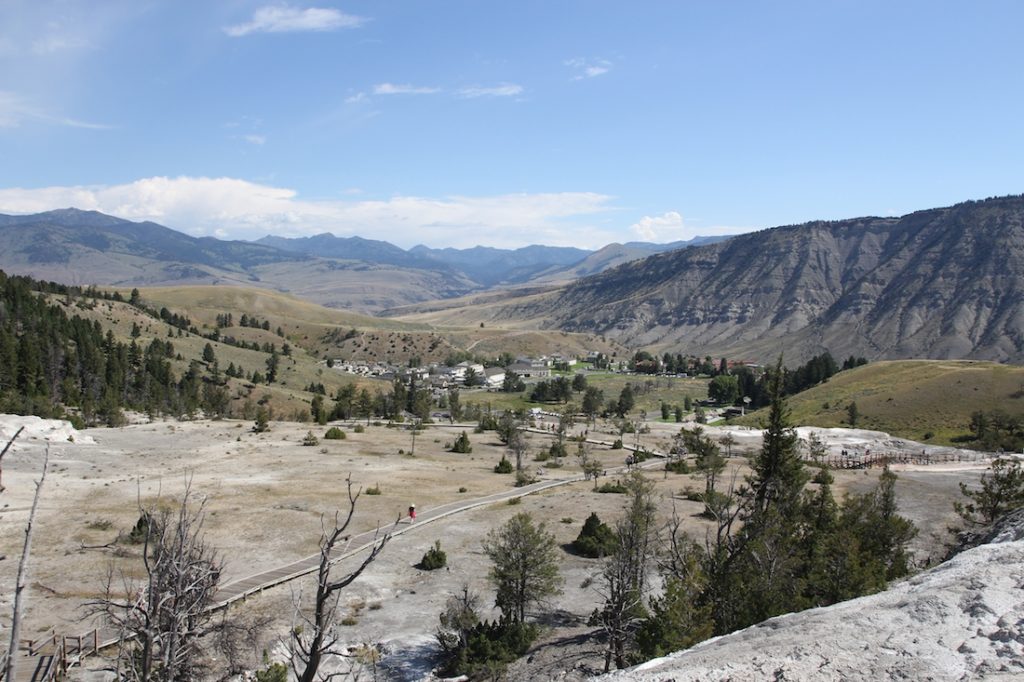
This 1.5-mile one-way drive winds through the upper terrace’s features. It is a great alternative to hiking the boardwalks at Mammoth Hot Springs.
Mammoth to Roosevelt
The upper part of the Grand Loop Road is 18 miles long between Mammoth and Tower-Roosevelt Junction. It offers wildlife, and this area is called the Blacktail Deer Plateau. Pull-outs like Undine Falls, Petrified Tree and Phantom Lake.
Best Things to Do at Yellowstone Lake
Wildlife in Mammoth Hot Springs
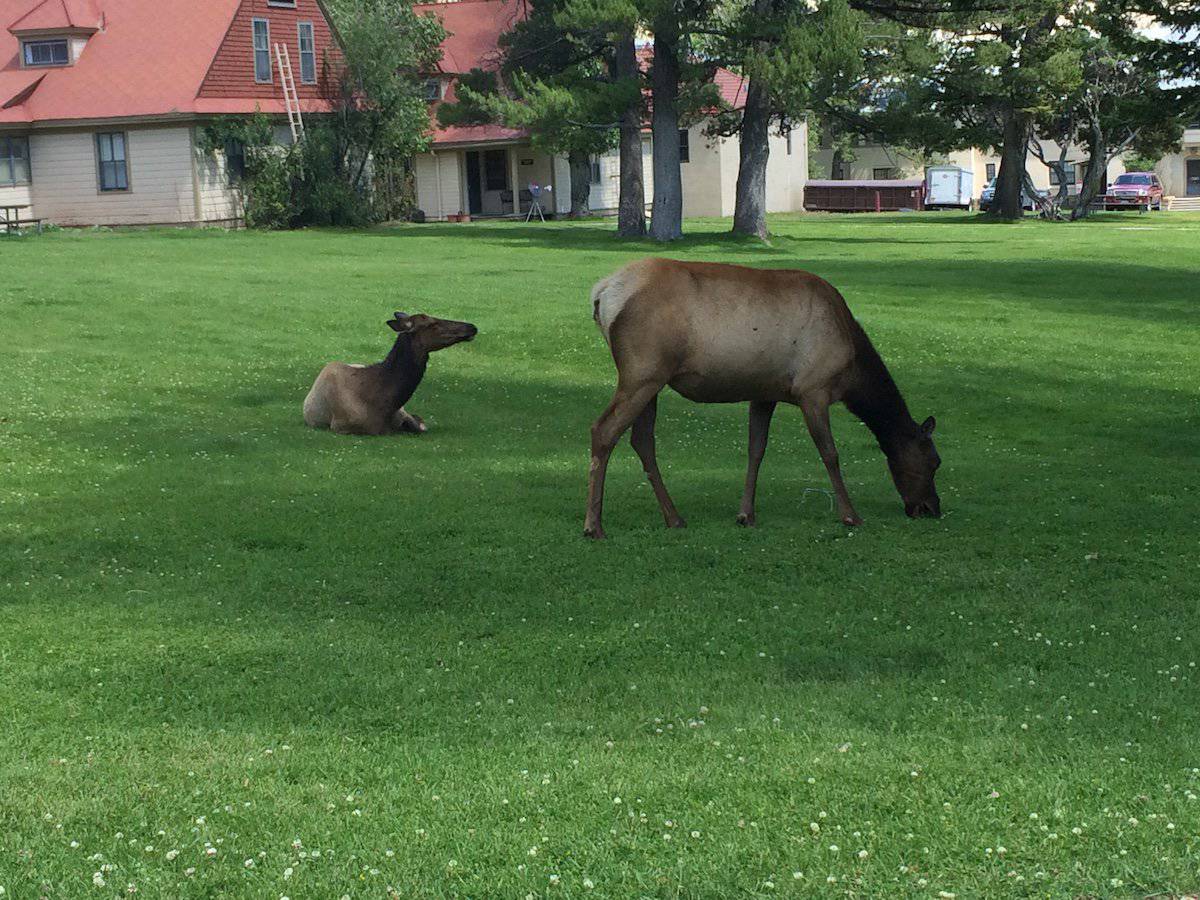
Who doesn’t love a luxurious grass lawn? Since the National Park Service considers the grass an historic lawn, it is irrigated.
The park’s elk munch its grass frequently. It is not uncommon to see Park Ranger driving traffic to prevent encounters. When not wandering the streets of Fort Yellowstone, the elk retreat to the bluffs above the Mammoth Hot Springs.
On every trip, I have seen or heard the elk bulge at Mammoth, so keep a lookout. However, visitors should remember to stay at least 25 feet away from elk.
Wildlife in Yellowstone National Park
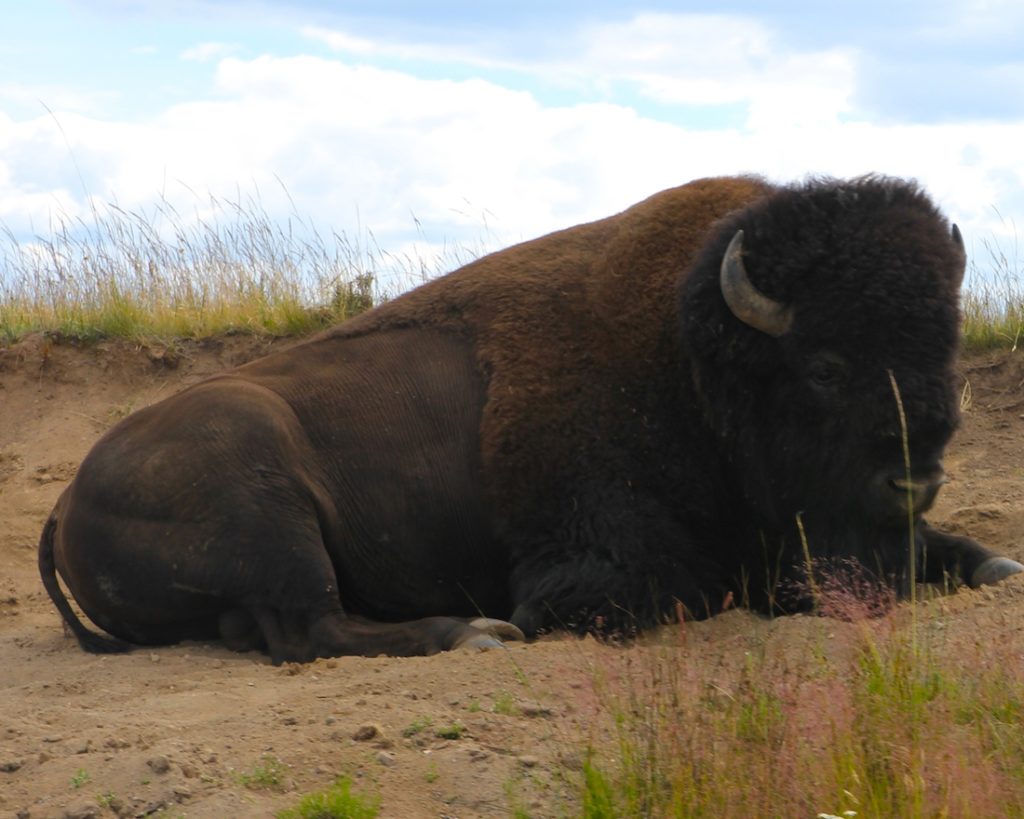
I recommend Hayden Valley or Lamar Valley, along the river, for the best wildlife spotting. The best times to spot animals are at dawn and dusk when they are most active. Check-in with the Park Rangers, who know where animals frequent, or take a guided tour.
- Bison
- Moose
- Elk
- Grizzly Bear
- Black Bear
- Wolf
- Bighorn Sheep
- Mule Deer
- Coyote
- Pronghorn
- Pika
- Marmot
Note:
- Stay at least 25 feet away from elk.
Top Things to Do at Grand Teton National Park
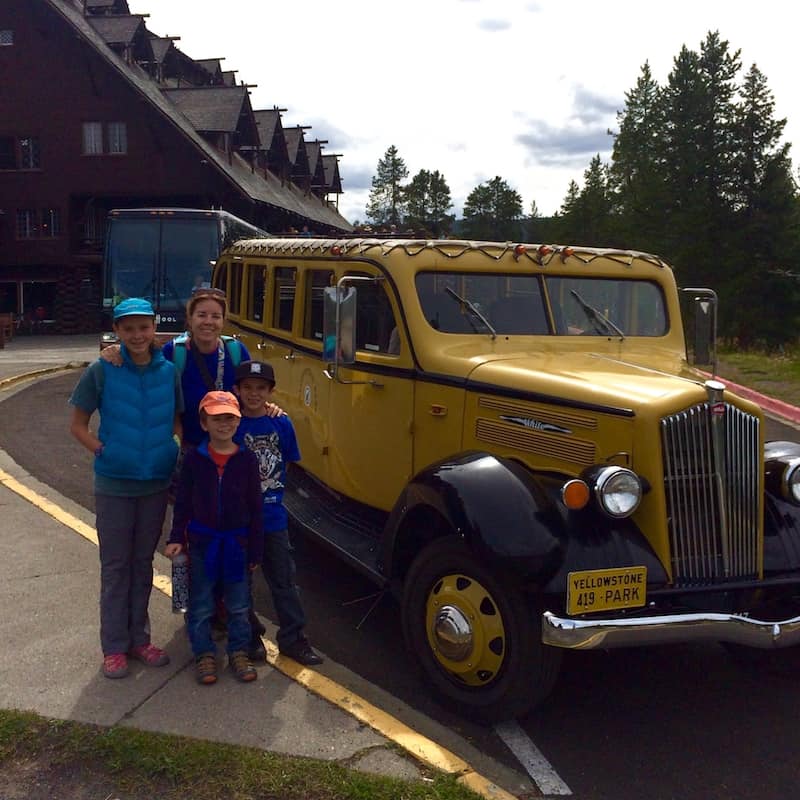
Take a Wildlife Excursion
For the best wildlife spotting, a guided excursion is the way to go. Yellowstone’s North Range is the place to go. The guided tour is 4 hours long and departs in the afternoon from Mammoth Hot Springs Hotel, heading to the Tower-Roosevelt Area.
Tours are offered daily from mid-May until early October. Adults are $89 and kids (3 to 11) are $44.50. Reservations are required.
Junior Ranger Program
The Junior Ranger Program is the go-to program for families to learn more about a National Park Service site. It takes about two hours to complete. My kids love the badges that the Rangers present them after completing their booklet.
Kids love Yellowstone and kids love animals. So buy a Junior Ranger booklet at the nearest bookstore. In Yellowstone, the Junior Ranger booklets are $3 but kids who complete their booklets get a patch. So it’s one of the top things to do at Old Faithful with kids.
Yellowstone National Park divides the Junior Ranger booklet into three age categories, with age-appropriate activities. Kids 4 to 7, 8 to 12 and 13 and older each complete as many activities as their age.
Old Faithful Visitor Education Center also offers a Young Scientist Patch Program. Buy the $5 booklet at the visitor center’s gift shop. The visitor center also checks out a pack of equipment needed to conduct experiments. Best suited for students spending a couple of days in the Old Faithful Area to finish the program. This program is more in-depth than the Junior Ranger Booklet and will require more time. Though patches and keychains are rewarded to those who finish.
Try to turn in your Junior Ranger booklet at Yellowstone’s National Park Junior Ranger Station, located near the Madison on the west side of the park.
Guide to Junior Ranger Badges
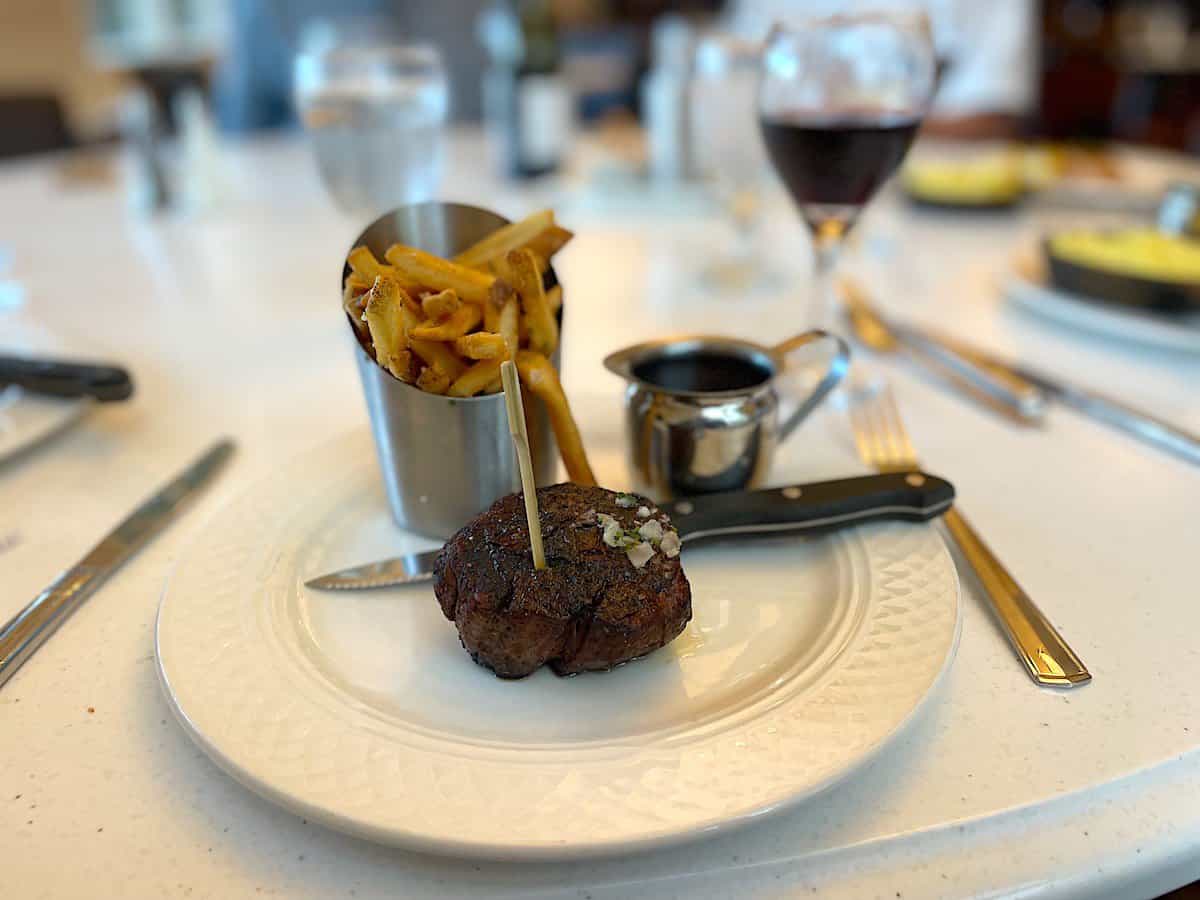
Enjoy Dinner at the Mammoth Hotel Dining Room
The Mammoth Hotel Dining Room features an Art Deco design and has been completely renovated. It feels a bit glam for a national park, but the dress is casual, and like the rest of Yellowstone National Park, hiking boots are welcome.
The Mammoth Hotel Dining Room menu features several entrees sourced within 500 miles of the park, including Montana Beef and local trout. During my meal, I sampled the Blistered Shishito Peppers and the Smoked Trout Dip. I followed that with the 6-ounce Petit Filet Mignon.
Other options include Colorado Lamb Rack, NY Strip, and a Pork Rib Chop. The menu also offers gluten-free, vegan, and vegetarian options.
The Mammoth Hotel Dining Room is open from mid-April to mid-October and from mid-December to early March for its winter season. It is open for breakfast, lunch, and dinner and features a kid’s menu.
Located at 305A Grand Loop Rd. Hours are seasonal. It is a free-standing building within walking distance of the Mammoth Hot Spring Hotel. Dinner is 4:30 to 10 p.m.
Mammoth Terrace Grill
The Terrace Grill offers efficient service for quick meals, to-go items, and fountain drinks. It also serves lunch and dinner items, like burgers, sandwiches, and salads. Ice cream is also available.
During my stay, I had a breakfast sandwich on a bagel with egg and cheese—a perfect start to my day of exploring.
Located at 305B Albright Ave., next to the Mammoth Hotel Dining Room. It is open daily from late April to mid-October from 6:30 a.m. to 9 p.m.
Other Places to Eat at Mammoth Hot Springs Area
The Mammoth Hot Springs Picnic area is located near Fort Yellowstone. It features nine tables.
Yellowstone General Stores sells packaged snacks along with ice cream at Mammoth General Store.
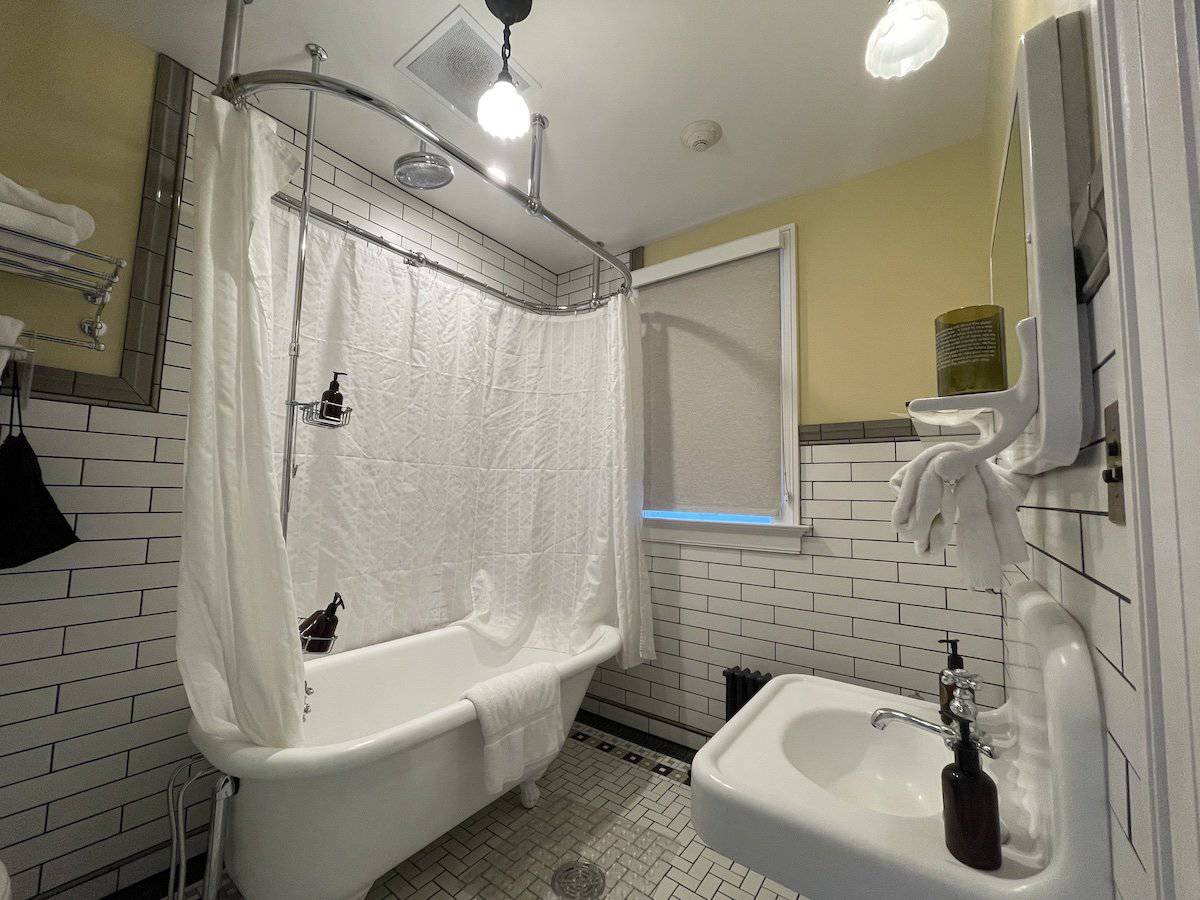
Spend the Night at Mammoth Hot Springs
Camping at Mammoth Hot Springs
Mammoth Campground—2024 Dates TBD
- Year-round
- Reservable in summer
- 85 sites
- Potable Water and Flush Toilets, No Showers
- RV Limit: 40 feet
The camping fee starts at $25 a night, reservable through Recreation.gov.
Indian Creek Campground
- Seasonal
- Reservable from early June until early September
- 70 sites
- Potable Water and Vault Toilets, No Showers
- RV Limit: 35 feet
The camping fee starts at $20 a night, reservable through Recreation.gov.
Mammoth Hot Springs Hotel & Cabins
The Mammoth Hot Springs hotel underwent a major renovation of the its gathering spaces and guest rooms. It is also open for winter visits in addition to the summer.
The Mammoth Hot Springs Hotel offers a variety of accommodations from historic rooms with original clawfoot tubs to Western Cabins behind the main hotel. In the main hotel, rooms feature a king bed or double queen beds.
The rooms are well appointed and feature mini-fridge, microwave, coffeemaker along with chair and reading lamp. None of the rooms at Mammoth Hot Springs Hot feature air-conditioning, a TV or radio. Pets are not allowed at this property.
The Mammoth Hot Srpings Hotel is within walking distance to the Mammoth Hot Springs Terrace, Mammoth Hot Springs Dining Room and Fort Yellowstone. There is even a chance to spot elk grazing outside the hotel.
Mammoth Hot Springs Cabins
The Hot Tub Cabins are available in the winter and offer an outdoor hot tub within an enclosed patio. Each cabin offers one queen bed along with heat and a bathroom with a shower only. It offers a front porch, a coffeemaker, a telephone, a hair-dryer, alarm clock and fan. No air-conditioning, TV or radio. Sorry, pets and cooking aren’t allowed.
The following are summer only cabins:
Frontier Cabin
With two queen beds, this cabin features heat and a bathroom with a shower only. It also offers a front porch, a hair-dryer, an alarm clock and a fan. No air-conditioning, TV or radio. Sorry, pets and cooking aren’t allowed.
Cabin Without a Bath
This cabin offers one queen bed and a sink though no toilet or shower. It features heat, alarm clock, hair dryer, and a fan. Sorry, pets and cooking aren’t allowed.
Two Room Cabins without a Bath
This cabin offers one queen bed and two full beds, so good for families and groups. It has a sink though no toilet or shower. It features heat, alarm clock, hair dryer, and a fan. Sorry, pets and cooking aren’t allowed.
A communal bathhouse with showers is located in the area.
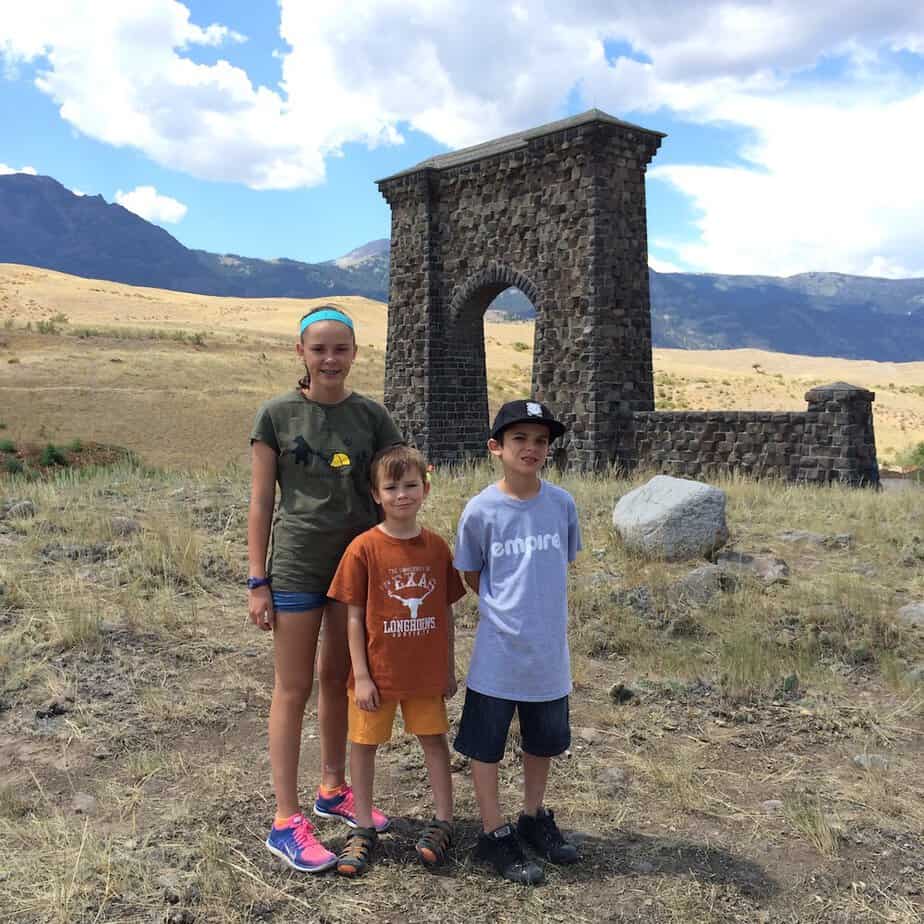
See the Roosevelt Arch at the North Entrance
At the North Entrance, the Roosevelt Arch is a popular photo opportunity. In 1903, President Theodore Roosevelt vacationed in Yellowstone National Park and laid the cornerstone of the arch.
Yellowstone National Park offers five entrances.
- West Entrance—For families trying to add Idaho to their state count, enter or exit through the west entrance.
- North Entrance—Closest entrance for Bozeman, Montana and features the Roosevelt Arch
- Northeast Entrance—Scenic highway to Billings, Montana
- East Entrance—Scenic highway to Cody, Wyoming
- South Entrance—The busiest entrance and gateway to Grand Teton National Park and Jackson, Wyoming.
History of Yellowstone National Park
On March 1, 1872 Yellowstone National Park became the first national park in the world. An idea that’s flourished across the world.
Approximately two million years ago, a super volcano erupted in Yellowstone forming a caldera, or basin. Find it at the center of Yellowstone National Park measuring 45 miles across, now home to the largest concentration of geysers in the world.
The railroad arrived to the northern edge of the park in 1883. Then the first roads started to bisect the park allowing visitors more access to the geothermal features and the animals. More people meant more building with Lake Yellowstone Hotel and Old Faithful Inn a few of the surviving early lodges.
It was on the western frontier so the U.S. Army built a fort to keep the law and chase away the poachers. See the old Fort Yellowstone at Mammoth Hot Springs.
Yellowstone is a UNESCO World Heritage Site, attractting visitors from around the world.
Guide to Montana’s Glacier National Park
If it’s Your First Visit
On my first visit to Yellowstone National Park, I made every newbie mistake.
- Didn’t make reservations.
- I camped in the same campground and didn’t move around the park.
- Didn’t research.
When the time came to plan another trip, I wanted to see more of the park. I planned a Grand Tour, much like the first visitors did over 100 years ago.
I started in one area and explored before relocating to another area. It worked out great, minimized the driving and maximized the enjoying.
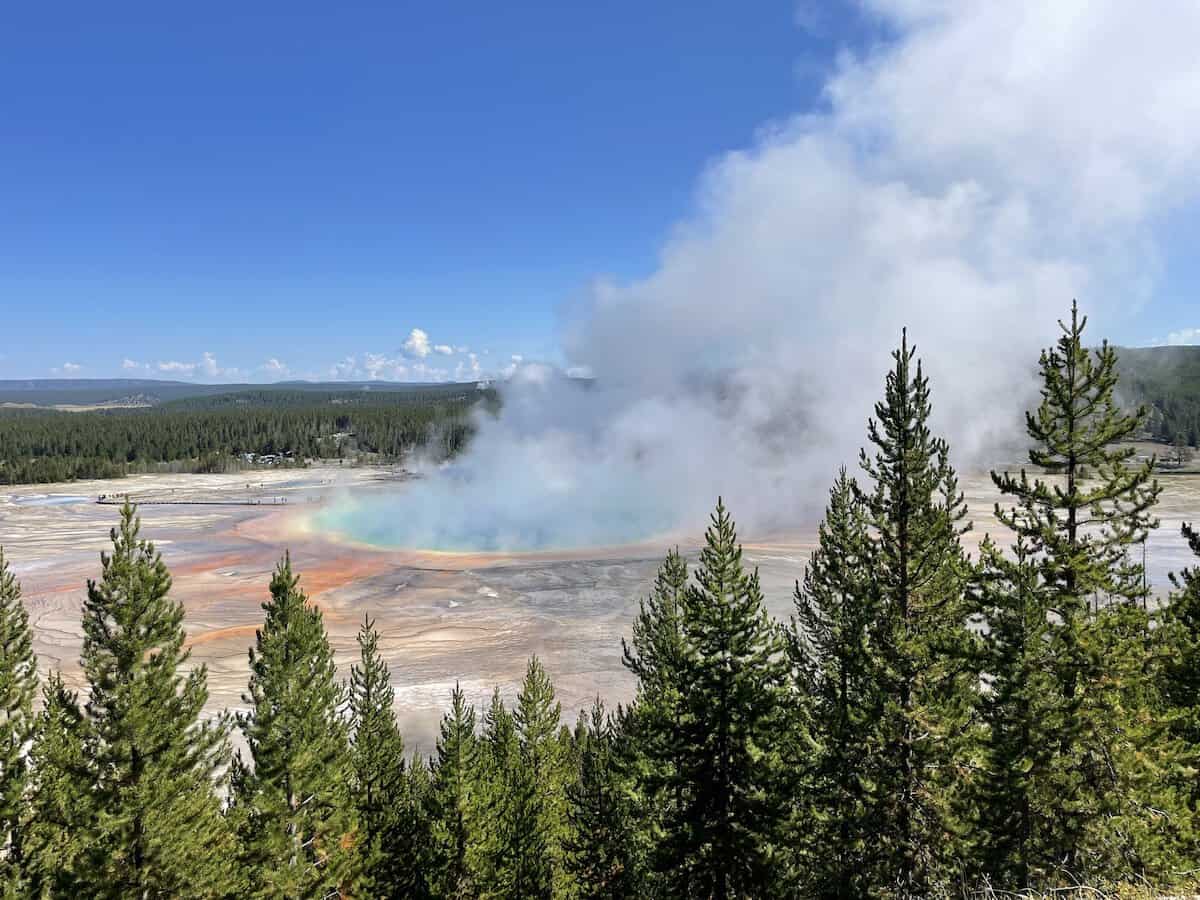
Top Places to Explore in Yellowstone National Park
Mammoth Hot Springs isn’t the only thing to see in Yellowstone National Park. Explore the other corners on the park for more family fun.
- Old Faithful Inn and Geyser
- Grand Canyon of Yellowstone
- Lake Yellowstone
- Lamar or Hayden Valley
To find out more information, attend a ranger program to learn more about bears in Yellowstone National Park. I did and it’s a great way to learn more about bears. My boys loved the bear programs and I felt more confident afterwards.
Best Books for National Park Lovers
Where’s Yellowstone National Park
It’s 320 miles northeast of Salt Lake City. Unless you arrange a tour you will need a car to explore.
Three airports serve Yellowstone National Park.
- Bozeman Yellowstone International Airport (BZN)—Bozeman, Montana, offers everything you need to outfit your family for a national park adventure, from food to equipment.
- Jackson Hole Airport (JAC)—The busiest airport in Wyoming is a regional airport. Jackson is a quaint town with an Old West flavor.
- Yellowstone Regional Airport (COD) in Cody Wyoming is a regional airport, located east of Yellowstone.
Yellowstone National Park offers cafes, general stores and restaurants. However, be prepared to picnic for lunch and grab some snacks and sandwich ingredients in Bozeman or Jackson.
Getting Around Yellowstone
Yellowstone National Park is open 365 days a year and 24 hours a day. Use an America the Beautiful annual pass ($80) or purchase a 7-day pass for $35 per vehicle.
Seasonal closures affect Yellowstone National Park. July and August are the only months that all roads and facilities are open.
Guide to National Park Passes
Know Before You Go
- Stay on the paths and boardwalks in Yellowstone’s geothermal areas.
- Check in at the Ranger Station to see the approximately geyser eruption times for Old Faithful, Castle and Grand geysers.
- Kids might be sensitive to sulfuric acid smell.
- The Junior Ranger Booklet includes animal spotting activities.


Comments are closed.