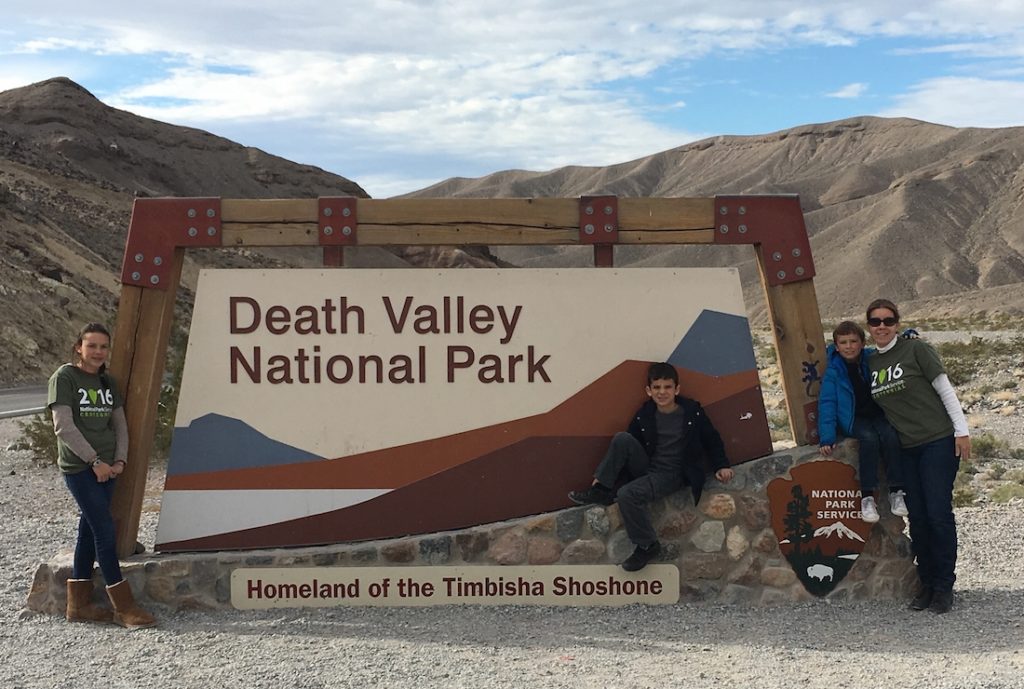
Death Valley National Park is more pleasant than the name implies, and due to its unforgettable name, it became famous in movies,. This Southern California park is a warm winter escape that offers hiking, biking, scenic drives and even a golf course and a pair of pools. Most visitors know it as the hottest place in the U.S.; however, it is also home to the lowest elevation in the U.S. Here are the top things to do in Death Valley National Park.
Top 9 Things to Do in Death Valley National Park
Stop by the Visitor Center
Take a Scenic Drive
Hike in Death Valley
Bike along a Trail
Go Birding or Wildlife Viewing
Enjoy the Skies above Death Valley
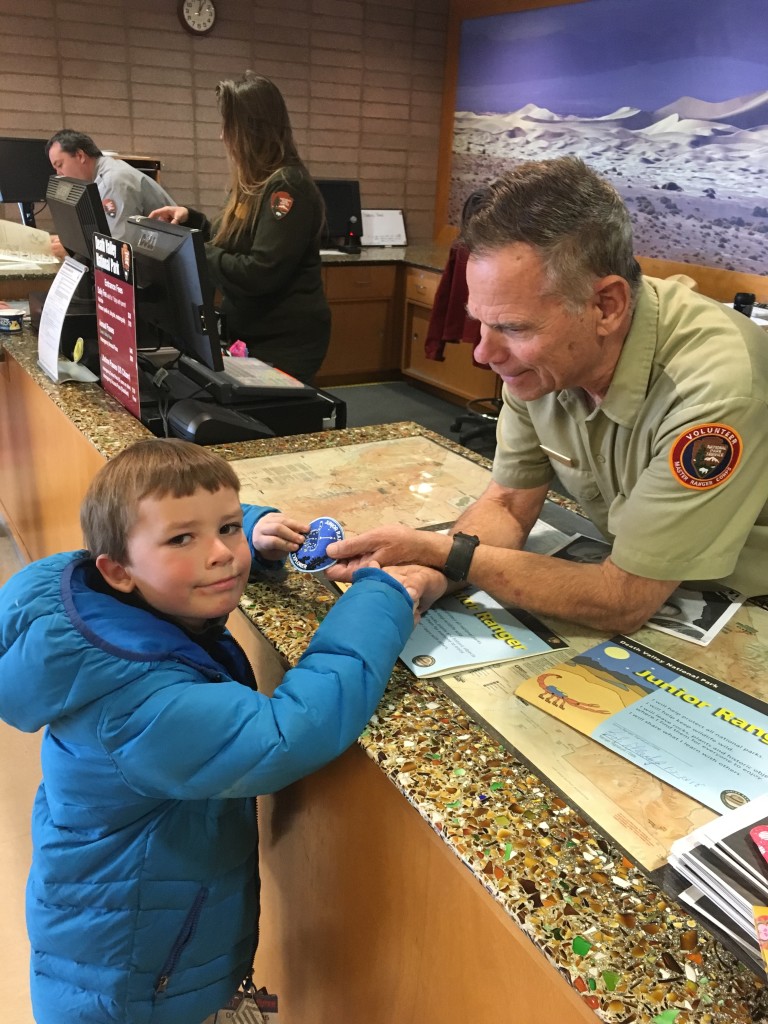
Earn a Junior Ranger Badge Or Attend a Ranger Program
Swim in One of Its Natural Pools
Spend the Night in Death Valley
Should You Visit Death Valley?
If it’s cold at home, it is warm and sunny in Southern California. From October to the end of April, the weather is perfect for hiking. As a bonus, Death Valley National Park boasts a couple of swimming pools, so pack your swimsuit.
Fall, winter and early spring visits are the best, and this is the busiest season. This national park site offers seasonal guided tours, including horseback riding and Jeep tours. The sunsets are stunning, and the night skies are dramatic.
Guide to Joshua Tree National Park

Top Places to Visit in Death Valley
With over 3 million acres, Death Valley is a huge park. To make it easier, here are the top places to explore in the park.
Artist’s Palette–Located off Badwater Road, the one-way 9-mile drive meanders through striated rock formations.
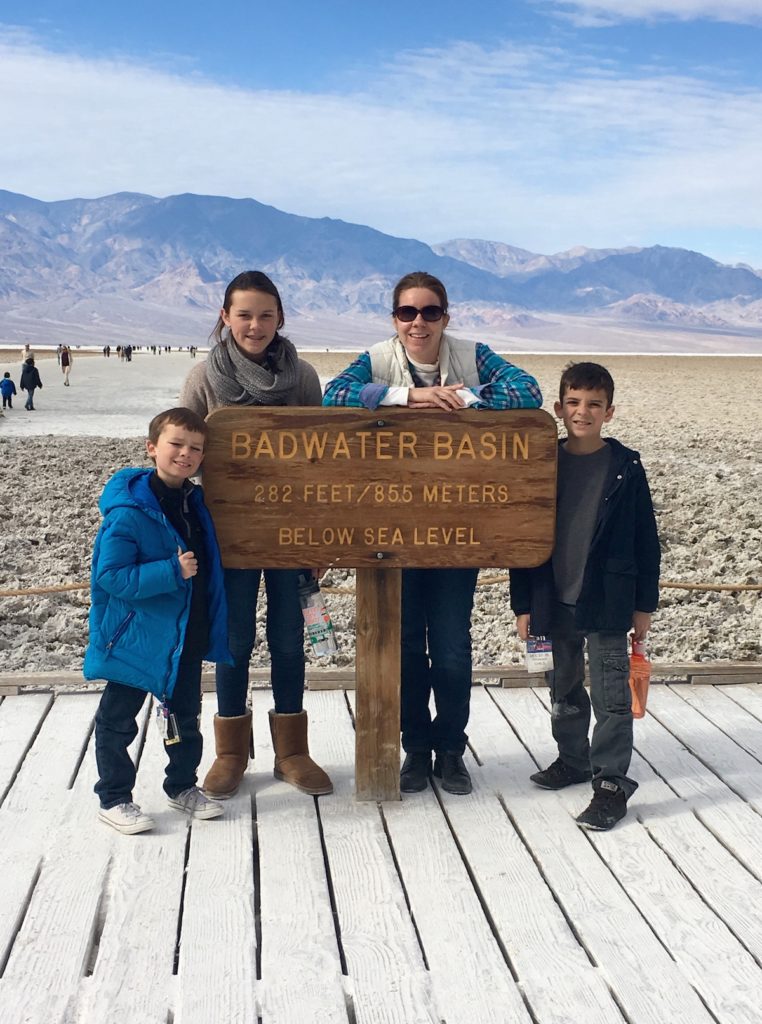
Badwater Basin–Located south of Furnace Creek down Badwater Road, see the lowest point in North America at -282 ft. Also, see the polygon formations on the salt flat.
The Devil’s Golf Course–Along Badwater Road, the rock salt crystals have eroded into a sea of jagged rocks.
Golden Canyon–Find an interpretive trail or a longer loop hike in this area off Badwater Road. Star Wars Episode IV was filmed at this location.
Zabriskie Point–One of the most popular viewpoints, especially at sunrise and sunset. Located on Highway 190 close to the eastern entrance, near Death Valley Junction.
Mesquite Dunes–Located near Stovepipe Wells Village, the Mesquite Dunes are the largest dunes in the park. Find crescent, star and linear dunes. The dudes were used for the Tatooine scenes in Star Wars Episode IV.
Keane Wonder Mine–See an intact tramway from 1909 used for gold ore extraction. Located off the Beatty Cutoff, north of Furnace Creek
Ubehebe Crater–Located close to Scotty’s Castle, it’s a 600-foot deep and half a mile across volcanic crater.
Wildrose Charcoal Kilns–Located along Emigrant Canyon Road, find ten 25-foot-tall masonry beehive structures. It’s cooler at the charcoal kilns since the elevation is 5,000 feet.
Rainbow Canyon–Head to Father Crowley Vista Point for a look over the colorful desert landscape. If you are lucky, catch a military jet in a low-flying training mission in the R-2508 Airspace Complex. Some jets can be as close as 200 feet from the ground.
Dante’s Peak–Another viewpoint of the entire Badwater Basin, along with the Panamint Mountains to the west. Located south of Zabriskie Point.
Why is it So Hot?
Sure, people will tell you it’s a dry heat, but so is my oven. During the summer, the park rangers almost shutter the park and suspend programming, just to keep visitors safe.
Death Valley is surrounded by the Amargosa Mountains on one side and the Panamint Valley Mountains on the other. The narrow, deep valley in between the mountains traps the heat. The valley floor lacks vegetation, so it reflects the heat.
Take precautions when traveling in Death Valley during the summer, like carrying a gallon of water per person per day. Refrain from hiking at low elevations during the warmer months.
I visited both in July and January. The heat is intense on people and vehicles in the summer. During the winter, the weather is warm enough to swim in the pools at Furnace Creek.
Death Valley National Park
Death Valley is the largest national park outside of Alaska, with over 3 million acres. Within its boundaries is the lowest point in North America. That’s not the only record. The highest temperature ever recorded happened at the Furnace Creek Resort in 1913 (134° F/56.7° C). During the summer, temperatures routinely reach 120°F (50 °C) during the day. Summer temperatures usually start in April and continue through October.
Surrounded by the Amargosa and Panamint mountain ranges, Death Valley is 140 miles long. The peaks surrounding Death Valley can reach 11,000 feet. This makes for some epic desert landscape photos.
Death Valley is an International Dark Sky Park, and you can see the Milky Way without a telescope. Park rangers host star-gazing programs from the fall to the spring, and there’s even a special Junior Ranger patch for Dark Skies.
Weekend Itinerary for Joshua Tree
Death Valley Visitor Center
Furnace Creek Visitor Center is the main visitor center in Death Valley National Park. Stopping at a park’s visitor center is one of the top things to do in Death Valley National Park.
It offers an interpretive area with a park film, along with a bookstore and gift shop. It features restrooms, too.
Located on SR 190 near the intersection of Badwater Road. Open daily from 8 a.m. to 5 p.m.
Note: A seasonal contact station is open at Stovepipe Wells Ranger Station. It does not have posted hours.
Scenic Drives in Death Valley
All the routes in Death Valley offer expansive views of the valley. This is one of the top things to do in Death Valley National Park.
SR 190–It is the main road in Death Valley and travels from the eastern to the western entrance as it passes top areas like Furnace Creek.
Badwater Road–From Furnace Creek, it is a scenic road to reach Badwater Basin.
Artists Palette–A short turn-off from Badwater Road that winds through the colorful rock feature called Artists Palette.
Dante’s View–From SR 190, this route heads south out of the park on the eastern side.
Death Valley features hundreds of miles of unpaved roads, best suited for 4x4s. Please observe all signs as conditions can change frequently through the seasons.
Mojave Desert Planning Guide
Hiking in Death Valley
Hiking is a great way to see a park, weather permitting. It is one of the top things to do in Death Valley National Park.
Easy Hiking
Harmony Borax Works–.4-mile flat path
Badwater Basin–1-mile flat trail
Mesquite Dunes–2-mile trail over sand
Moderate Hiking
Ubehebe Crater–1.5-mile trail
Golden Canyon–3-mile trail
Darwin Falls–2-mile round-trip trail
Biking in Death Valley National Park
Bikes can be used on all roads open for vehicular traffic, both paved and unpaved. Additionally, you will find a bike path between the Harmony Borax Works and the Visitor Center.
Easy Bike Routes
Bike Bath—1-mile bike path from Harmony Borax Works to the Visitor Center
Salt Creek Road—1.2-mile route on a graded gravel road.
20-Mule Team Canyon Road—3-mile route a graded gravel road.
Moderate and difficult routes are available.
Guided Tours in Death Valley
During the high season from September to May, visitors will find tours and rentals inside the park. The park’s main concessionaire, Xanterra, hosts many of the activities in Furnace Creek
Rental bikes are available in half-day and full-day rentals, with road bikes and e-bikes with pedal assist. Rates start at $35 and include helmets and bike locks.
Furnace Creek Stables offers one- and two-hour guided horseback tours from October to May. The one-hour rides stay in the valley. The two-hour rides venture to the Funeral Mountains for valley views.
Farabee Jeep Rentals rents 4×4 Jeeps equipped to tackle the off-road conditions in Death Valley. Fall day rentals include a cooler of ice and water, plus a GPS unit, since cell service is poor throughout the park.
Reservations are recommended.
Top National Park Road Trips from LA
Horses in Death Valley
Due to the harsh conditions and limited water sources, horses and stock animals are uncommon in Death Valley. Additionally, Death Valley National Park doesn’t feature horse camps or designated sites.
Horses and stock can use the backcountry dirt roads in the park.
Birding in Death Valley
Find birds from the fall through the spring as many migrate to the warmth of Death Valley for the winter months. The best places to see birds are close to water sources, like Saratoga Springs and the Furnace Creek area, along with the Wildrose area and the Panamint Mountains.
Wildflowers in Death Valley
If rain arrives during the winter, then the wildflowers start to bloom in late February and continue through June, depending on elevation. Death Valley National Park features Mariposa Lilies, Desert Dandelions and Bear Poppies, along with desert Five Spot.
Head to Jublibee Pass along Highway 190 or the Panamint Mountains for the best wildflower viewing. Superblooms are unpredictable from year to year.
Best Sunrise and Sunset Spots in Death Valley
Without trees to disturb the view, find some amazing sunrises and sunsets in Death Valley. For sunrise, head to either Mesquite Flats Sand Dunes or Zabriskie Point. Sunsets glow from vivid orange to deep aubergine, and the best place is Badwater Basin or Dante’s View.
Best Beaches in Southern California
Night Sky Programming in Death Valley
Death Valley National Park is the largest Dark Sky Park in the U.S. as determined by the International Dark Sky Association. Its skies are so dark that it is a Gold level, the highest rating of darkness.
Each spring, Death Valley hosts a Star Party, scheduled for February 5 to 7, 2027.It is a partnership between NASA, Las Vegas Astronomical Society, SETI and the California Institute of Technology.
Inquire at the Visitor Center or the park’s calendar for night sky ranger programs.
Ranger Programs in Death Valley
Dive deeper into a national park site by attending a ranger program. With programming for all ages, rangers can lead hikes, guided tours and special programming for kids, the Junior Ranger Program,
Junior Ranger Program
The Junior Ranger Program is the go-to program for families to learn more about Joshua Tree National Park. This is one of the top things to do in Death Valley National Park.
It’s free and takes about two hours to complete. My kids love the badges that the Rangers present them after completing their booklet.
.A drive down Badwater Road is a kid-pleaser, and Artists Drive is another one not to miss. The Mesquite Flat Sand Dunes are a family favorite. The overlooks at Zabriskie Point and Dante’s View are great stops for families too. Find several ghost towns around Death Valley, like Rhyolite outside Beatty, Nevada.
Death Valley National Park also offers the Night Explorer Patch.
BARK Program
Most National Parks welcome pets as long as they follow the BARK program’s principles. They are usually welcome at the park’s picnic area, campground, in the parking lots and on the paved roads.
Worth noting, due to summertime heat, it is advisable to leave your pets at home during peak heat. They are not to be left in vehicles in the park.
For more information, visit the park’s page for visiting with pets.
B–Bag waste and dispose of it in the trash
A–Always leash your dog for their safety and others
R–Respect wildlife
K–Know where you can go
The History of Death Valley
The Tisbisha Shoshone have called Death Valley home for thousands of years. However, a group of lost pioneers stranded during the winter of 1849-1850 named it. First came the gold miners in the 1850s, and then borax mining in the 1880s. After the mining moved on, a resort was built to help support the infrastructure.
Death Valley was first protected as a national monument in 1933. In 1994, it became a national park. Additionally, it’s part of UNESCO’s Mojave and Colorado Deserts Biosphere Reserve.
The People of Death Valley
The Timbisha Shoshone people lived in the Death Valley area for thousands of years. It was named by the next group of people to traverse through the harsh valley.
In 1840, emigrants and prospectors traveled through the area on the way to coastal California. This included the 49ers’ gold prospectors. The gold rush faded, and borax mining replaced it. Chinese workers worked in construction in the area first before mining for borax.
As a desolate place, Death Valley Scotty worked in the Harmony Borax Works before joining the Buffalo Bill Wild West Show.
Sequoia and Kings Canyon National Parks Planning Guide
Manzanar National Historic Site
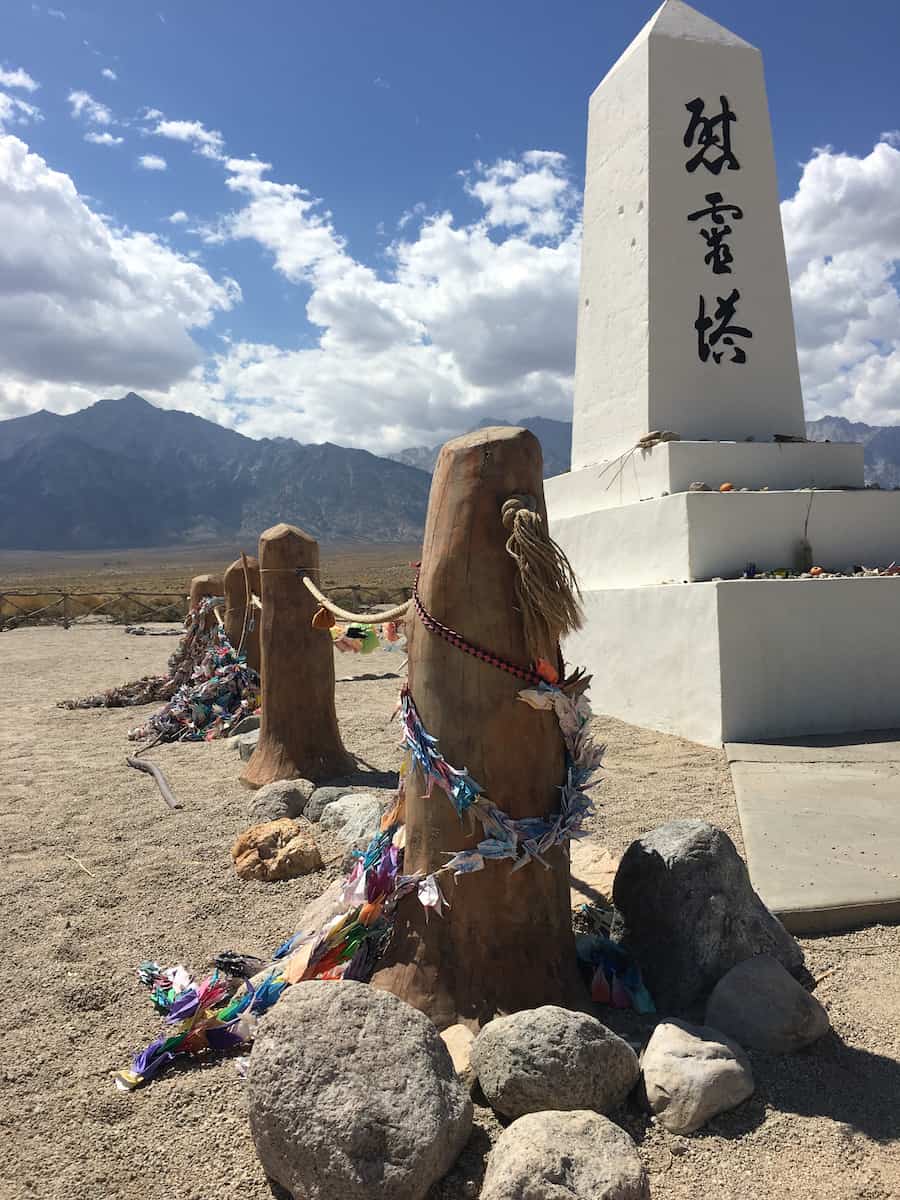
Shortly after the bombing of Pearl Harbor, the U.S. government ordered over 110,000 American citizens of Japanese descent to be detained in military-style camps. One of ten camps, Manzanar, offers a glimpse into the dark area.
Most of the original buildings have been removed. The Manzanar Visitor Center offers an interpretive area that reconstructs portions of the camps. Also, find audiovisual programs and a documentary film. Take the 3.2-mile self-guided driving tour through the site to see the historic orchard and the rock gardens.
Located at 5001 Highway 395 in Independence, north of the Panamint Springs entrance of Death Valley. The grounds are open from sunrise to sunset. The visitor Center and the interpretive area are open 9 a.m. to 4:30 p.m. in the winter and 9 a.m. to 5:30 p.m. the rest of the year. Free to enter.
San Diego’s Cabrillo National Monument
Where to Stay in Death Valley
Stovepipe Wells
In the center of Death Valley, Stovepipe Wells offers a convenient base. Developed in 1926, it offers basic lodging along with a general store and gift shop.
Find an 83-room hotel with a pool, along with the Toll Road Restaurant, serving breakfast, lunch and dinner. The Badwater Saloon is open from lunch through dinner, serving food and cocktails. Also, there’s a small RV campground with 14 sites and hook-ups.
Located at 51880 Highway 190.
Panamint Springs Resort
At the western entrance of Death Valley, the Panamint Springs Resort offers motel rooms, cabins, and a campground. Also, find a gas station along with a general store, restaurant, and gift shop. This area opened in 1946.
The motel rooms offer basic accommodations, and the cabins are a newer option. The restaurant serves lunch and dinner, along with cocktails. Find a campground with RV hook-ups, along with dry sites.
Located at 40440 Highway 190.

The Oasis at Death Valley
Located in the Furnace Creek area, the Oasis at Death Valley offers two properties.
The Ranch at Death Valley
The Pacific Coast Borax Company built the Furnace Creek area in 1933 to support the railroad after the mining stopped.
The Ranch at Death Valley underwent a 200-million-dollar renovation and offers a family-friendly environment with 275 rooms. Conveniently located next to the Furnace Creek Visitor Center, the area is in the center of the park and close to several top sites.
The Ranch now features a palm-tree-lined Town Square with a fountain and benches in front of the new registration building with Mission California design elements. Find a new restaurant along with a saloon and gift shop.
For those who want more space, the Cottages at Furnace Creek offer two queen or one king options. These feature separate living and bedroom spaces.
The 1849 Buffet serves a breakfast, lunch and dinner buffet in the Town Square area. The Coffee and Cream is located next to the buffet and serves coffee drinks and ice cream along with breakfast, lunch, and dinner takeaway options.
The Last Kind Words Saloon offers a heaping spoon of Old West flavor. Find cowboy relics, wanted posters and hunting trophies on the wall. The dinner menu features upscale offerings like Alaskan salmon and tomahawk steaks. Open for lunch and dinner at 5 p.m. daily. Reservations recommended for dinner. Outdoor seating area available.
Located in the Furnace Creek area of Death Valley at the intersection of Highway 190 and Badwater Road.
Activities at the Ranch at Death Valley
Find a spring-fed pool with a year-round temperature of 87 degrees for year-round swimming. Next to the pool, find covered tables, sports courts, tennis and pickleball courts, and a playground close by.
The legendary 18-hole par 70 golf course is 214 feet below ground level. The course includes water features along with a pro shop and 19th Hole Restaurant with a full bar and outdoor dining (closed in the summer).
The Harmony Borax Works offers a .25-mile walking trail to the remnants of the mining operation, including an original 20-mule wagon train.
For kids into science, Furnace Creek Resort has a solar facility with a viewing platform.
The Ranch at Furnace Creek is also an RV park, Fiddler’s Camp.
Furnace Creek Golf Course at Death Valley
This 18-hole Par 70 course is a bucket-list destination for golfers. Known as the lowest course in the world, its low elevation and low barometric pressure challenge golfers. So much so, Golf Digest has named it one of America’s 50 Toughest Courses.
Golfers play the course lined with palm and tamarisk trees. The pro shop, Wild Rose, offers golf carts and rental gear. Reservations are a must.
The Inn at Death Valley
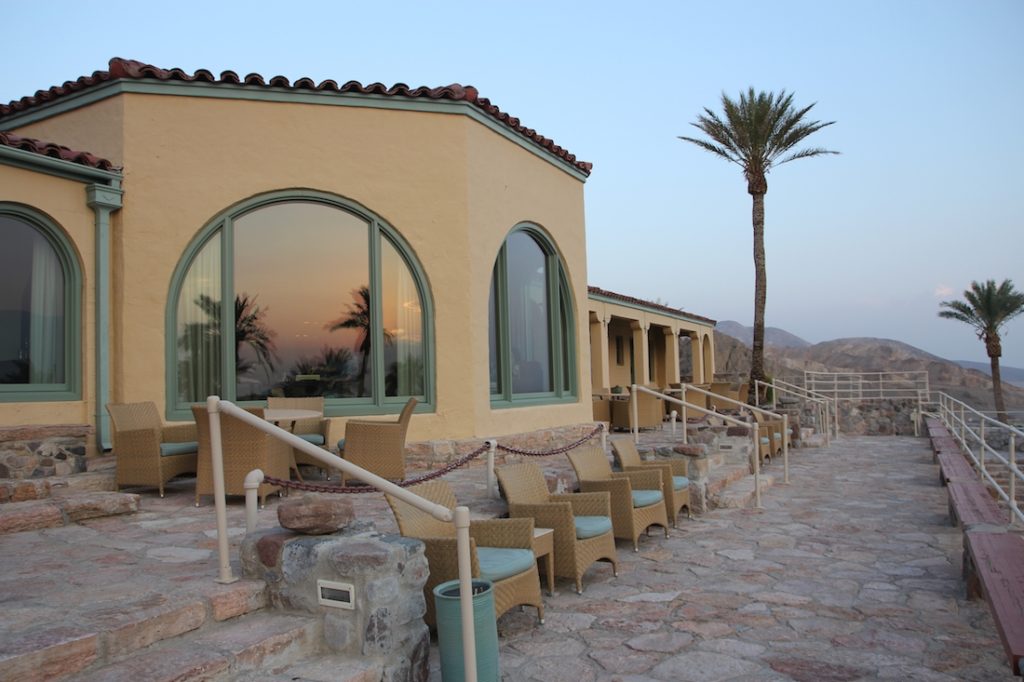
As Death Valley’s most luxurious property, the Inn at Furnace Creek is a four-diamond desert resort built in 1927. Long considered a hideout for Hollywood stars and Parisian socialites, the property underwent an extensive renovation.
The arrivals area received a refresh with new fountains and lush oasis landscaping. As guests enter the lobby and lounge area, they find a new Saltillo tile floor and inviting new furnishings in desert hues.
The bar is completely new and includes a menu with desert-inspired classic cocktails along with small plates. The dining room’s new furnishings focus on the refined elegance that blends with the chef-created menu with an eye to sustainable offerings.
The main Inn rooms retain their laid-back, luxurious feel with sumptuous fabrics and warm wood. The bathrooms feature period details like hex tile.
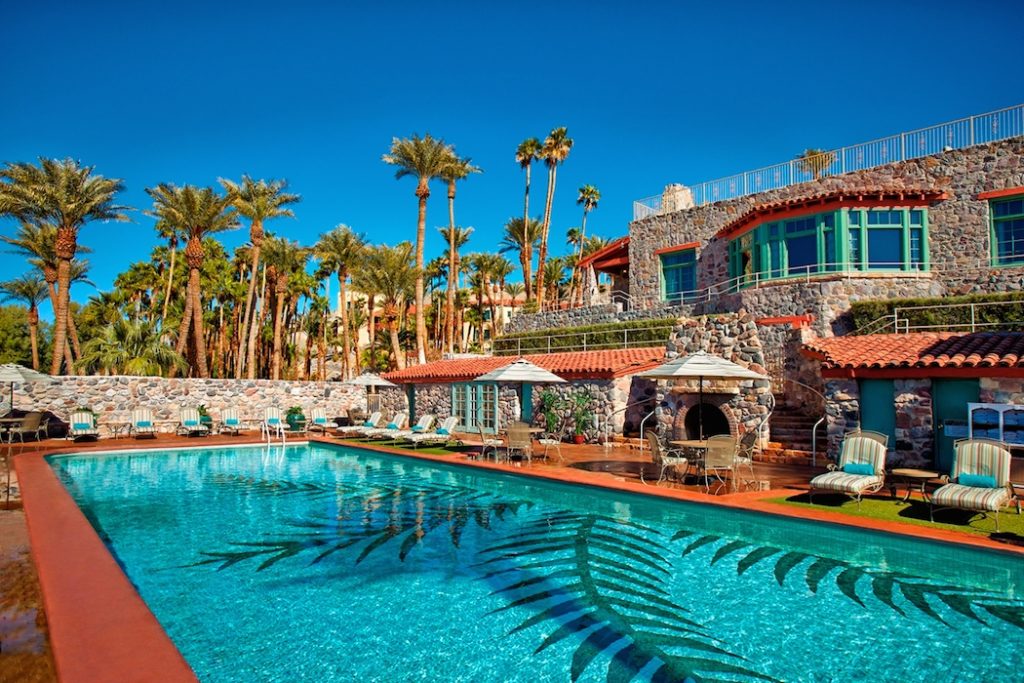
For a secluded retreat, the 22 new casitas offer a refuge along the date palm oasis. With a separate living room and patio for in-room dining, enjoy privacy steps from the spring-fed pool. Each casita features a wet bar and beverage station as well.
The iconic swimming pool maintains a year-round temperature of 87°F. Though enjoy a shaded cabana for all-day lounging. Refreshments are steps away from the poolside.
The Spa at the Inn at Furnace Creek offers packages and an extensive menu of wellness treatments. Find tennis courts on the property, and the golf course is a short drive away near the Furnace Creek Visitor Center.
Located in the Furnace Creek area of Death Valley at the intersection of Highway 190 and Badwater Road.
Desert Luxury — Finding Your Death Valley Hotel
Camping in Death Valley
Note: Most campgrounds are closed during the summer, and the following are the National Park Service campgrounds. Private campgrounds are available at several locations.
Furnace Creek
Year-round
Reservations: October 15 to April 15
136 sites (18 with hook-ups) with a Dump Station
Potable water and flush toilets
Sunset
Seasonal Late Fall to Spring
No reservations
230 sites with a Dump Station
Potable water and flush toilets
Texas Springs
Seasonal–Late Fall to Spring
No reservations
106 sites with a Dump Station
Potable water and flush toilets
Stovepipe Wells
Seasonal–Late Fall to Spring
No reservations
190 sites with a Dump Station
Potable water and flush toilets
Mesquite Spring
Year-round
No reservations
40 sites with a Dump Station
Potable water and flush toilets
A primitive campground is available at Wild Rose Campground in the Panamint Mountains. It has 23 sites with no water or services.
Where’s Death Valley National Park
Death Valley is in Southern California, though it’s closer to Las Vegas than Los Angeles. The Death Valley Visitor Center is about 130 miles from Las Vegas. It’s about 300 miles from Los Angeles.
California Highway 190 transects Death Valley from Death Valley Junction on the east side to Panamint Springs on the west side. The majority of the services in the park are located in the Stovepipe Wells Village or the Furnace Creek Resort area.
Death Valley National Park is open 365 days a year, 24 hours a day. Admission is $30 per vehicle for a 7-day pass, or you can purchase an annual America the Beautiful Pass.
Find close to 1,000 miles of roads in Death Valley National Park, though the majority of them are unpaved, four-wheel drive roads unsuitable for most vehicles. Please read the map carefully. Find an airstrip in the Furnace Creek area in Death Valley.
Guide to National Park Passes
Note
Scotty’s Castle is closed until further notice. Due to a flash flood in 2015, repairs are still being made.
ProTips:
Make reservations for lodging and tours as soon as possible. Lodging reservations can be made 13 months in advance.
Don’t enter mines, shafts or tunnels.
Carry extra water year-round. Water is only available in the developed areas of the park.
Don’t rely on technology for directions. Get a map at the visitor’s center.
The summer season is from May through September. The park suspends popular programs like ranger programs and horse trips.
Don’t hike at the lower elevations during the summer.
Don’t leave kids or pets in vehicles in the summer. Temperatures can reach 160 F in the car.
Disclosure: This article contains affiliate links.
