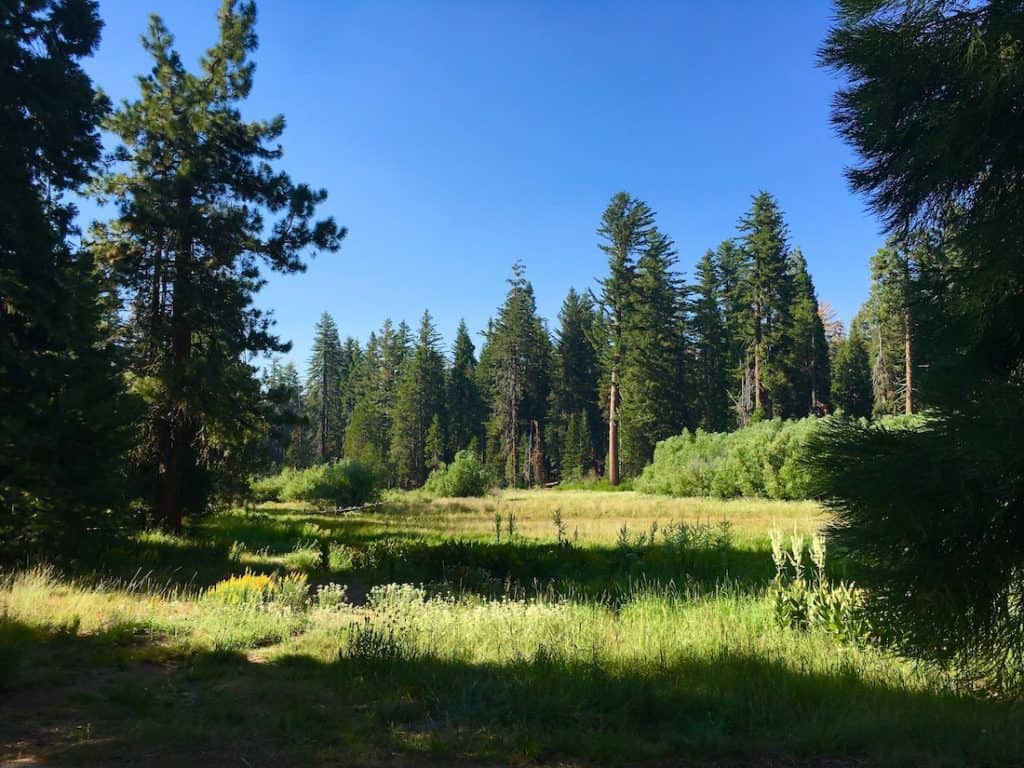
Nestled in the Sierra Nevada Mountains, Sequoia and Kings Canyon National Parks protect some of the largest trees in the world. Visitors will find the iconic Sequoia located in both parks. They are one of the top things to see in California. Families will find plenty of outdoor activities, like hiking, camping and wildlife viewing. Visitors can also take scenic drives, go horseback riding and even fish. Here are the top things to do in Sequoia National Park.
Top 13 Things to do in Sequoia National Park
Learn about Redwood Trees
Stop by a Visitor Center
Pick an Area to Visit
See the Redwoods
Take a Scenic Drive
Take a Hike
Attend a Ranger Program
Take a Horseback Ride
Go Fishing
Earn a Junior Ranger Badge
Learn about the People who Lived in the Area
Have a Picnic
Spend the Night in the Park
Planning Guide to Redwood National and State Parks
Types of Redwoods
There are three types of redwood trees in the world. The Coastal Redwoods are the tallest trees in the world, with heights over 370 feet. Each is grown from a seed the size of a tomato seed.
The Giant Sequoias are located on the western slope of the Sierra Nevada Mountain Range in Central California’s Sequoia and Kings Canyon National Parks. They are bulkier with thicker trunks yet not as tall as the Coastal Redwoods.
The Dawn Redwoods were thought to be extinct, yet were discovered in 1944 in Central China. There are none in the U.S.
Where are the Redwoods in the U.S?
California boasts two of the three types of redwoods in the world. Best of all, many are protected in national and state parks.
Redwood National and State Parks—Find Coast Redwoods along U.S. 101 on the northern California coast between Eureka and Crescent City. The Muir Woods National Monument is closer to San Francisco.
Sequoia and Kings Canyon National Park—See a couple of the tallest Giant Sequoias in a pair of parks that adjoin.
Yosemite National Park—See Sequoias in the Mariposa Grove near the southern entrance. Or hike 2 to 3 miles into the Tuolumne or Merced Groves.
Why Visit Sequoia or Kings Canyon
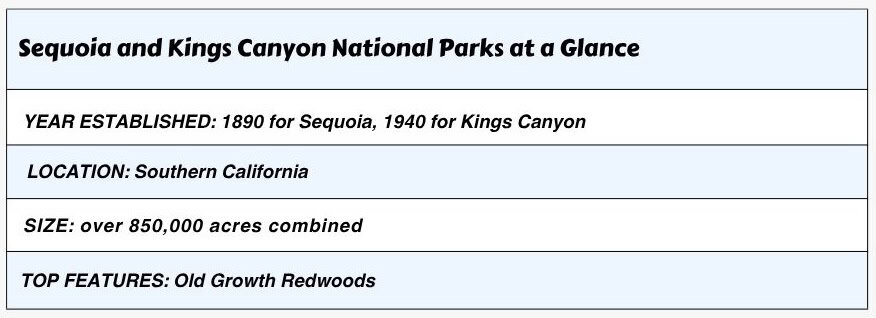
It is one of the best places to see the famed redwood trees in California. This pair of national parks is in the Sierra Nevada mountain range in Southern California. Sequoia and Kings Canyon are adjoining parks, and Sequoia is closer to Southern California cities like LA and San Diego. Sequoia is the more popular of the pair; however, Kings Canyon offers a quieter area to explore the redwoods.
Most visitors come to see the Sequoias. This is the reason I’ve visited. They are the kings of the forest since they are some of the largest trees in the world. In fact, five of the ten largest trees in the world by volume are in Sequoia National Park.
In Kings Canyon and Sequoia National Parks, visitors will find enormous trees with trunks bigger than a bedroom and canopies that touch the clouds. The Giant Forest is the place in Sequoia for the General Sherman tree. To see the General Grant tree, head to Kings Canyon’s Grant Grove.
There are no roads that bisect the parks from east to west. Both national parks are developed on the western side only. Sequoia National Park is also home to Mt. Whitney, the highest mountain in California. There is also no tree that you can drive through.
National Parks a Road Trip away from LA
Visitor Centers in Sequoia and Kings Canyon National Parks
When visiting a National Park Service site, the first place I stop is a Visitor Center. This is where you will find restrooms and water filling stations (usually open 24 hours).
There are park rangers or well-informed park volunteers located in the visitor center to help you plan a hike. Some visitor centers offer interpretive areas to explore and even a short introductory film about the site.
Foothills Visitor Center in Sequoia
This is your stop for maps and park brochures. It also offers an interpretive area and ranger programs departing from the Foothills Visitor Center. This is one of the top things to do in Sequoia National Park.
Located inside the Ash Mountain Entrance at 47050 Generals Highway. It is open year-round and daily from 9 a.m. to 4:30 p.m., 8 a.m. to 5 p.m. in the summer.
Giant Forest Museum in Sequoia
Learn about the giant trees in a historic market and why they can grow so large.
Located at mile 16 on Generals Highway. Open daily year-round from 9:30 a.m. to 4:30 p.m., 9 a.m. to 5 p.m. in the summer.
Kings Canyon Visitor Center
In the Kings Canyon National Park, learn about the three regions of the park: Sequoia Grove, Kings Canyon and the High Sierra. There’s also a 15-minute interpretive movie.
Located at 83918 Highway 180. Open daily from 9 a.m. to 4:30 p.m., 9 a.m. to 6 p.m. in the summer. Closed Tuesdays.
Lodgepole Visitor Center in Sequoia
This is a seasonal visitor center open from mid-May until mid-October. It is close to the General Sherman Tree.
Located on Generals Highway, 21 miles (34 km) north of the Ash Mountain Entrance. Open daily from 8 a.m. to 5 p.m. during the summer season.
Cedar Grove Visitor Center in Kings Canyon
Find this visitor center next to the South Fork of the Kings River with an interpretive center discussing the cultural history of the area.
Located on Northside Drive. Open daily from the end of May until mid-September from 9 a.m. to 5 p.m. Closed seasonally.
Mineral King Ranger Station in Sequoia
Grab food storage containers and wilderness permits along with maps and brochures.
Located at Mile 24 on Mineral King Road. Open daily from May 1 until the end of October from 7:30 a.m. to 4 p.m. Closed seasonally.
There are 14 wilderness ranger stations in the Sequoia-Kings Canyon wilderness.
Areas of Sequoia and Kings Canyon National Parks
The majority of both parks are designated wilderness and not developed. So visitors won’t find roads or developed campsites in the wilderness areas. Here are the developed areas of the parks.
Foothills Area
The Foothills area is located along Highway 198 outside of Three Rivers at Sequoia National Park’s Ash Mountain Entrance. This area is at a lower elevation and misses much of the wintertime snow.
Giant Forest and Lodgepole Area
The Giant Forest and Lodgepole area is near the Kaweah River and offers the Wuksachi Lodge and the Giant Forest (with the largest trees) in Sequoia National Park. Visitors will find the General Sherman tree. It is located along General Highway, the main road connecting both parks.
Grant Grove Area
Grant Grove area is located in Kings Canyon National Park at the Big Stump entrance of the park. It offers the Kings Canyon Visitor Center and the General Grant Grove. This area features the largest grove of sequoia trees.
Cedar Grove Area
The Cedar Grove area is in Kings Canyon National Park, and visitors have to drive through Sequoia National Forest to reach this area along the Kings Canyon Scenic Byway. It is home to the glaciated valley of the Kings River with peaks towering overhead.
Mineral King Area
The Mineral King area is in Sequoia National Park after entering the Lookout Point entrance. The highest place you can drive in both parks is the Mineral King area at 7800 feet (2375 m). This area is not suitable for RVs and travel trailers.
Top National Parks in California
Scenic Drives in Sequoia and Kings Canyon
If limited on time, scenic routes offer glimpses of the magnificent redwood forests. This is one of the top things to do in Sequoia National Park.
General’s Highway–Connects the Parks and the two main Sequoia groves.
King’s Canyon Scenic Byway–CA State Route 180
Panoramic Point Road–Heads up to Hume Lake
Majestic Mountain Loop–Connects Sequoia, Kings Canyon and Yosemite National Parks.
Hiking in Sequoia and Kings Canyon
You can hike across both parks, from easy interpretive trails to strenuous backcountry overnight trails. The famed Pacific Crest Trail and the John Muir Trail both traverse Kings Canyon and Sequoia National Parks. This is one of the top things to do in Sequoia National Park.
General Sherman Tree Trail—A .5-mile trail (.72-km) to one of the most famous trees in the park. Busy trail.
The Big Tree Trail—A .75-mile (1 km) loop trail around the Round Meadow with interpretive signs.
Moro Rock—Climb 300 stairs for a view of the Great Western Divide
Tokapah Falls—A 1.7-mile one-way trail to the 1,200-foot (365 m) falls and the Kaweah River. Early summer is the best for waterfall viewing.
General Grant Tree Trail—A .3-mile paved trail to see one of the more famous trees in the park. Busy trail.
North Grove Loop—A 1.5-mile (2.4 km) trail through a mixed forest.
Zumalt Meadow—An .8-mile (1.3 km) trail passes King River.
Roaring River Falls—Short walk to the waterfall.
Note: Pets are not allowed on hiking trails in Sequoia or Kings Canyon National Park for your safety and theirs.
Guided Horseback Riding
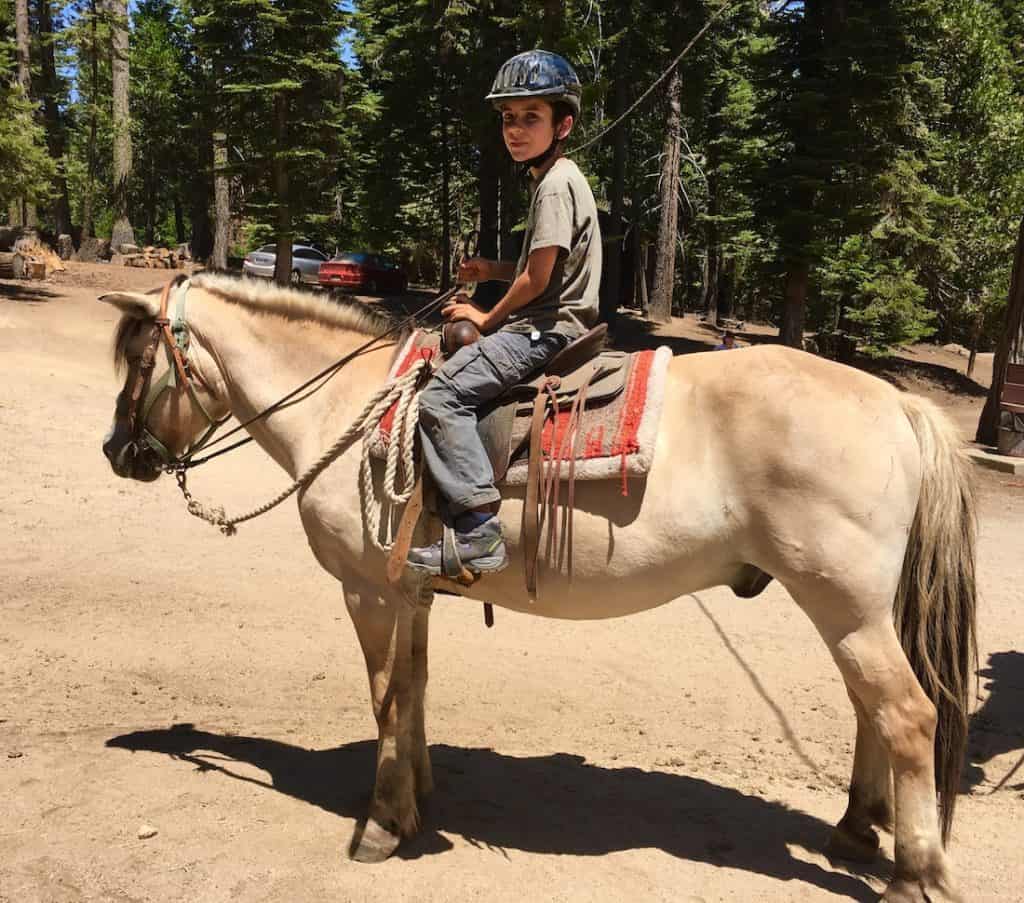
Take the kids on a guided horseback ride in Kings Canyon National Park. Ride through the forest of the Giant Sequoias on a one or two-hour ride.
You must be 7 years old and fit in a saddle. Helmets are provided, though close-toe shoes and long pants are recommended. Weigh restrictions are also enforced.
Grant Grove Stables and Cedar Grove Stables both offer guided horseback riding from early June until mid-October.
Fishing in the Parks
Fishing is allowed in the Sequoia and Kings Canyon National Parks, though anglers are required to carry a California fishing license. Some of the best places include Hume Lake, Lewis Creek and Bubbs Creek.
Fishing licenses are not available in the park.
Note: Sequoia and Kings Canyon National Parks don’t have a living tree that you can drive through. However, you can find a downed tree tunnel in Sequoia National Park near the Giant Forest on Crescent Meadow Road. Winter storms often bring down the trees.
Top Things to do at Lassen Volcanic National Park

Junior Ranger Badges in Sequoia and Kings Canyon National Park
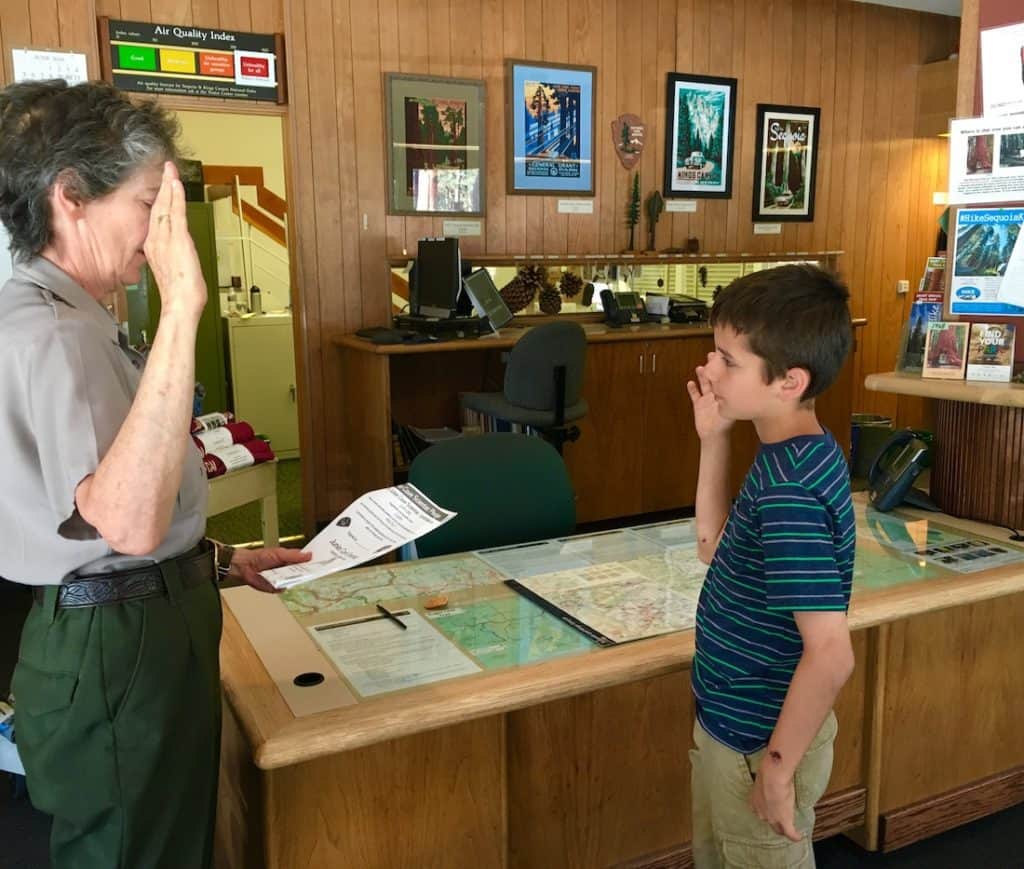
The Junior Ranger Program is the go-to program for families to learn more about a National Park Service site. It’s free and takes about two hours to complete. My kids love the badges that the Rangers present them after completing their booklet.
Sequoia and Kings Canyon National Parks offer the same Junior Ranger booklet. If kids visit the Crystal Cave, located in Sequoia National Park, they can earn the cave scientist patch after completing its booklet. Cave admission extra.
Head to a visitor center to pick up a Junior Ranger booklet.
Pets in the Parks
Both parks allow pets; however, due to encounters with wildlife, pets need to stay in the following areas. Sequoia and Kings Canyon do not have a BARK ranger program.
Parking lots
Paved roads
Campgrounds
Picnic areas
Crystal Cave Tours
Located in Sequoia National Park, take a guided tour of a marble cave. Tours cover .5-miles of the cave and last 50 minutes. A steep .5-mile walk is required to and from the cave. Tours are offered from Spring until Fall, and reservations are required a couple of months in advance.
Cave temperature is 50 degrees Fahrenheit (10C), so pack a layer for the tour. For more information and to reserve tickets, head to its website.
35 of the Top Things to do at Lake Tahoe
The People of the Sierra Nevada Mountains
Many tribal people used the Sierra Nevada Mountains, particularly in the warmer parts of the year. The Mono, Yokuts, Tübatulabal, Paiute, and the Western Shoshone all used the land of Sequoia and Kings Canyon.
Walter Fry came to the Sierra Nevada mountains as a logger and counted the rings of one of the trees he felled. From that point forward, he championed the creation of Sequoia National Park and worked for the park in the early years.
Captain Charles Young was a military officer stationed at Sequoia and led the Buffalo Soldiers who patrolled the park. Young initiated the program to buy out private landowners near Sequoia in an effort to enlarge the area of protection.
Susan Thew was originally from Ohio, but she moved to California to escape the winters of the Midwest. Settling in the area, she spent several summers photographing the rugged and remote landscape. Her photos helped expand Sequoia National Park in the 1920s after its creation in 1890.
Wildlife of the Sierra
Kids love to catch sight of wildlife in national parks. This is one of the top things to do in Sequoia National Park. Be on the lookout for tracks and scat.
Black Bear
Mountain Lion
Badger
Bobcat
California Mule Deer
Coyote
Stellar’s Jay
Western Bluebirds
California quail
Remember to give animals 25 feet for your protection and theirs, and 75 feet for bears and mountain lions.
Best Mountain Destinations in the Western U.S. for Families
Black Bears in Sequoia and Kings Canyon National Parks
Be Bear Aware
Black bears in the Sierra Nevada mountains cause more property damage than danger to humans. Using their sense of smell and strength, vehicles can not keep a bear out that wants a candy bar.
Tips from Park Rangers:
Don’t leave food or scented items in vehicles.
Store all food or items with a scent, including toiletries, in the provided bear-proof storage lockers.
Lodge guests must bring all items indoors overnight.
Keep a clean camp.
Deposit all garbage in bear-proof trashcans or dumpsters.
If you encounter a black bear, make loud noises to scare them away.
Note: Grizzly Bears do not live in the Sierra Nevada mountain range.
Where to Picnic in Sequoia and Kings Canyon National Park
Big Stump Picnic Area
Columbine Picnic Area
Wolverton Picnic Area
Pinewood Picnic Area
Halstead Meadow Picnic Area
Lodgepole Picnic Area
Crescent Meadow Picnic Area
Hospital Rock Picnic Area
Foothills Picnic Area
Mineral King Picnic Area
Where to Eat in Sequoia and Kings Canyon
The Peaks Restaurant in Wuksachi Lodge sells breakfast, lunch and dinner year-round.
Grant Grove Restaurant and Courtyard serves breakfast, lunch and dinner.
Lodgepole Deli, Market and Snack Bar is open seasonally from mid-April through October.
Cedar Grove Snack Bar serves breakfast, lunch and dinner from late May through October.
Top 35+ Things to Do in San Diego
Where to Stay in Kings Canyon National Park
Lodges
Wuksachi Lodge offers 102 rooms, and The Peaks Restaurant is located close to Lodgepole Village.
John Muir Lodge features 36 rooms and a restaurant in Grant Grove Village. It’s a modern timber and stone lodge with comfortable rooms named after the naturalist John Muir, who tirelessly worked to preserve and protect the Sierras.
Grant Grove Village is the first village when entering Kings Canyon National Park from Fresno along CA Highway 180. In addition to a lodge and cabins, there is a small market selling basics plus beer and wine, a restaurant, a gift store, a post office, the Kings Canyon Visitor Center, and camping.
Cedar Grove Lodge offers 21 rooms along with a snack bar. It’s open from Spring until Fall.
Cedar Grove Village is 35 miles west of the park after driving through the Sequoia National Forest along CA Highway 180. The Cedar Grove Lodge is in the heart of a glaciated canyon, along with a market, gift store, showers, self-serve laundry, and a campground.
Cabins
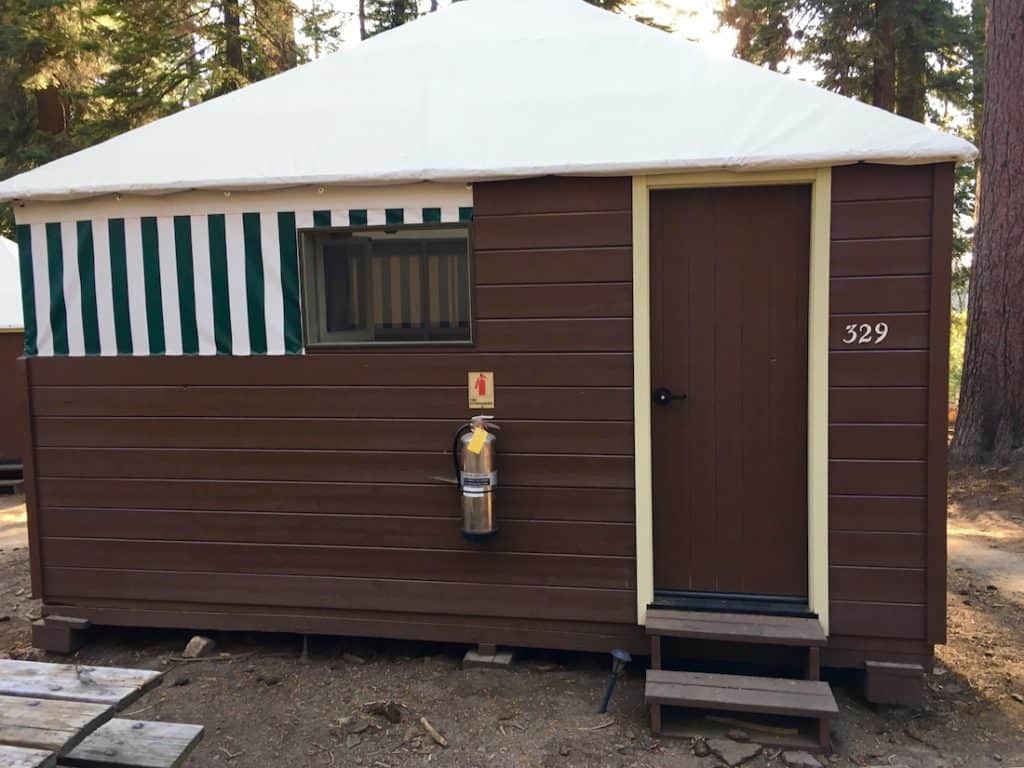
Grant Grove Cabins are timber and canvas cabins with electricity and heating, along with a bathhouse close by. Tent cabins without electricity and heating are also available in the area. All cabins feature traditional beds with linens and picnic tables outside.
Where to Camp in Sequoia and Kings Canyon
With 14 campgrounds across the parks, visitors find many camping options. Reservations are needed, as the developed campsites go quickly and fill up. Reservations open 30 days before the arrival date.
Foothills Area Campgrounds in Sequoia
Sequoia National Park offers a couple of campgrounds across the park. Sites include a metal food storage box, a picnic table and a fire ring with a grill.
Potwisha Campground
Open Year Round
Reservations recommended
42 sites without hookups
Potable water and flush toilets
Dump station
Buckeye Flat Campground (It was closed in 2024 and 2025)
Open Seasonally
Reservations recommended
27 sites without hookups
Potable water and flush toilets are seasonal
Lodgepole Area Campgrounds in Sequoia
Lodgepole Campground
Open from Late May until the end of November
Reservations recommended
214 sites without hookups
Potable water and flush toilets (seasonal)
Hot showers (seasonal)
Dump station (seasonal)
Dorst Creek Campground (It was closed in 2024 and 2025)
Open from mid-June until Labor Day.
Reservations recommended
222 sites without hookups
Potable water and flush toilets (seasonal)
Grant Grove Area Campgrounds in Kings Canyon
Kings Canyon offers several campgrounds across the park. Sites include a metal food storage box, a picnic table and a fire ring with a grill.
Azalea Campground
Year-round
Reservations recommended
110 sites without hookups. Only 20 sites are open year-round.
Potable water and flush toilets
Crystal Springs Campground
Open from Late May until mid-September
Reservations recommended
35 sites without hookups.
Potable water and flush toilets (seasonal)
Sunset Campground
Open from Late May until Labor Day
Reservations recommended
158 sites without hookups.
Potable water and flush toilets
Cedar Grove Area Campgrounds
Canyon View Campground
Open from mid-June until late September
Reservations recommended
16 sites for groups without hookups. No RVs.
Potable water and flush toilets
Sentinel Campground
Open from late April to mid-November
Reservations recommended
82 sites without hookups.
Potable water and flush toilets (seasonal)
Hot showers (seasonal)
Sheep Creek Campground
Open from Late May until early September
Reservations recommended
111 sites without hookups.
Potable water and flush toilets (seasonal)
Hot showers (seasonal)
Moraine Campground (It was closed in 2024 and 2025
Open from Late May until early September
Reservations recommended
121 sites without hookups.
Potable water and flush toilets (seasonal)
Hot showers (seasonal)
Gateway Towns to Sequoia and Kings Canyon
Fresno
Located in the San Joaquin Valley along Highway 99 offers the Fresno Yosemite International Airport (FAT) and Amtrak station. Find a host of lodging, dining and shopping for your trip. Fresno is 53 miles west of Kings Canyon National Park along Highway 180.
Visalia
Located south of Fresno along Highway 198, Visalia is the closest gateway town to Sequoia National Park. It’s about 35 miles from the Foothills Visitor Center in Sequoia. In Visalia, you can find lodging, dining, and shopping.
History of Sequoia and Kings Canyon National Parks
Sequoia National Park was the second national park when it was established in 1890, after Yellowstone. General Grant National Park was also established in 1890 and would be enlarged over the years. It was renamed Kings Canyon National Park in 1940. Sequoia and Kings Canyon National Parks were designated a UNESCO Biosphere Reserve in 1976.
The General Sherman tree is the largest tree on Earth by volume. Located in the Giant Forest, it is with five of the 10 largest trees found on earth.
Weather in Sequoia and Kings Canyon National Parks
Summer sees highs in the 70s F and lows in the 40s F. Rain is rare and a welcome break to keep down the dust. September rolls in, and the nightly temperatures are the first to fall. The first light snows happen at the higher elevations in late October, though temperatures top out in the 50s F during the day, depending on elevation.
In November, temperatures average with highs 40s F and overnight lows in the 20s F. Winter is snowy in the mountains, and roads can be hard to navigate without chains or snow tires. This is the quietest time of the year. However, the lower elevations see their first wildflowers in January. Spring weather climbs out of the valley and up to the mountains from March, with highs in the 40s F until summer brings in mid-June. Use caution when near rivers and streams with swift-moving water from snow melt run-off.
Where’s Sequoia and Kings Canyon National Park
Located in the Sierra Nevada mountains, Sequoia and Kings Canyon are adjoining national parks, and several national forests are in the area as well. Both parks have five main areas: Foothills, Giant Forest and Lodgepole, Grant Grove, Cedar Grove and Mineral King. Mineral King and Cedar Grove are open from Spring until Fall, and the rest are open year-round.
Kings Canyon National Park is open 365 days a year and 24 hours a day. Use an America the Beautiful annual pass ($80) or purchase a 7-day pass for $35 per vehicle that’s good for both Kings Canyon and Sequoia National Parks.
National Park Passes Guide
Know Before You Go
Make lodging and camping reservations as early as possible.
Gas isn’t available in the Sequoia or Kings Canyon National Park.
Take care when driving the steep and winding park roads.
Planning to park overnight? Marmots may attempt to get into your car’s undercarriage or damage wiring. Make sure that you wrap the underside of your vehicle in a tarp, according to the NPS.

Comments are closed.